Is water bad for lash extensions?
Not once the adhesive has set. Keep your extensions dry for the first 24 hours so the adhesive can fully set. After that, water on its own isn't what loosens them.
Lashes are built for water. Natural lashes are water-repellent and shaped to drain droplets quickly: their structure cut the time water stayed in contact by about 20% compared with a smooth slope (Zhou et al., 2024). That study looked at natural lashes rather than extension adhesive, but the picture is useful. Water is meant to run off your lashes, not sit on them.
What actually breaks down lash glue?
Three things do the damage: oil, heat and friction.
- Oil. Oil breaks down lash adhesive. That's why our aftercare says to use oil-free cleansers and makeup removers and to keep oil-based eye creams away from the lash line.
- Heat. In a lab test of extensions on a model lash line, retention fell as the temperature rose from 15 °C to 35 °C, because heat wears the adhesive down faster (Chiang et al., 2025).
- Friction and pressure. Every rub and press pulls on the bond. At home, that means rubbing your eyes, scrubbing with a pad or towel, and sleeping face-down.
The lab test used a model, not people, but it points the same way as our aftercare: a gentle wash is not the risk. Hot, oily and rough handling is.
Water. Fine once the first 24 hours have passed. Rinse and pat dry.
Oil. Breaks down lash adhesive. Choose oil-free cleansers and removers.
Heat and steam. In a 2025 lab test, retention fell as the temperature rose from 15 °C to 35 °C.
Rubbing. Pat dry and brush with a clean spoolie; don't rub, tug or pick.
How do I wash lash extensions?
Once the first 24 hours have passed, do this once a day:
- Wet the lash line with warm, not hot, water.
- Pat a small amount of your cleanser along the lash line with a clean fingertip.
- Rinse gently, letting the water run down and off the lashes.
- Let them air-dry, or pat the skin around them with a towel. Don't rub.
- Each morning, brush them gently with a clean spoolie.
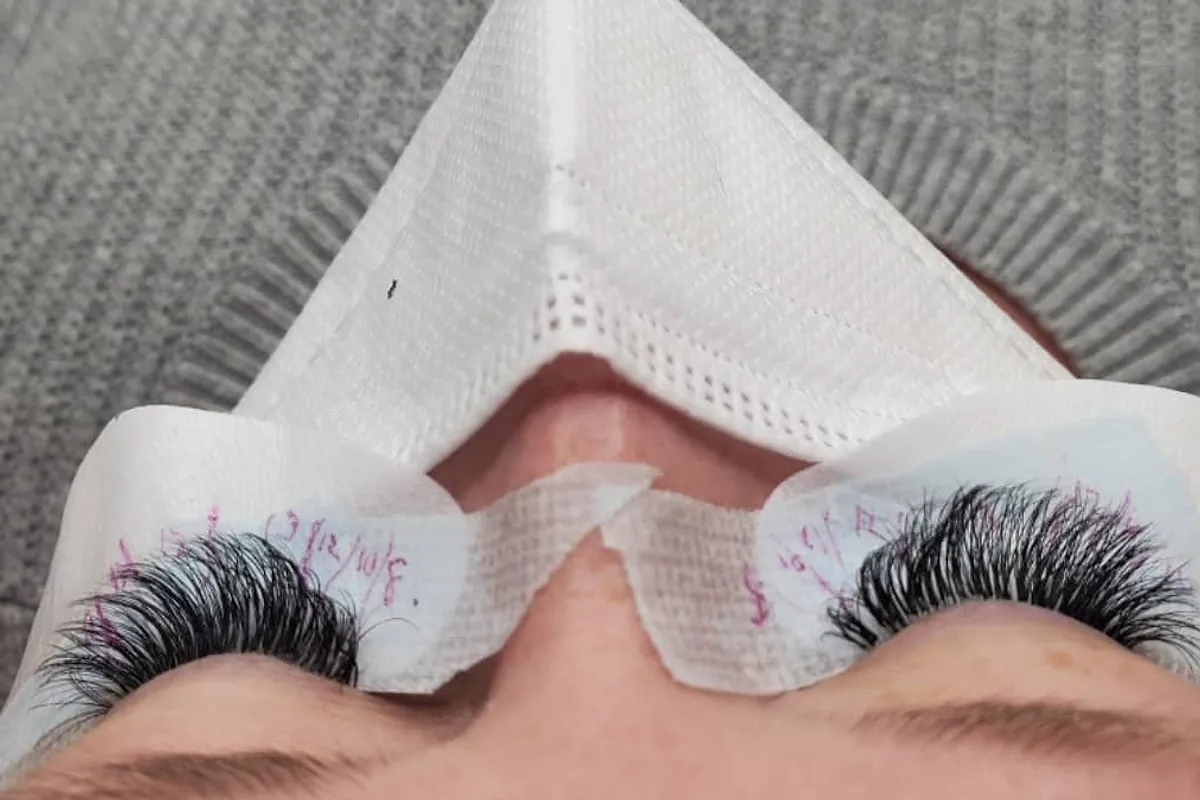
If you wore eye makeup, take it off first with an oil-free remover. Better still, skip mascara altogether: it clumps extensions and needs an oil-based remover to come off.
What to do and what to skip
| Do | Skip | Why |
|---|---|---|
| Keep them dry for the first 24 hours | Getting them wet on day one | The adhesive needs that time to fully set |
| Use your cleanser on the lash line every day | Oil-based cleansers, eye creams and makeup removers | Oil breaks down lash adhesive |
| Pat and rinse gently | Rubbing, wiping or scrubbing with a pad or towel | Friction and pressure wear the bond |
| Use warm water | Very hot water on your face | Heat hurt retention most in a lab test |
| Brush with a clean spoolie each morning | Mascara | It clumps extensions and needs an oil-based remover |
| Sleep on your back or side when you can | Sleeping face-down | It keeps pressure off the lashes overnight |
| Let loose extensions come out on their own | Pulling or picking at them | That can take natural lashes with them |
What happens if I don't wash them?
Debris builds up at the base of your lashes. In a 2025 survey, most people said they wash their face and lashes, but fewer used a cleanser made for eyelids (Alkalash et al., 2025). That's the case for a daily wash and regular fills.
For a deeper clean, Desiree offers a lash bath at the studio. In her words:
Help those lashes get squeaky clean and boost your retention with this service.From Desiree’s menu: Lash Bath
Book a Lash Bath ($15, 15 minutes) whenever your lashes need a reset. It adds to your daily wash rather than replacing it.
Why do extensions come off when I wash them?
Often because the natural lash underneath was ready to shed. Every extension or volume fan is bonded to a single natural lash, and natural lashes cycle out on their own: one full eyelash cycle takes about 4 to 11 months (Aumond and Bitton, 2018), so at any moment some lashes are near the end of theirs. A lash that's ready to go lets go at the first touch, and that touch is often your cleanser.
If you're losing more than usual, don't pick at them. Call or text Desiree at (971) 205‑2402 or send a note so she can see what's going on; her 90‑minute appointments are the ones she recommends "if you have had more shedding than usual." For gaps in the first week, read why extensions fall out after one week.
If there's redness, swelling, pain or any change in vision, contact Desiree and see a doctor.
Quick answers
- How long after getting lash extensions can I get them wet?
- Wait 24 hours. Keep your extensions dry for the first day so the adhesive can fully set. After that, water is fine: clean the lash line every day with a cleanser that has no oil in it, pat rather than rub, and brush them gently with a clean spoolie each morning.
- Can I shower with lash extensions?
- Yes, after the first 24 hours. Water on its own doesn't loosen set adhesive. Keep the water warm rather than hot, since warmth wore extension adhesive down faster in a lab test (Chiang et al., 2025), and pat the skin around your eyes dry instead of rubbing with a towel.
- What should I wash my lash extensions with?
- A gentle cleanser with no oil in it, patted along the lash line with a clean fingertip and rinsed gently. Skip oil-based cleansers, eye creams and makeup removers, because oil breaks down lash adhesive, and skip mascara, which clumps extensions. Brush them with a clean spoolie each morning.
- Does a lash bath help retention?
- It can. A deep clean lifts the oil, makeup and debris that collect at the base of your lashes, and oil wears lash adhesive down. Most people wash their face and lashes, but fewer use a dedicated eyelid cleanser (Alkalash et al., 2025). Desiree describes her Lash Bath as a way to help lashes get "squeaky clean and boost your retention," alongside your daily wash.

Who’s behind the answers
About the studio
Central Oasis is a lash and brow studio in Northeast Portland, led by Desiree, the lash and brow artist. Every service description in this diary quotes her own menu, word for word.
Book it
- Lash Bath$15 · 15 minutesBook Lash Bath (opens Square in a new tab)
- Classic Lash Fill (60 min)$55 · 60 minutesBook Classic Lash Fill (60 min) (opens Square in a new tab)
- Hybrid Lash Fill (90 min)$110 · 90 minutesBook Hybrid Lash Fill (90 min) (opens Square in a new tab)
Nothing is charged online; you pay at your visit.
Sources
- Zhou S, Chen F, Cheng Z, et al. (2024). Rapid water drainage on human eyelashes of a hydrophobic Brachistochrone fiber array. Science Advances.A lab study of natural and shed lashes showing they are shaped to drain water quickly, supporting that water itself isn't the enemy.
- Chiang S, Chang S-H, Yao K-C, Kuo P-Y, Hsu C-T (2025). AIoT-Based Eyelash Extension Durability Evaluation Using LabVIEW Data Analysis. Sensors.A lab test of extensions on a model lash line, not people, in which retention fell as the temperature rose from 15 °C to 35 °C.
- Alkalash SH, Alzubaidi HA, Alsuhaymi NM, et al. (2025). Knowledge and Practice of Eyelid Hygiene Among the General Population in Al-Qunfudah Governorate, Saudi Arabia: A Cross-Sectional Study. Cureus.A survey of eyelid hygiene in which most people washed their face and lashes but fewer used a dedicated eyelid cleanser, supporting a daily lash-line wash.
- Aumond S, Bitton E (2018). The eyelash follicle features and anomalies: A review. Journal of Optometry.A review of eyelash biology; it supports the 4-to-11-month full lash cycle, which explains why some extensions shed naturally.
Know someone with the same question?