Is there one best eyebrow shape for each face shape?
No. “Round face,” “oval face” and “square face” are broad geometry labels, not preference measurements. They can help someone describe proportions in a full-face image, but they do not tell us whether that person wants a straighter brow, a higher-looking arch, a softer tail, more visible fullness or almost no change.
The exact studies used here do not validate the familiar rule that one face category should receive one brow category. They tested preferences in particular images and participant groups. The useful conclusion for a boutique is narrower: preserve the visible geometry, keep each study's population attached, and ask the client which change she wants instead of converting a label into a prescription.
Visible geometry. A usable image may show the brow head, apex, tail, direction and coverage.
Group research. A study records how its participants answered; another sample may answer differently.
Your goal. Only the client can say which visible change she wants. Desiree confirms the service fit.
What do eyebrow-preference studies actually show?
They show variation—not a single transferable template. A 2007 study concluded that multiple eyebrow beauty ideals existed rather than one universal standard (Feser et al., 2007). A 2014 survey of Korean women found no significant difference in brow-archetype preference between respondents younger and older than 30 (Kim et al., 2014). That does not cancel the earlier paper; it shows why age cannot be treated as a dependable preference shortcut across studies.
| Study result | Exact reported pattern | What it does not authorize |
|---|---|---|
| Multiple ideals | At least three eyebrow beauty ideals were reported (Feser et al., 2007) | Choosing one shape for everyone |
| Age split did not hold | No significant preference difference above vs. below age 30 in one Korean survey (P = 0.1374) (Kim et al., 2014) | Inferring taste from someone's age or group label |
| Preference stayed divided | 48.33% preferred a wider angle, 28.33% a narrower angle and 23.33% no change in one surgical-planning sample (Rajabi et al., 2017) | Turning the largest subgroup into the client's answer |
| Overall did not mean universal | A 2023 survey generally favored one arched shape, but the result was not uniform across all subgroups (Richer et al., 2023) | Assigning a shape from a demographic subgroup |
Can an AI eyebrow-shape finder choose the best brow for me?
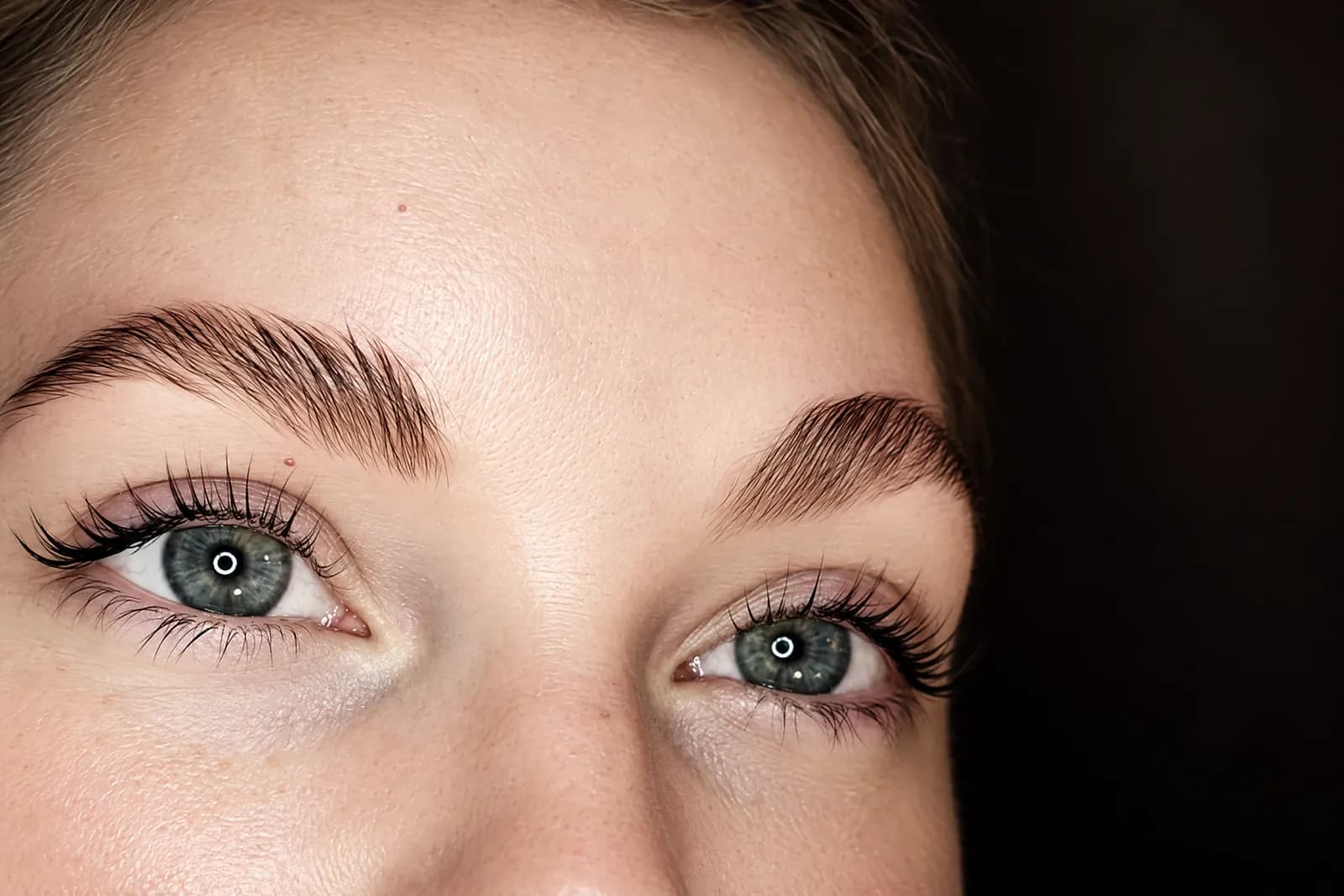
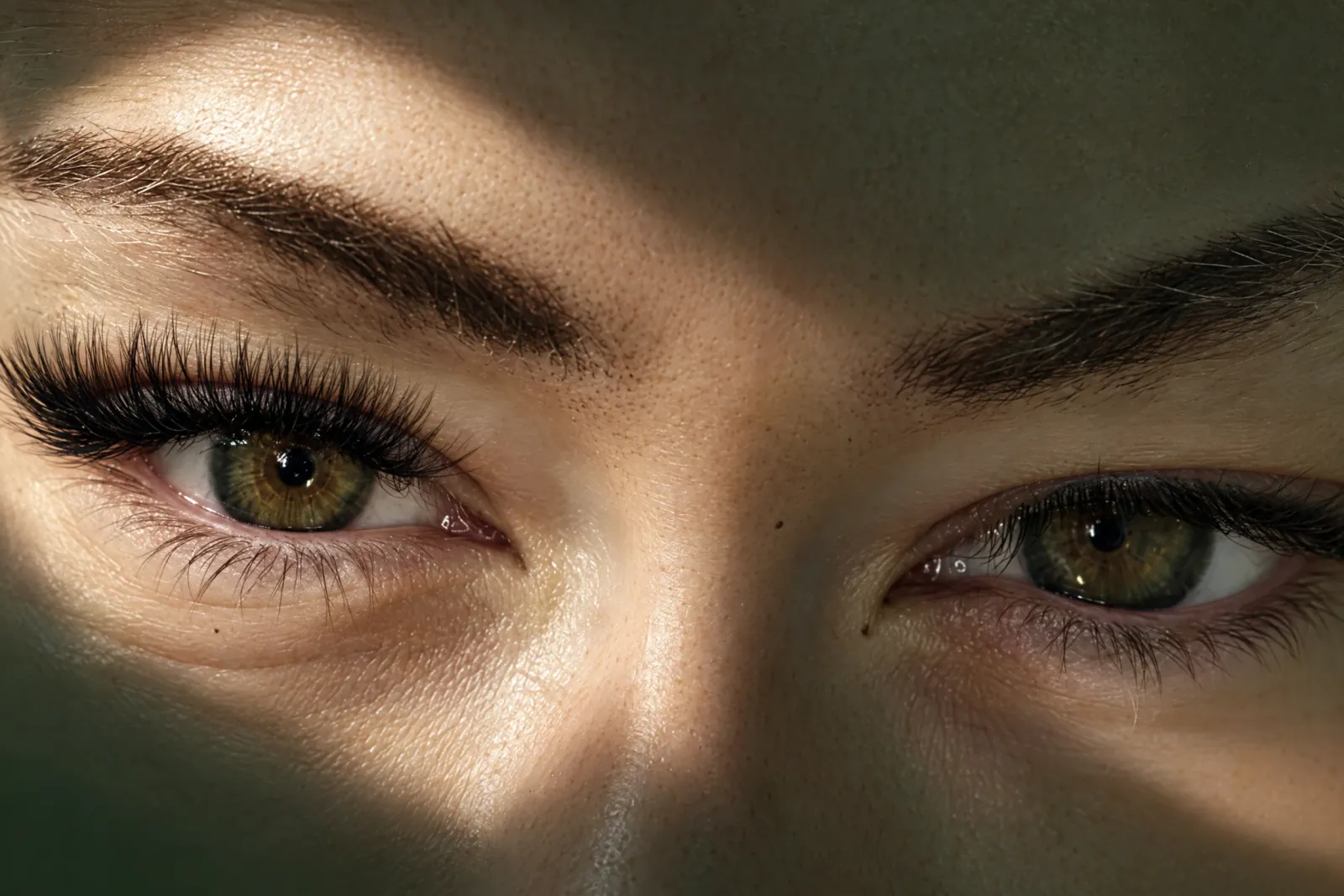
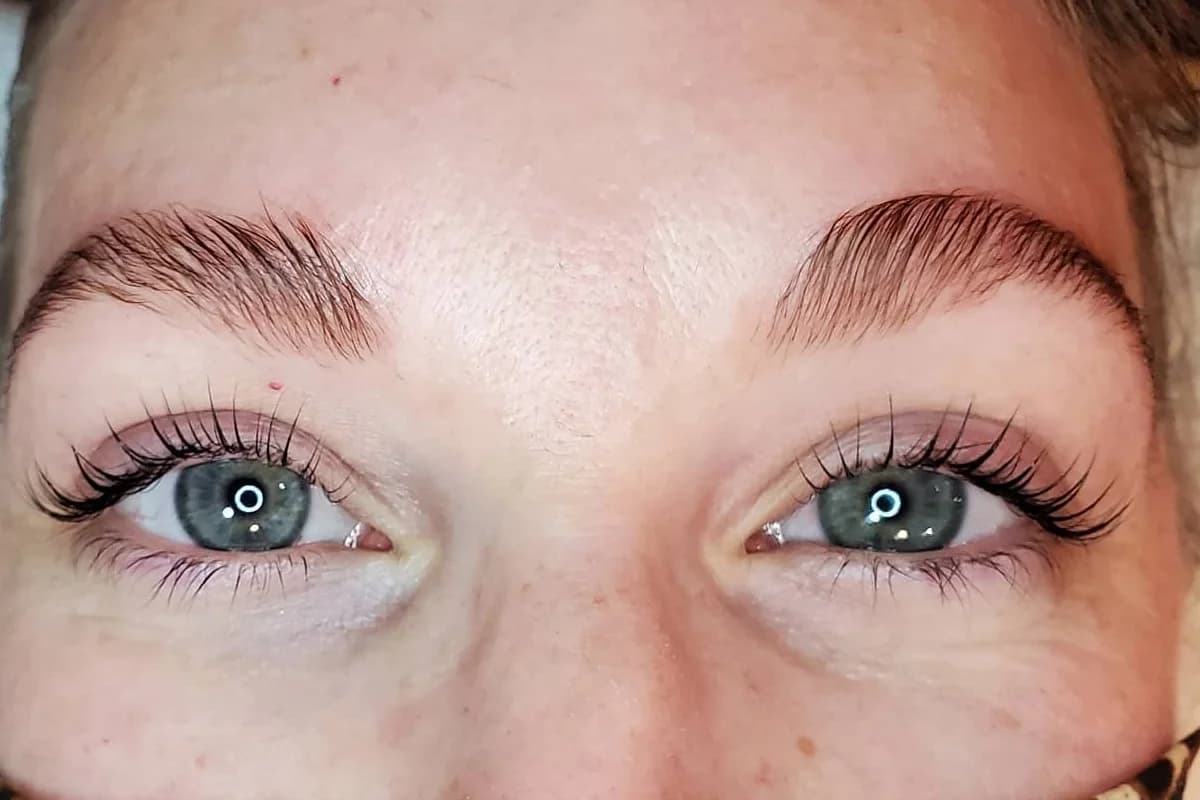
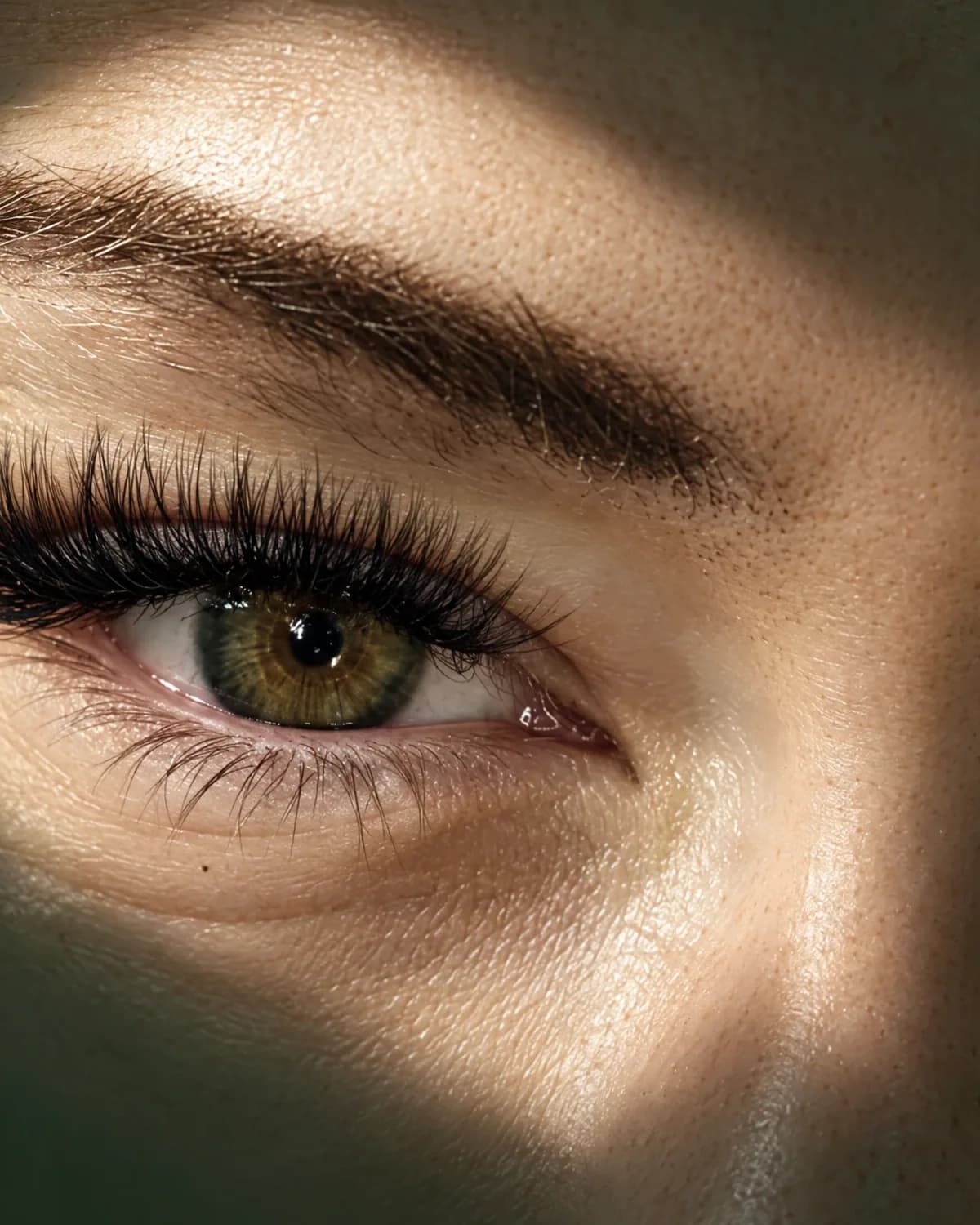
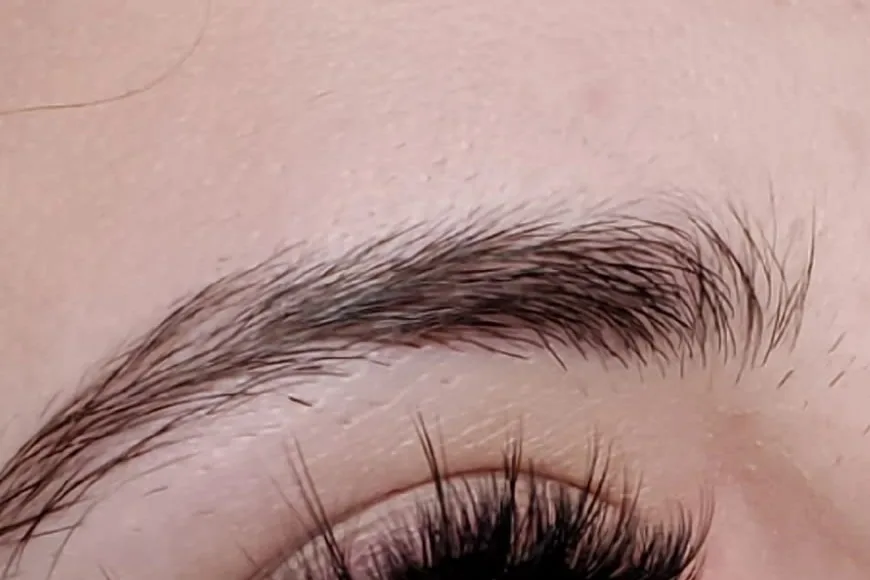
It can be useful as a mirror and a language tool, not as a taste detector. In a clear image, software may describe the visible brow head, apparent apex, tail direction, hair direction, coverage and differences between the two sides. The Central Oasis eye close-ups do not include enough of the whole face to classify a face shape reliably, and a full-face category still would not reveal personal preference.
- The image contributes: visible brow outline, hair direction, coverage, contrast and whether the frame is usable.
- The research contributes: examples of population-level preference variation and a warning against one universal template.
- You contribute: the reference, the feature you want emphasized or softened, and how much daily styling you want.
- Desiree confirms: what can be changed with shaping, tint or lamination on the current menu.
The AI should not guess demographic identity, health or taste from a face, then use that guess to select a brow. It should also abstain when lighting, framing, makeup, hair overlap or camera angle makes the visible geometry unreliable. That is not lost personalization; it is the point where a question is more accurate than a prediction.
How do I turn a brow reference into a useful appointment brief?
| Instead of saying | Point to | Tell Desiree |
|---|---|---|
| “I have a round face, so I need a high arch” | The exact rise and softness you like in the reference | “I want more lift here, but I do not want a sharp peak” |
| “The AI says this is my ideal brow” | Which simulated change looked useful | “I liked the straighter head and kept my current tail” |
| “Make both brows identical” | Where the visible difference bothers you, if anywhere | “This side feels heavier; keep the result natural rather than perfectly matched” |
| “Whatever suits me” | Fullness, definition, direction or cleanup | “My priority is a cleaner outline with soft color” |
What I like in this reference is [straighter / softer / fuller / more lifted]. What I do not want is [too dark / too thin / too sharp / too brushed up]. My priority is [shape / color / hair direction], and I want the daily result to feel [low-maintenance / defined / flexible]. Which current service changes that part?
Which Central Oasis brow appointment changes what?
For outline cleanup, Brow Wax is 15 minutes at $10. For outline plus color, Brow Shape and Tint is 30 minutes at $25. Lamination is a different lever: it redirects existing brow hairs. Compare lamination, tint and shaping before assuming the strongest-looking change is the right service.
Here is how Desiree describes the shape-and-color appointment on the current menu:
Semi-permanent tinting of the brows and shapingFrom Desiree’s menu: Brow Tint and Shape
A reference can start the conversation, but it cannot promise the same result on different starting hair, skin contrast or growth direction. Send the photo, name the visible part you like, and let Desiree explain what the booked service can change. For method choices, use wax, tweezing and threading; for hair direction versus pigment in skin, compare lamination and microblading.
Quick answers
- What eyebrow shape is best for my face?
- There is no research-backed face-shape formula that identifies one best brow for you. Published studies found multiple ideals, divided preferences and subgroup variation (Feser et al., 2007) (Kim et al., 2014) (Rajabi et al., 2017) (Richer et al., 2023). Use your face and brow geometry to describe the starting point, then name the visible effect you want. Your preference—not a demographic label—should drive the consultation.
- What eyebrow shape is best for a round face?
- A round-face label does not automatically require a high arch or any other single brow. Point to the rise, thickness, tail and softness you like in a reference, then compare that with your current hair direction and maintenance goal. Central Oasis can discuss shaping, tint or lamination without pretending the face label predicts your taste.
- Can AI find my ideal eyebrow shape?
- AI can simulate or describe visible changes, but it cannot know which one you prefer from your face alone. The Central Oasis camera may organize visible brow observations when the image is usable; it does not infer demographic identity, health or taste, and its eye close-ups are not a full-face shape assessment. You choose the goal and Desiree confirms the service fit.
- Should my eyebrows be perfectly symmetrical?
- Perfect matching is not required for a successful brow result. A clear image can help you point to a visible difference, but camera angle, expression, lighting and natural hair direction all affect the comparison. Tell Desiree which difference matters to you and whether you want it softened, kept or simply cleaned up; do not let an app invent the goal.
Who’s behind the answers
About the studio
Central Oasis is a lash and brow studio in Northeast Portland, led by Desiree, the lash and brow artist. Every service description in this diary quotes her own menu, word for word.
Book it
- Brow Shape and Tint$25 · 30 minutesBook Brow Shape and Tint (opens Square in a new tab)
- Brow Wax$10 · 15 minutesBook Brow Wax (opens Square in a new tab)
Nothing is charged online; you pay at your visit.
Sources
- Feser DK, Gründl M, Eisenmann-Klein M, Prantl L (2007). Attractiveness of Eyebrow Position and Shape in Females Depends on the Age of the Beholder. Aesthetic Plastic Surgery.A portrait-ranking study supporting multiple eyebrow beauty ideals; it does not assign a brow to an individual client or validate a face-shape service formula.
- Kim SK, Cha SH, Hwang K, Hwang SW, Kim YS (2014). Brow Archetype Preferred by Korean Women. The Journal of Craniofacial Surgery.A survey of Korean women whose age-group result did not reproduce a simple age-to-preference rule; it is not a Portland preference study or an identity prescription.
- Rajabi MT, Makateb A, Hassanpoor N, et al. (2017). Determinative Factors in Surgical Planning of Eyebrow Cosmetic and Reconstructive Surgery. Clinical Ophthalmology.A surgical-planning sample with divided preferences for wider, narrower or unchanged brow angle; the distribution is not a beauty-service recommendation.
- Richer V, Berkowitz J, de Almeida AT (2023). Eyebrow Shape Preference Across Age, Gender, and Self-reported Ethnic Group. Dermatologic Surgery.An online preference survey whose overall arched-brow result was not uniform across every subgroup; its group result cannot reveal an individual's taste.
Know someone with the same question?