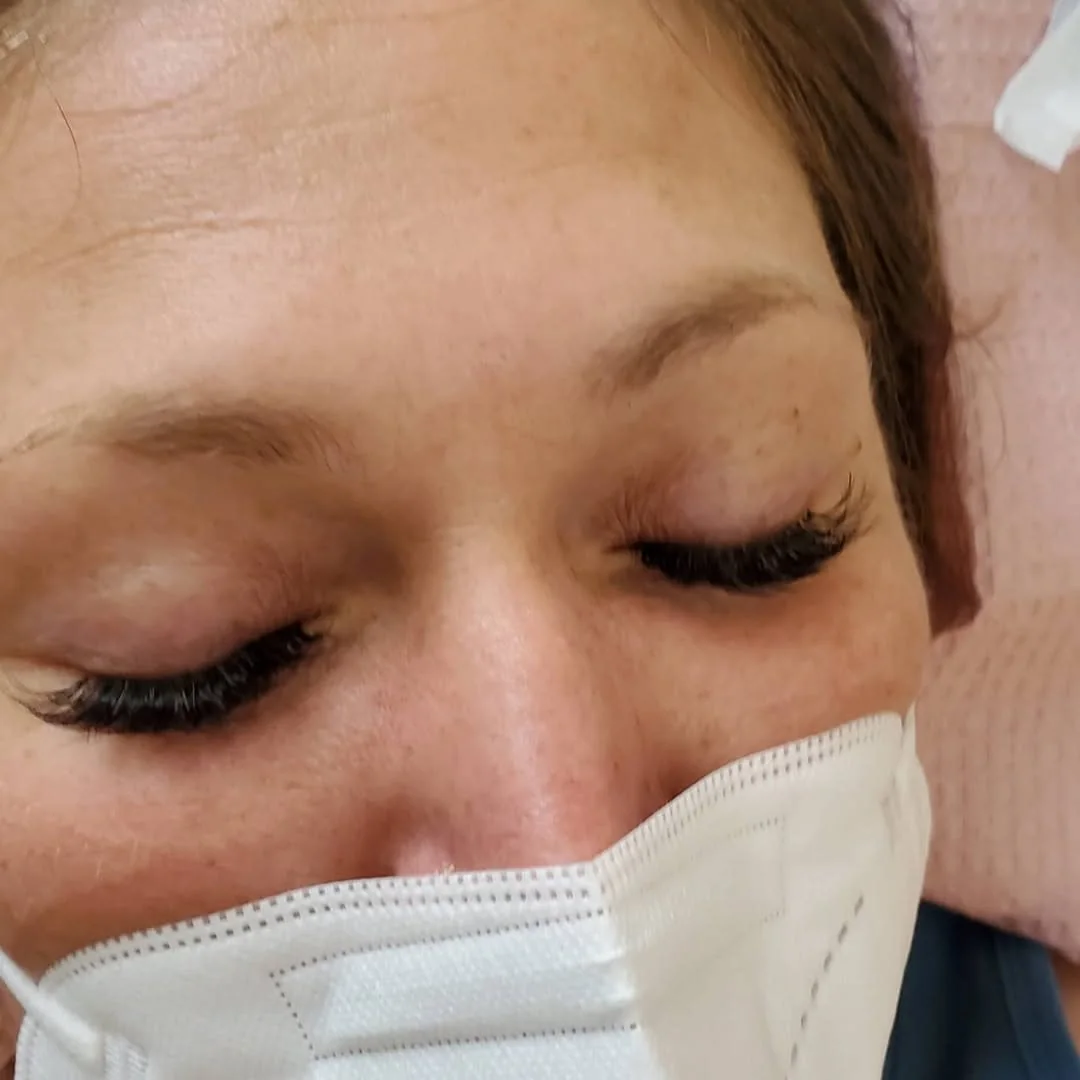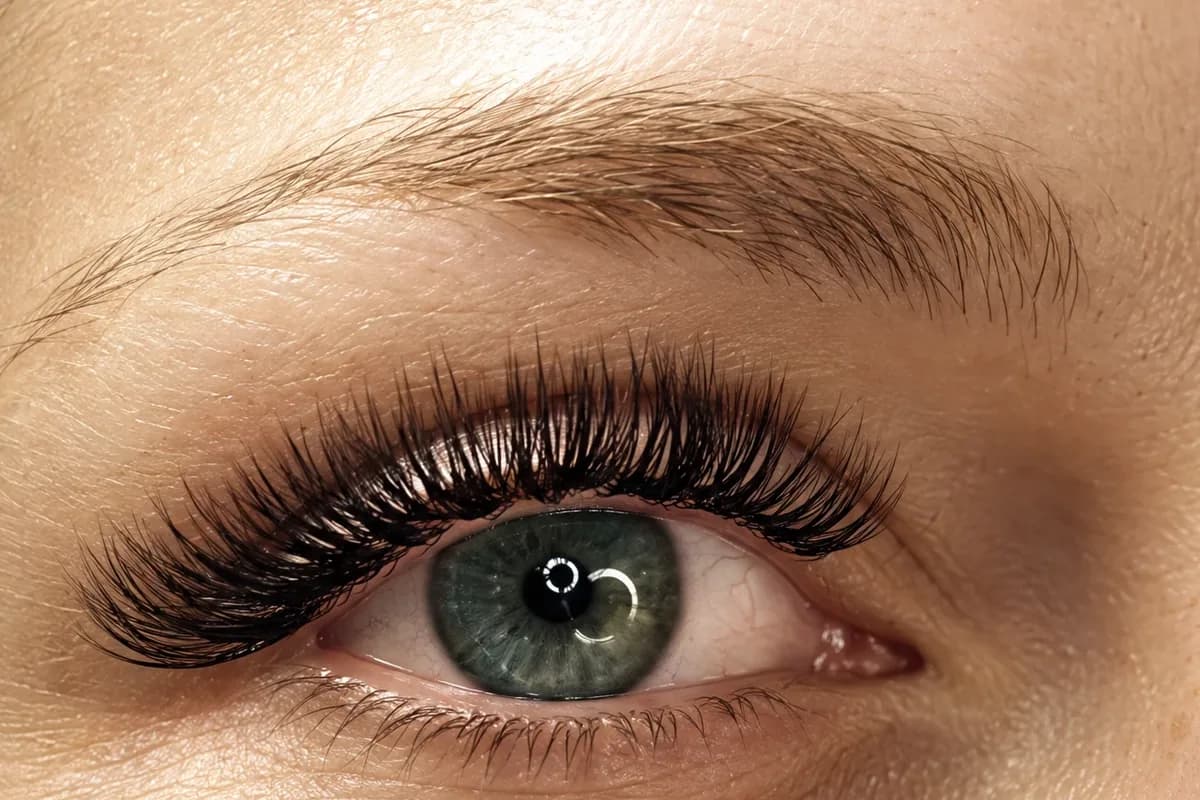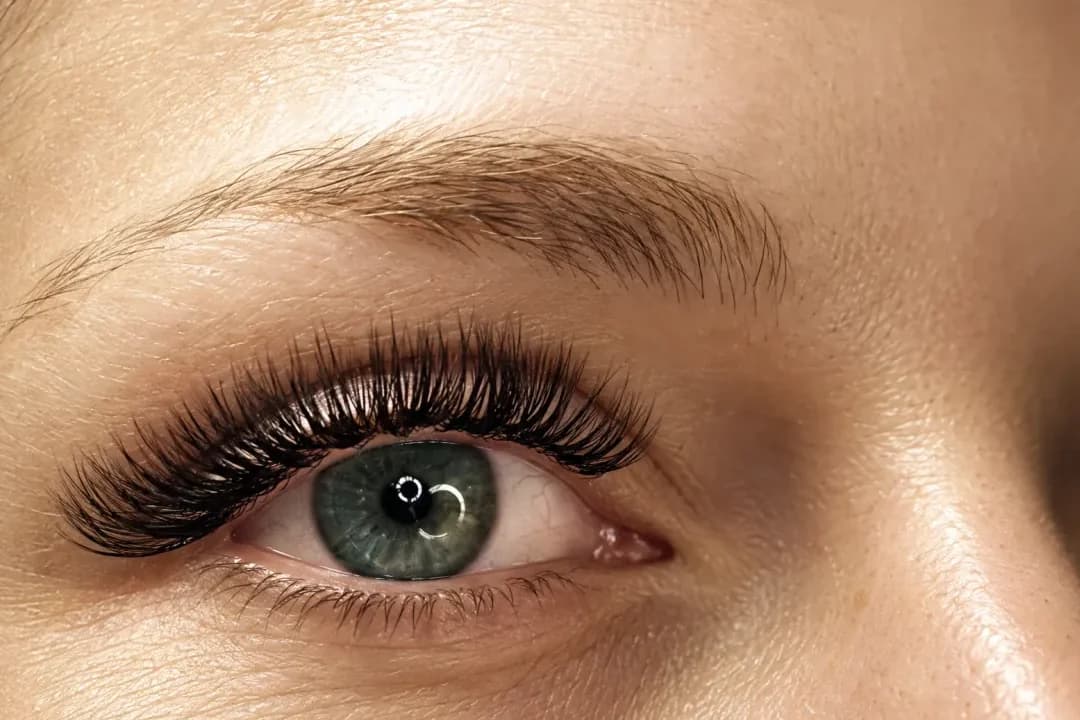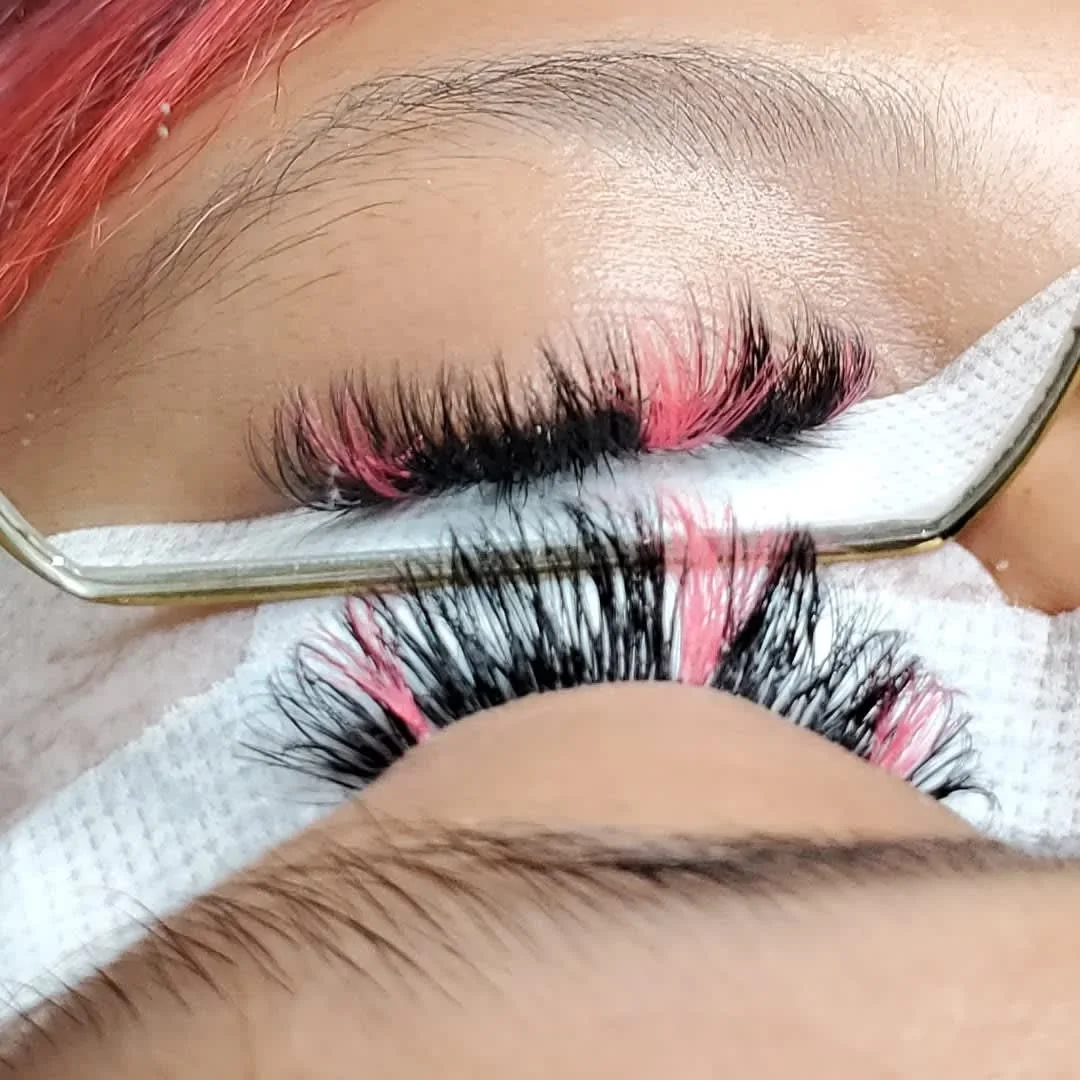
Why is a lash inspiration photo a starting point?
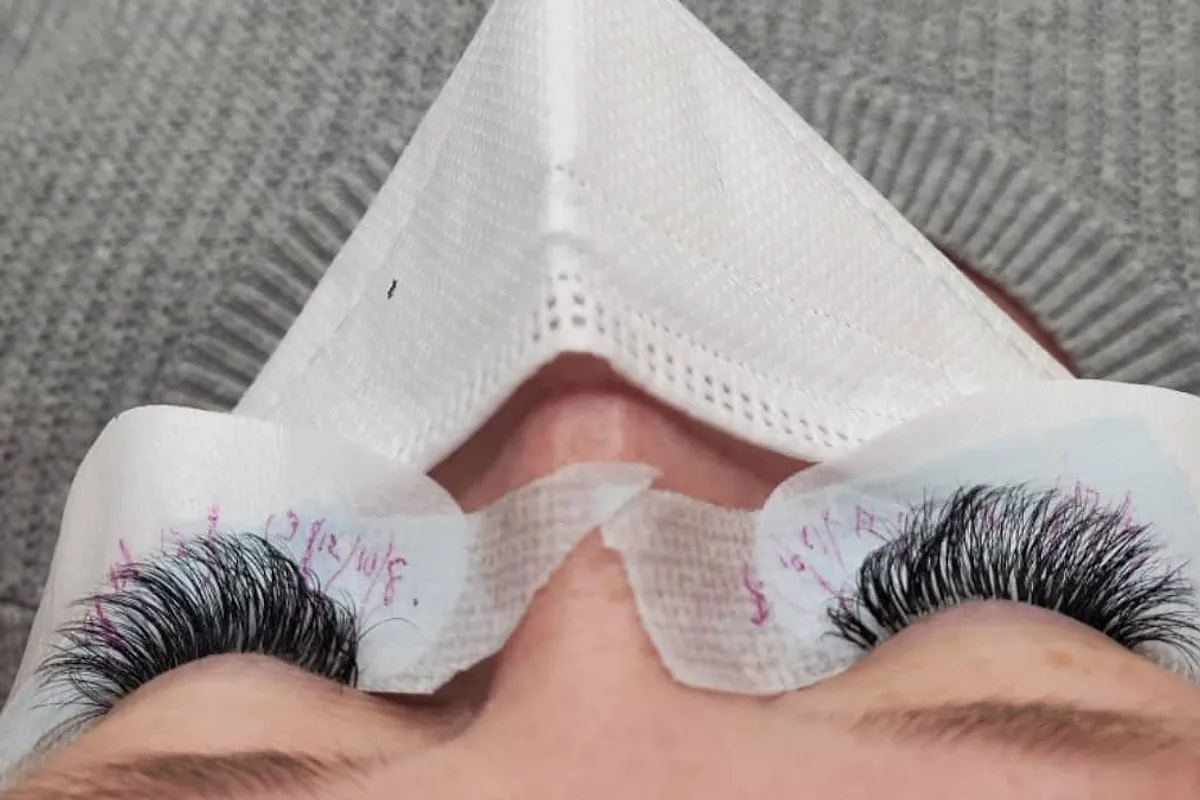
Because it is rich in appearance and thin in provenance. You can see an edited moment from one angle, under one light, on one person's eyes. You usually cannot see the natural-lash density, which fibers were used, the curl system, adhesive, lengths, mapping notes, retouching or how the set looked after normal wear.
That does not make the photo useless. It makes it a visual brief. The reliable move is to separate what is visible from what is hidden, then rank the visible details. A request such as “I like the pink accents, narrow texture and soft base” is actionable. “Copy this exactly” asks the image to carry facts it does not contain.
Photo shows. Apparent texture, darkness, direction, length pattern and emphasis.
Customer ranks. Two visual priorities, one boundary and the realistic upkeep rhythm.
Desiree adapts. The listed service and design are confirmed against the lashes in front of her.
What should I point to in a lash reference photo?
| Look at | Describe | Add a boundary |
|---|---|---|
| Base | Airy, medium or dark | I do not want a solid band |
| Tips | Even, fluffy, narrow points or pronounced spikes | I want texture, but not large gaps |
| Length pattern | Where the longest visible points appear | Keep the overall length shorter than this |
| Direction | Rounded, lifted, swept or level in the open-eye view | I care more about lift than outer length |
| Accent | Color, contrast or repeated feature | Use less color than the reference |
Pick the two features that would make the result feel right even if another feature changes. Then choose one boundary—the part that would make the set feel too long, dark, spiky or busy. Priorities resolve conflicts better than collecting ten images with no explanation.
What I want from this photo is [priority one] and [priority two]. I do not want [boundary]. If all three cannot transfer to my lashes, preserve [the most important priority] first.
What does the research add to a reference-photo conversation?
A Korean study found that participants' cosmetic preference patterns were strongly associated with their natural eyelash shape (Kwak et al., 2002). It studied mascara preferences, not extension maps, and it cannot predict what any Portland client wants. Its useful transfer is that starting structure and desired effect deserve separate fields rather than being treated as one fixed photo recipe.
A separate extension-preference survey recorded a specific combination of thickness, color, texture, curl, length and density preferences in its participant group (Lee and Han, 2017). That result is not a universal recommendation. It demonstrates how many variables hide behind a finished appearance—and why a screenshot without those fields is not a specification.
What can the Central Oasis lash camera do with a reference?
The current camera path is designed around the customer's own close-ups and stated goal. For a clear image, an AI can describe bounded appearance cues such as visible coverage, separation, apparent direction and where emphasis sits. It should not claim the fiber dimensions, product, technique, comfort, history or exact map are visible when they are not.
- Observable: what appears in this image, with image-quality limits.
- Requested: which visible details the customer wants and which she does not.
- Retrieved: relevant menu facts and exact research context, with transfer limits.
- Confirmed: the actual service and design decision Desiree makes in person.
That separation is how the learning corpus can improve recommendations without overclaiming. New images can improve the vocabulary for what is visible. Desiree's corrections can improve service translation. Neither source turns a photograph into hidden product metadata.
How do I make my inspiration photo appointment-ready?
- Choose one lead image rather than a feed of competing looks.
- Mark the two visible details that matter most to you.
- Name one boundary and your preferred maintenance rhythm.
- Send or bring the uncropped image if the open-eye shape is important.
- Treat Desiree's plan as an adaptation, not a promise of facial duplication.
If the photo is labelled with a trend term, translate that term too. Angel versus hybrid lashes shows why a social label may not equal a listed technique. Natural-looking extensions turns another broad word into a brief. Classic, hybrid and volume explains the current construction families.
Central Oasis's full-set options are Classic Lash Full Set ($150), Hybrid Lash Full Set ($170), Volume Lash Full Set ($235) and Mega Volume Lash Full Set ($275). You do not need to identify the right one from the screenshot. Your job is to explain the effect. Desiree's job is to translate that effect into the current service and the lashes she can examine directly.
Quick answers
- Can my lash extensions look exactly like a photo?
- An artist can use the photo as a visual target, but an exact copy is not a responsible promise. Starting lashes, eye-area geometry, products, lighting and editing differ. Choose the details that matter most so the result can preserve the effect without pretending every hidden input matches.
- How many lash inspiration photos should I bring?
- Start with one lead photo and optionally one boundary photo showing what feels like too much. Too many unrelated images can hide the decision. On the lead image, point to two priorities; on the boundary image, identify the single feature you want to avoid.
- Can AI tell which lash map was used from a picture?
- Not reliably from appearance alone. A clear photo may show where visible length or emphasis appears, but it does not reveal the application record, fiber dimensions, curl system or every decision behind the set. The AI should describe the visible pattern and abstain from hidden specifications.
- What should I say when I show my lash artist a photo?
- Name the two visible details you want most, one feature you do not want and which priority should survive if the whole image cannot transfer. Add your preferred maintenance rhythm. That gives the artist a ranked brief instead of an impossible request to duplicate another person's result.
Who’s behind the answers
About the studio
Central Oasis is a lash and brow studio in Northeast Portland, led by Desiree, the lash and brow artist. Every service description in this diary quotes her own menu, word for word.
Book it
- Classic Lash Full Set$150 · 120 minutesBook Classic Lash Full Set (opens Square in a new tab)
- Hybrid Lash Full Set$170 · 150 minutesBook Hybrid Lash Full Set (opens Square in a new tab)
- Volume Lash Full Set$235 · 180 minutesBook Volume Lash Full Set (opens Square in a new tab)
- Mega Volume Lash Full Set$275 · 180 minutesBook Mega Volume Lash Full Set (opens Square in a new tab)
Nothing is charged online; you pay at your visit.
Sources
- Kwak T-J, Lee S-M, Cho W-G (2002). The character of eyelashes and the choice of mascara in Korean women. Skin Research and Technology.A Korean mascara-preference study linking participant preference patterns with natural eyelash shape; it does not prescribe extension design or predict an individual client's taste.
- Lee K-H, Han C-J (2017). Usage of, Preference for, and Satisfaction with Extended Eyelashes and False Eyelashes in Adult Women. Asian Journal of Beauty and Cosmetology.A South Korean survey recording multiple extension-preference variables in one participant group; it is not an individual prescription or a reference-photo decoder.
Know someone with the same question?