What does it mean when one eye loses more extensions?
It means the two sides look different at this moment. That is worth recording, but it is not enough to decide whether the difference came from natural shedding, attachment, products, rubbing, sleep position or more than one of those at once.
Natural lashes do not all shed together. A review of eyelash biology describes separate growth, transition and resting phases, with a complete lash cycle spread across months rather than one synchronized event (Aumond and Bitton, 2018). An international cosmetics report says people typically lose and replace between 1 and 4 lashes a day (Sullivan et al., 2023). Those findings explain ongoing turnover; neither study predicts which eye will look thinner this week.
How should I compare both eyes?
| Notice | Record | Do not conclude |
|---|---|---|
| Timing | Appointment date and the first day one side looked different | That the change happened all at once |
| Location | Inner, center or outer area; one clear gap or overall thinning | That the location proves sleep, rubbing or application |
| Fallen pieces | Whether a fine natural lash is visibly attached | That one piece explains the whole set |
| Symptoms | Any redness, swelling, pain, itching or vision change | That the symptom's cause is settled |
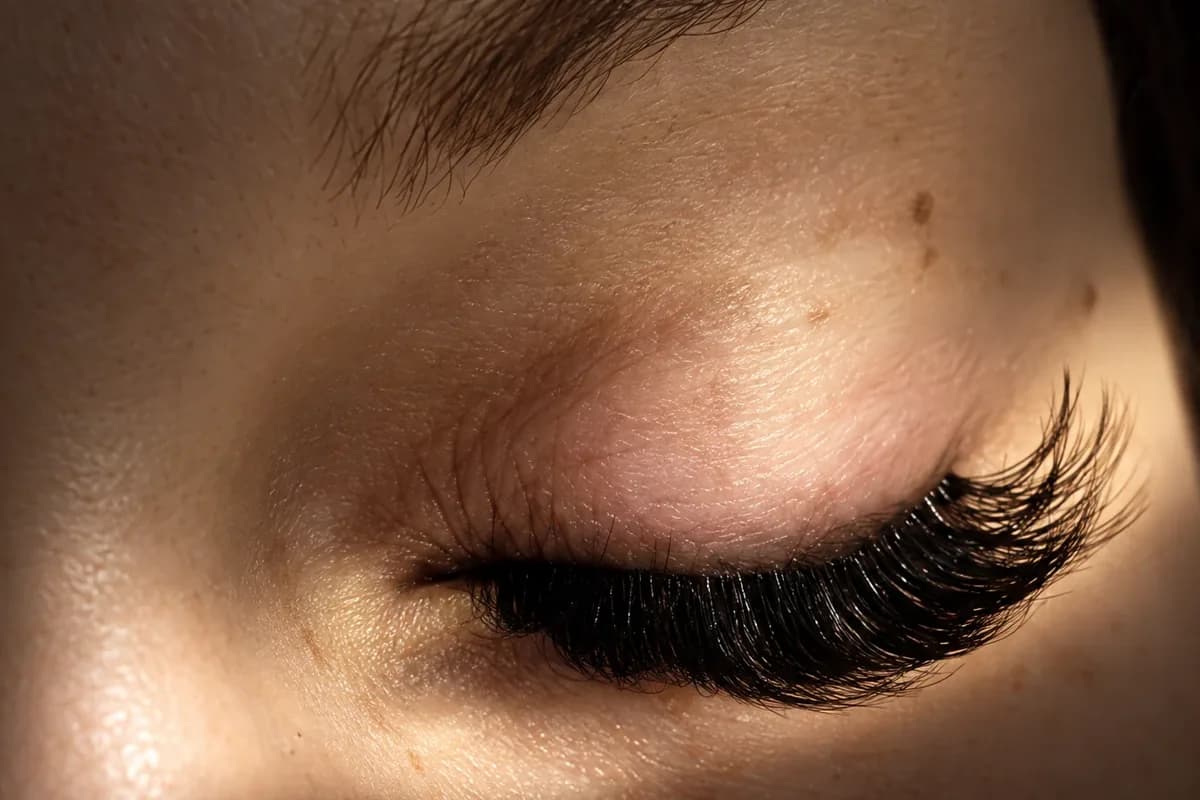
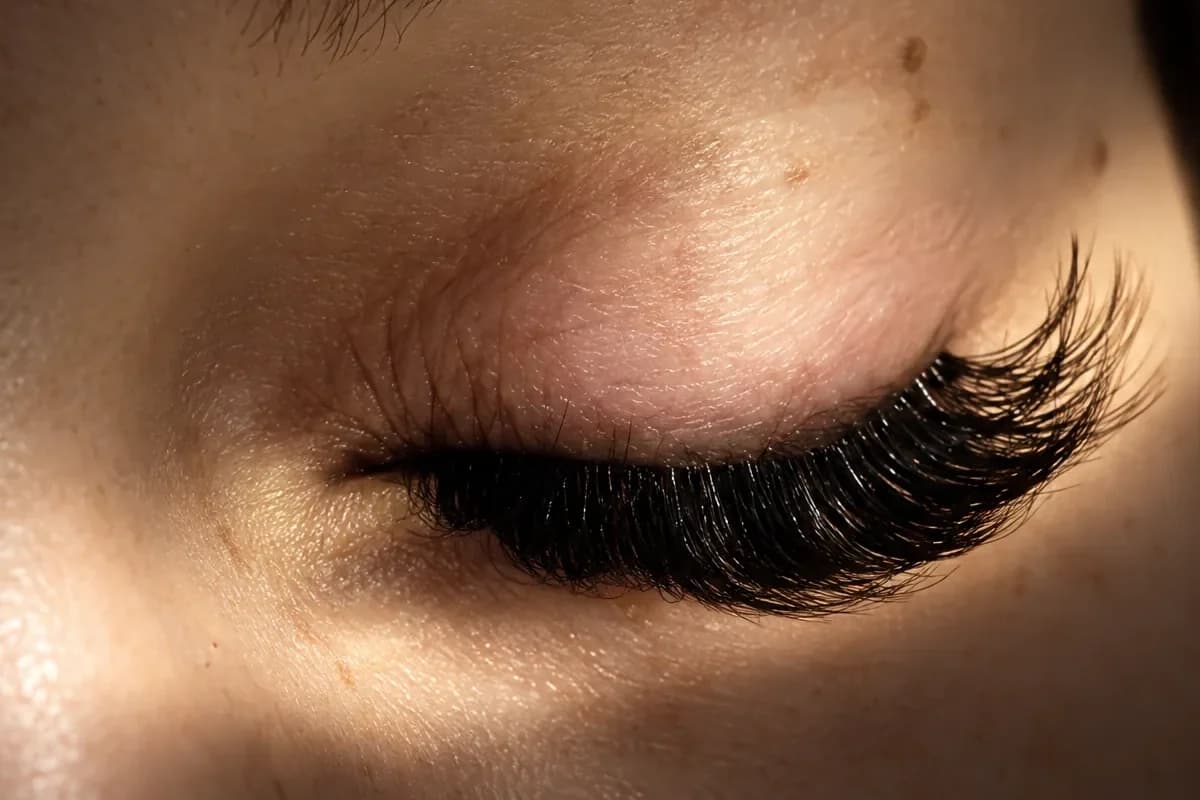
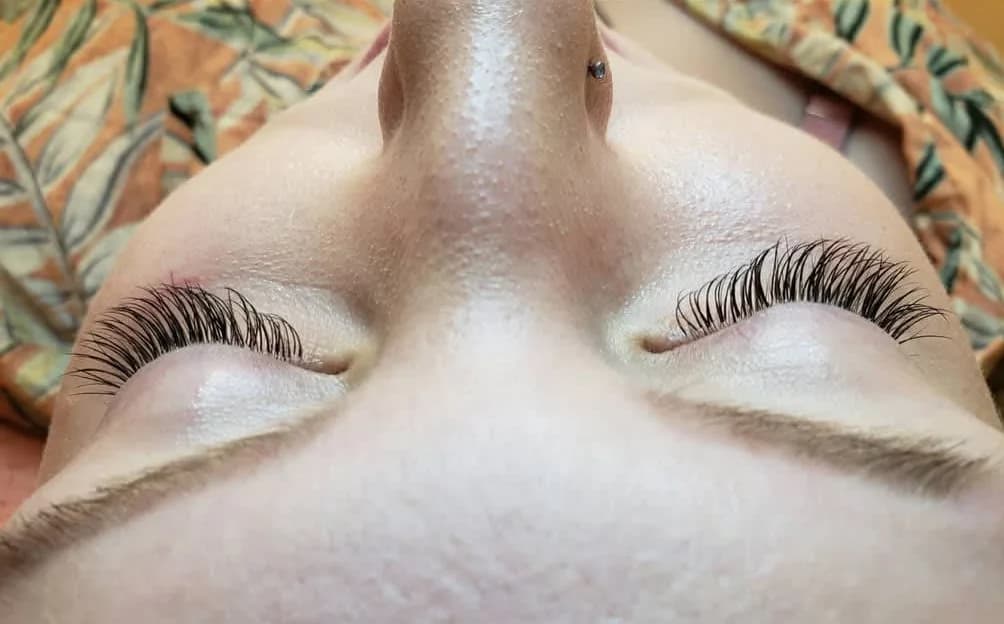
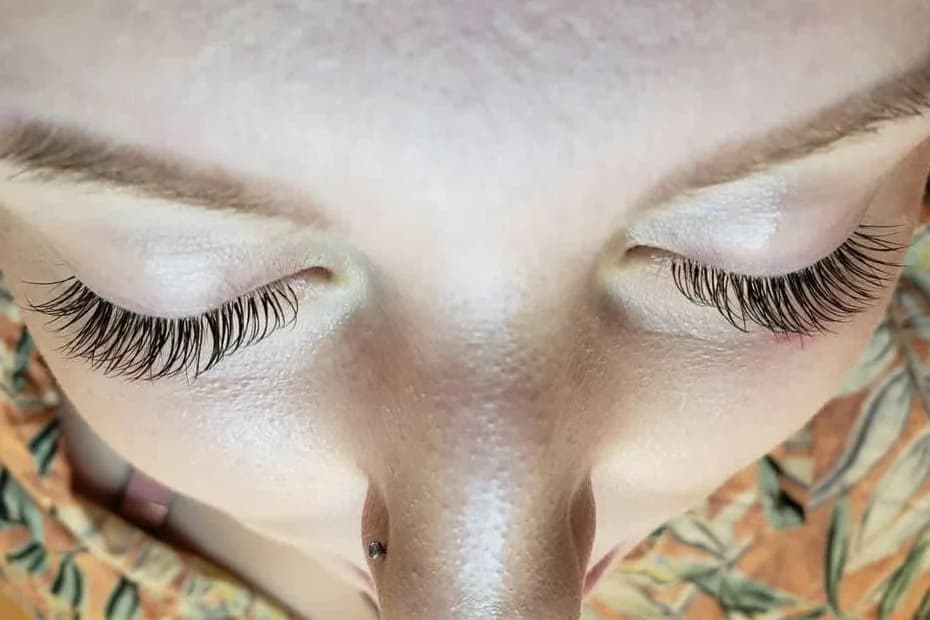
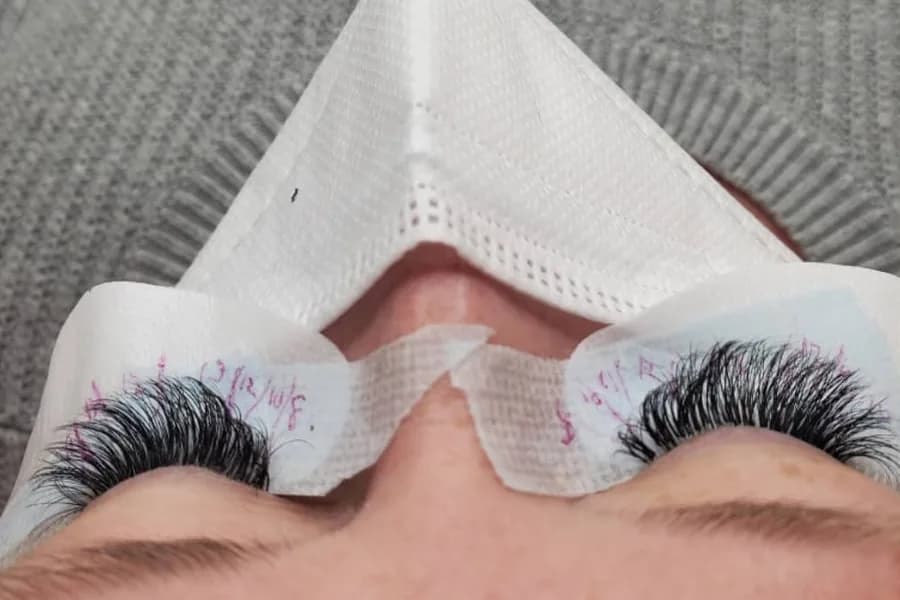
Same light and angle. Frame both eyes the same way so location and overall fullness can be compared.
Record the difference. Note where and when it appeared; the image documents a pattern, not its cause.
Take one straight-on photo and one slightly downward-looking photo in soft, even light. Keep the distance and angle the same for both eyes. A matched pair makes the pattern easier to inspect than two extreme close-ups taken from different directions.
Do not separate, tug or remove extensions to make the difference easier to see. That changes the set you are trying to document and can take natural lashes with it. If a loose piece is uncomfortable, contact Desiree instead.
Which details are useful to share?
- When: the appointment date and when the asymmetry first stood out.
- Where: the exact area that looks lighter on each eye.
- What came away: a natural lash with an extension, an extension alone, or no pieces you noticed.
- What touched the area: cleanser, makeup remover, eye cream, mascara, heat or steam.
- What you felt: no symptoms, or any irritation that changes the next step.
Hi Desiree, my appointment was on [date]. I first noticed my [left/right] eye looking thinner on [day], mostly at [inner/center/outer area]. The pieces I saw [did/did not] have a natural lash attached. I have matching photos of both eyes. What would you like me to do next?
Should I book a fill or ask first?
Ask first when the difference appeared quickly, one area has a clear gap, or you are unsure which appointment fits. Call or text Desiree at (971) 205‑2402, or send a note through the contact page. She can decide whether photos are enough to suggest a fill, a longer appointment or an in-person look.
Desiree's menu already gives extra time to a set with more shedding:
This appointment is recommended if it has been 2-3 weeks since your last lash appointment, or if you have had more shedding than usual. This appointment can be booked without having lash extensions currently on.From Desiree’s menu: 90 Minute Classic Lashes
For a broader first-week check, read why lash extensions fall out after one week. For the routine between visits, see washing lash extensions and when to book a fill.
Quick answers
- Is it normal to lose more lash extensions on one eye?
- It can happen, but the side-to-side pattern does not explain itself. Compare when it began, where the set looks thinner and whether fallen pieces have a natural lash attached. Send matching photos to Desiree rather than deciding from the side alone.
- Does sleeping on one side make lash extensions fall out?
- Friction may be one detail to mention, but sleep position cannot be proven as the cause from a thinner-looking eye. Note your usual sleep side alongside products, rubbing, timing and the pattern on the lash line, then let Desiree assess the whole set.
- Can a photo show why one eye lost more lash extensions?
- No. A matched pair of photos can show where one side looks different and help track change. It cannot recreate the attachment history, identify every shed lash or determine the cause of irritation. Use it as a record for Desiree, not a verdict.
- Should I book a fill when one eye is thinner?
- Ask Desiree first if the difference appeared quickly or you are unsure which appointment fits. Her longer fill appointments are intended for more shedding than usual, but she can tell you whether that is the right next step after seeing the pattern.

Who’s behind the answers
About the studio
Central Oasis is a lash and brow studio in Northeast Portland, led by Desiree, the lash and brow artist. Every service description in this diary quotes her own menu, word for word.
Book it
- Classic Lash Fill (90 min)$105 · 90 minutesBook Classic Lash Fill (90 min) (opens Square in a new tab)
- Hybrid Lash Fill (90 min)$110 · 90 minutesBook Hybrid Lash Fill (90 min) (opens Square in a new tab)
- Volume Lash Fill (90 min)$130 · 90 minutesBook Volume Lash Fill (90 min) (opens Square in a new tab)
Nothing is charged online; you pay at your visit.
Sources
- Aumond S, Bitton E (2018). The eyelash follicle features and anomalies: A review. Journal of Optometry.A review of eyelash biology; it supports that a complete lash life cycle is spread across months, not synchronized across one lash line.
- Sullivan DA, da Costa AX, Del Duca E, et al. (2023). TFOS Lifestyle: Impact of cosmetics on the ocular surface. The Ocular Surface.An international report on cosmetics and eye health; it supports that people typically lose and replace between 1 and 4 lashes a day.
Know someone with the same question?