Why do irritation and allergy sound so similar online?
Because readers search with symptom words, while the cause depends on more than appearance. Redness, itching, puffiness, watering, burning and soreness can occur in more than one process. Even the timing can overlap. A list that assigns one symptom to “irritation” and another to “allergy” looks decisive, but it skips the examination, exposure history and testing that may be needed.
The research makes that limit concrete. A Japanese survey of women who had experienced extensions recorded red eyes, pain and itchy swollen eyelids among reported health problems (Amano and Nishiwaki, 2013). Those are important symptoms, but the survey claim does not assign each report to glue allergy, irritation, placement, remover or another cause. The evidence supports attention and follow-up—not a symptom-to-cause shortcut.
What can you tell before a clinician evaluates it?
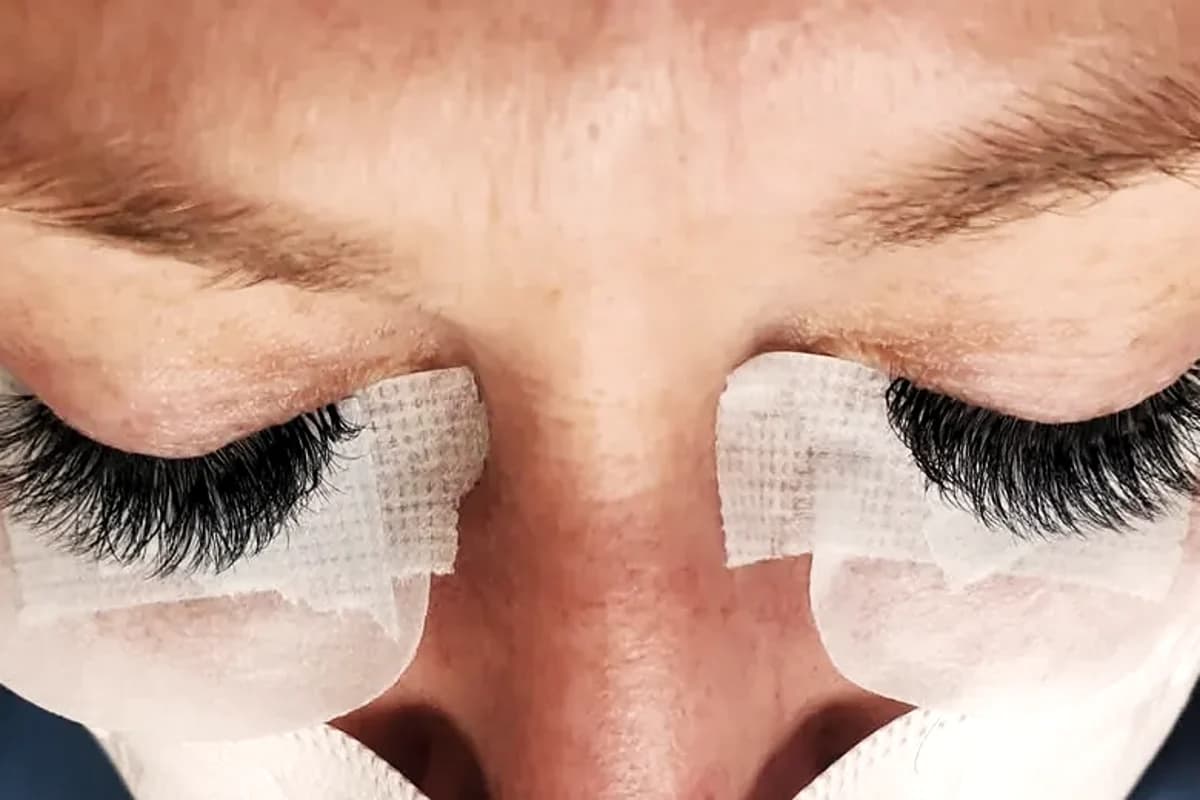
Observe. Redness, puffiness, watering and flaking can be recorded without naming a condition.
Reconstruct. Timing, products, one or both eyes and felt symptoms build the exposure history.
Assess. The cause belongs to a qualified clinician; the studio supplies service context.
| Layer | What you can record | Who interprets it |
|---|---|---|
| Visible | Redness, puffiness, flaking, watering or discharge | You can describe and document it |
| Felt | Itching, burning, soreness, pain or light sensitivity | You report it directly |
| Exposure | Adhesive, tape, remover, cleanser, makeup and timing | Desiree can provide service and product context |
| Cause | Irritant, allergic, infectious, mechanical or unrelated | A qualified clinician determines this |
This layered view is more useful than a quiz. It preserves everything the customer, camera and studio actually know, then hands the unresolved cause to the person qualified to decide it. That is also how the Central Oasis camera is built: it can note a visible change and withhold a lash recommendation, but it cannot turn pixels into an allergy label.
What timeline should I write down?
Start before the appointment. Note whether your eyes or lids already felt dry, itchy or sore; which service and add-ons you received; when each change began; and what you did afterward. Include remover, cleanser, eye drops, makeup, false lashes and home adhesives. Do not leave out a product because it seems unrelated—the point is to give the next person the full sequence.
- Before: record any existing eye or lid change and any past product reaction.
- During: note unusual stinging, watering, discomfort or adhesive contact if you remember it.
- After: write when the first visible or felt change appeared and whether it progressed.
- Now: note whether symptoms affect one eye or both and whether vision has changed.
A case report involving latex-containing false-eyelash glue documented redness and swelling in both eyelids (Mimura, 2013). That report shows why the product and distribution matter, but one bilateral case does not create a rule that both eyes means allergy—or that one eye means irritation. Pattern is context, not a verdict.
Both lids looked normal before my appointment. I first felt [itching, burning, soreness or pain] at [time], and I noticed [visible change] at [time]. It affects [one eye or both]. Since the service I used [products]. My vision is [unchanged or changed].
What should I do instead of guessing?
Do not try another adhesive, apply a random treatment or wait for a fill to see what happens. Contact Desiree with the timeline and photos so she can provide the exact service context. If symptoms are active, ask a clinician what level of care is appropriate. Pain, marked swelling, discharge or a change in vision should move out of salon troubleshooting.
If you are planning a future service after a past reaction, tell Desiree before booking and ask about a patch test 24 to 48 hours ahead. That is a pre-service information step, not proof that a product is universally safe and not a substitute for medical evaluation of an active reaction.
Quick answers
- How can I tell lash glue irritation from an allergic reaction?
- Not reliably from a symptom checklist. Describe what is visible, what you feel, when it began and every product used around the eyes. Contact Desiree for service details and a clinician for the cause. Pain, marked swelling, discharge or any change in vision should not be handled as routine salon troubleshooting.
- Does burning during lash extensions mean I am allergic?
- Burning is a feeling that deserves attention, but it does not identify an allergy by itself. Tell the artist immediately during a service. Afterward, record when it began and whether redness, watering, pain or vision change followed. Contact Desiree and seek medical advice if symptoms persist, worsen or affect vision.
- Can irritation happen in only one eye?
- A one-eye pattern is useful to record, but it does not settle the cause. Product contact, placement, rubbing, removal and unrelated eye issues can differ side to side. Send the same-angle photo of both eyes, explain the timeline, and let Desiree and a clinician use the asymmetry as context rather than a verdict.
- Should I remove lash extensions if my eyes are irritated?
- Contact Desiree and a clinician before attempting removal yourself, especially when the eye is painful, swollen or vision has changed. Home removal can add another product and another exposure near an already uncomfortable eye. The right next step depends on what is happening; an online article should not prescribe that decision.

Who’s behind the answers
About the studio
Central Oasis is a lash and brow studio in Northeast Portland, led by Desiree, the lash and brow artist. Every service description in this diary quotes her own menu, word for word.
Book it
- Classic Lash Full Set$150 · 120 minutesCall to book (971) 205‑2402 for Classic Lash Full SetText (971) 205‑2402 to book Classic Lash Full Set
- Hybrid Lash Full Set$170 · 150 minutesBook Hybrid Lash Full Set (opens Square in a new tab)
- Volume Lash Full Set$235 · 180 minutesBook Volume Lash Full Set (opens Square in a new tab)
- Mega Volume Lash Full Set$275 · 180 minutesBook Mega Volume Lash Full Set (opens Square in a new tab)
Nothing is charged online; you pay at your visit.
Sources
- Amano Y, Nishiwaki Y (2013). National survey on eyelash extensions and their related health problems. Nihon Eiseigaku Zasshi (Japanese Journal of Hygiene).A national survey in Japan recording red eyes, pain and itchy swollen eyelids among reported problems after extension experience; it did not assign one cause to every symptom.
- Mimura T (2013). Bilateral eyelid erythema associated with false eyelash glue. Cutaneous and Ocular Toxicology.A single case involving bilateral redness and swelling after a latex-containing false-eyelash glue; it does not establish a symptom rule for extension clients.
Know someone with the same question?