What does one lash case report actually establish?
One published report described a 22-year-old woman with redness and swelling of both eyelids after false-eyelash glue containing latex (Mimura, 2013). That exact record matters: it establishes that the described event occurred in that person and context. It does not reveal how many people used the product without that event, how common the event is, or whether the same result applies to a different adhesive, service or customer.
Case report. Shows that a particular event was observed in one described context; it supplies no frequency.
Case series. Shows patterns among records that reached a selected service or center; it is not a population rate.
Survey denominator. Relates reports to people asked or exposed; its place, sample and wording still limit transfer.
What changes when researchers collect a case series?
A case series places multiple records side by side, so repeated routes, documentation gaps or circumstances can become visible. In a poison-center series involving nail and false-eyelash glue, adhesive composition was reported in 22 out of 42 cases (52%) (Brambilla et al., 2020). That missing-context result is valuable by itself: even after an exposure reaches a specialist record, the exact composition may not be available.
The same series reported that accidental or unintentional exposure was the most common cause and that dermal contact was the most common route (Brambilla et al., 2020). But these were records that reached one poison center. They were not every salon visit, every adhesive user or a random sample of extension customers. The series can guide which details are worth recording; it cannot be converted into the chance of a routine appointment causing harm.
| Source | Keep | Do not invent |
|---|---|---|
| One case | Event, product context, timing and observed course | A frequency or rule for every customer |
| Selected series | Repeated patterns and missing fields among included records | A population denominator the study never sampled |
| Survey | Reports divided by a defined sample or exposed subgroup | Transfer to a new place, product or person without limits |
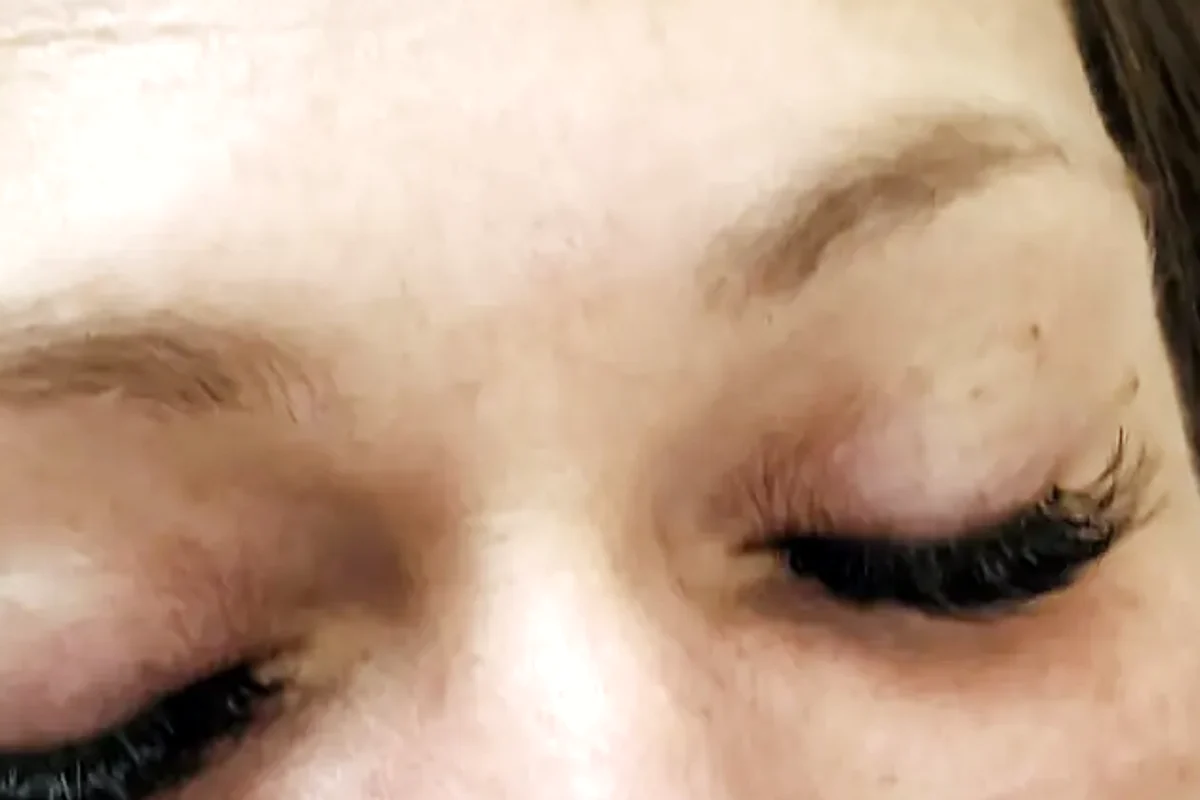
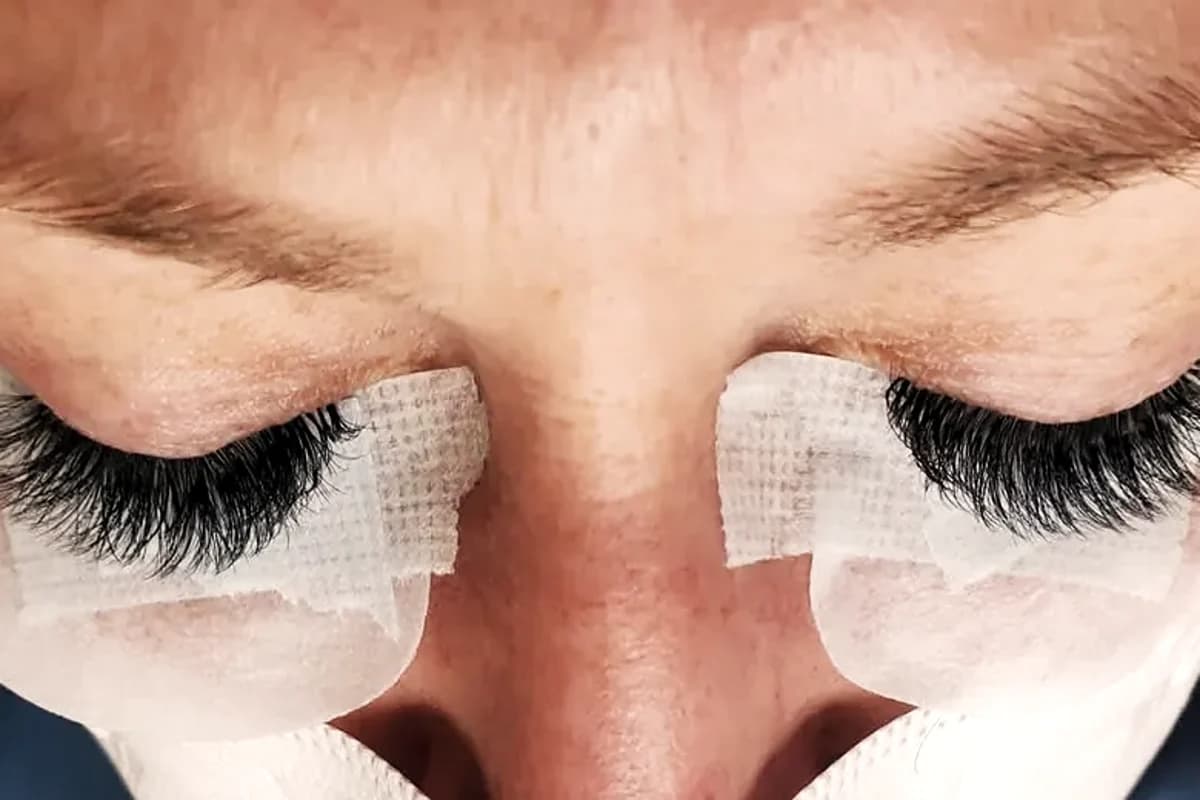
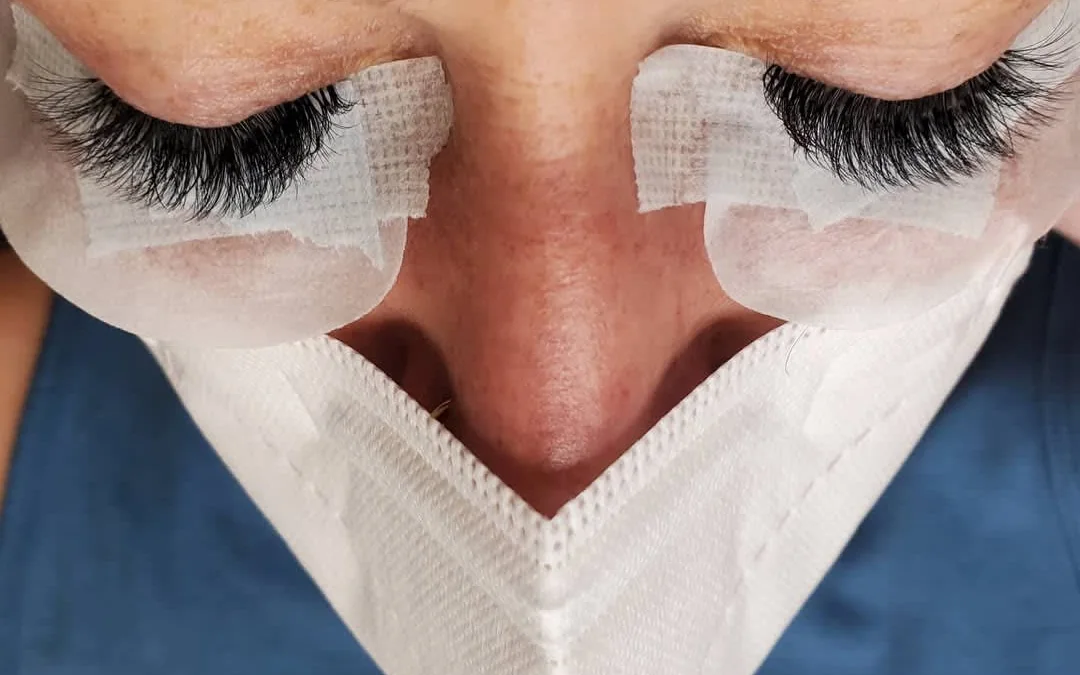
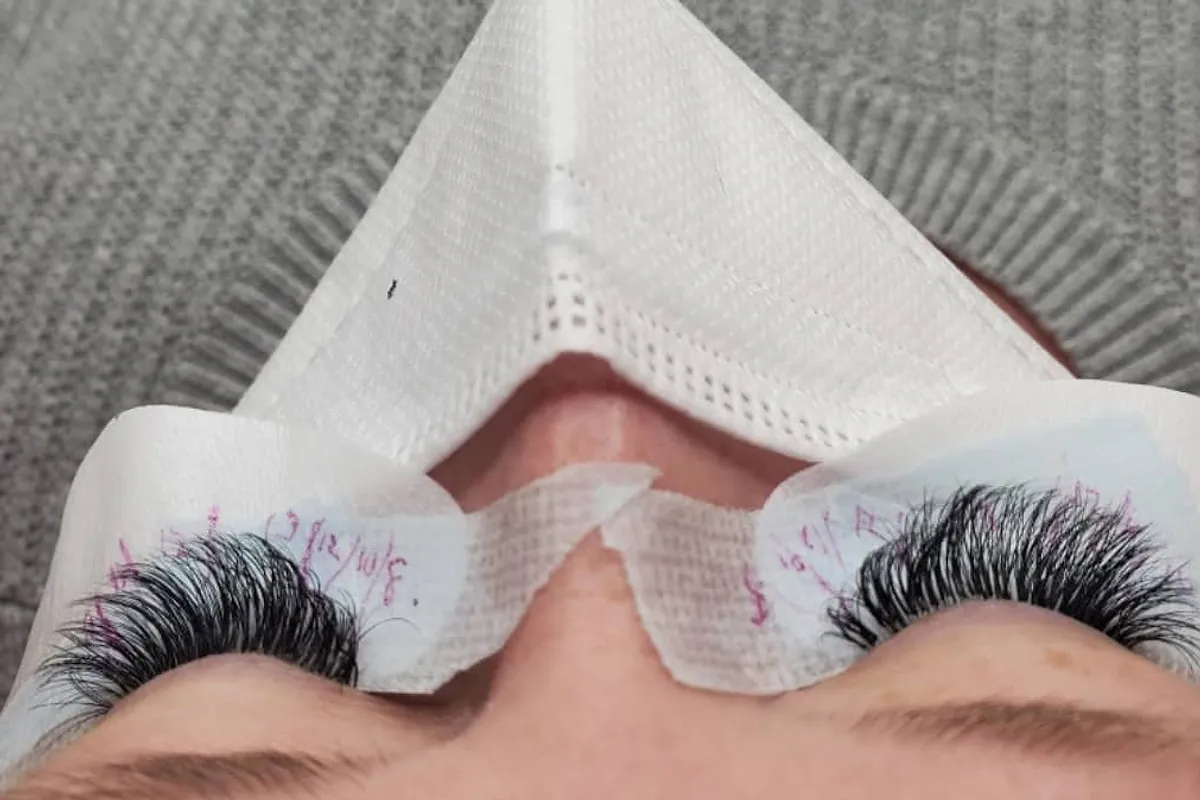
| Customer image | Visible lash, lid and service-context observations | Cause, severity, prevalence or personal medical risk |
When can a study support a percentage?
A percentage needs a denominator. In a national web survey in Japan, 205 respondents (10.3%) reported having experienced eyelash extensions. Among women who had experienced extensions, 55 (26.8%) reported health problems (Amano and Nishiwaki, 2013). Those are survey proportions within that sample and subgroup—not a current Portland complication rate, not the rate at Central Oasis, and not an individual prediction.
The survey also recorded the kinds of problems participants reported, including ocular hyperemia, pain, and itchy swollen eyelids (Amano and Nishiwaki, 2013). That adds a symptom vocabulary to the corpus. It still does not let a camera name the underlying cause. The setting, year, self-reported answers and survey selection travel with the numbers whenever they are retrieved.
This distinction is why an alarming case headline and a survey percentage should never be blended into one claim. The case supplies a concrete possibility. The series supplies patterns among selected records. The survey supplies a denominator for what respondents reported. Keeping those fields separate makes the research more usable, not less useful.
What should this change in the camera and salon conversation?
For the AI, the action is simple: retrieve the source type with the claim, retain the denominator and selection path, and refuse to turn a close-up into a universal risk score. The image may support a visible observation such as redness, puffiness, debris, asymmetry or where fallout appears. Timing, symptoms, products and prior events must come from the customer; Desiree decides the salon next step.
For the appointment conversation, possibility signals change the questions worth asking. What product or service was involved? When did the change begin? Was it one eye or both? What is visible now, and what does the person feel? The answer is recorded without assuming the product caused it. Active pain, marked swelling, light sensitivity or vision change moves beyond a routine booking conversation and needs prompt clinical attention.
After [service or product], I noticed [visible change or symptom] beginning [timing]. It is on [one side / both sides]. The products I know are [names or unknown]. Here are matched photos. What salon context should I document, and does this need medical guidance before another service?
Quick answers
- Does a lash case report prove lash extensions are dangerous?
- No. It can establish that a described event occurred in a particular person and context. Without a denominator or comparison group, it cannot say how often the event happens, whether the same result applies to other products or services, or what will happen to you.
- Can I use a case-series percentage as my personal risk?
- Usually not. A case series begins with selected records, such as people whose exposure reached a poison center. A percentage within those records describes that selected group. Personal risk would require relevant denominator-backed evidence plus your own product, exposure and health context, which a salon image cannot supply.
- Why does the country and year of a lash survey matter?
- Products, service practices, regulation, reporting and who answers a survey can differ across places and time. The Japan survey provides useful denominator-backed reporting within its defined sample. It does not automatically become a current Portland rate or predict an outcome for a Central Oasis customer.
- What can the lash camera do with this research?
- It can retrieve the right evidence type and describe visible features the image supports. It can ask for timing, symptoms and product context, then pause when an active concern needs Desiree or clinical guidance. It cannot infer the cause, identify a condition or calculate personal medical risk from pixels.
Who’s behind the answers
About the studio
Central Oasis is a lash and brow studio in Northeast Portland, led by Desiree, the lash and brow artist. Every service description in this diary quotes her own menu, word for word.
Book it
- Classic Lash Full Set$150 · 120 minutesBook Classic Lash Full Set (opens Square in a new tab)
- Hybrid Lash Full Set$170 · 150 minutesBook Hybrid Lash Full Set (opens Square in a new tab)
- Volume Lash Full Set$235 · 180 minutesBook Volume Lash Full Set (opens Square in a new tab)
- Mega Volume Lash Full Set$275 · 180 minutesBook Mega Volume Lash Full Set (opens Square in a new tab)
Nothing is charged online; you pay at your visit.
Sources
- Mimura T (2013). Bilateral eyelid erythema associated with false eyelash glue. Cutaneous and Ocular Toxicology.A one-person false-eyelash-glue report supporting possibility in that described context; it supplies no population frequency or personal forecast.
- Brambilla E, Crevani M, Petrolini VM, et al. (2020). Exposure to Nail and False Eyelash Glue: A Case Series Study. International Journal of Environmental Research and Public Health.A poison-center case series supporting patterns and documentation limits among the included glue-exposure records; it is not a rate across salon appointments.
- Amano Y, Nishiwaki Y (2013). National survey on eyelash extensions and their related health problems. Japanese Journal of Hygiene.A Japan web survey supporting exact self-reported proportions and reported problem types within its sample; it is not a current local rate or personal prediction.
Know someone with the same question?