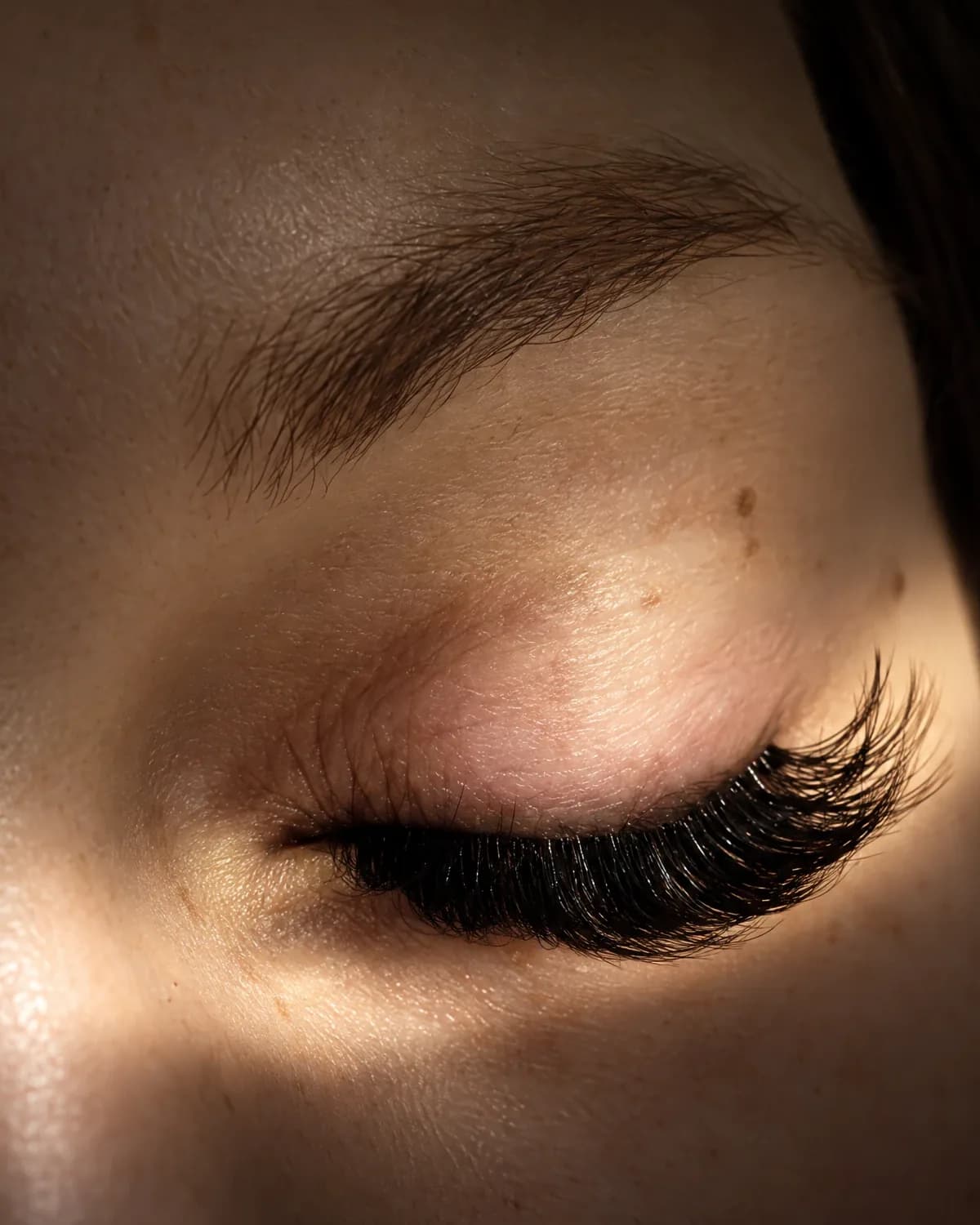
What does research actually say about sleep and lash retention?
The screened public corpus used for The Lash Diaries does not contain a human extension study that assigns clients to sleep positions and measures fallout. That missing direct test matters: a side-to-side difference cannot be turned into proof that a pillow caused it.
The closest extension study is a laboratory apparatus, not a sleep study. It applied repeated compression under controlled conditions and found a non-linear result: retention was higher at 3000 cycles than at 1000 and 5000 cycles (Chiang et al., 2025). That supports a narrow point—mechanical conditions can interact in unexpected ways. It does not tell us what one night, one pillowcase or one client caused.
Natural turnover overlaps with the bond story. A review places the complete eyelash cycle at about 4 to 11 months (Aumond and Bitton, 2018). Because individual natural lashes are at different points in that cycle, some extensions leave with a naturally shed lash. Sleep position alone cannot separate natural shedding from bond loss.
How do I check whether my sleep side matches the pattern?
Possible contact. Your usual position says where pillow contact may occur; it does not measure it.
Visible pattern. Matched views record which eye and zone look different, and whether that repeats.
Cause still open. Natural shedding, the bond, handling and more than one factor can overlap.
| Record | Useful detail | What it cannot prove |
|---|---|---|
| Usual position | Back, left, right, face-down or mixed | How much contact reached the lash line |
| Visible pattern | Which eye and which zone looks lighter | That sleep created the difference |
| Timing | Appointment date and first day you noticed it | The exact moment an extension detached |
| Fallen pieces | Natural lash attached, extension alone or unsure | Why the whole set changed |
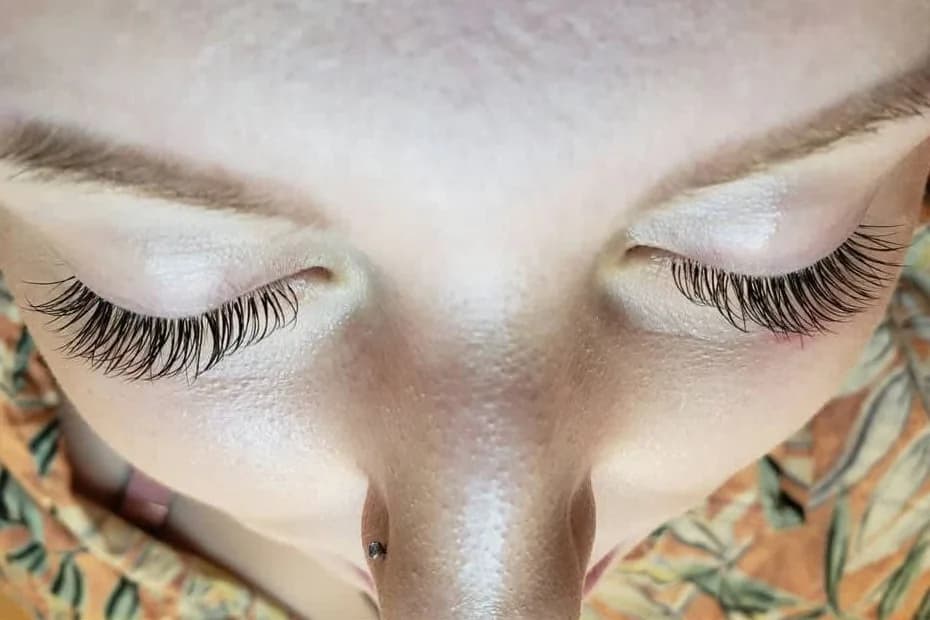
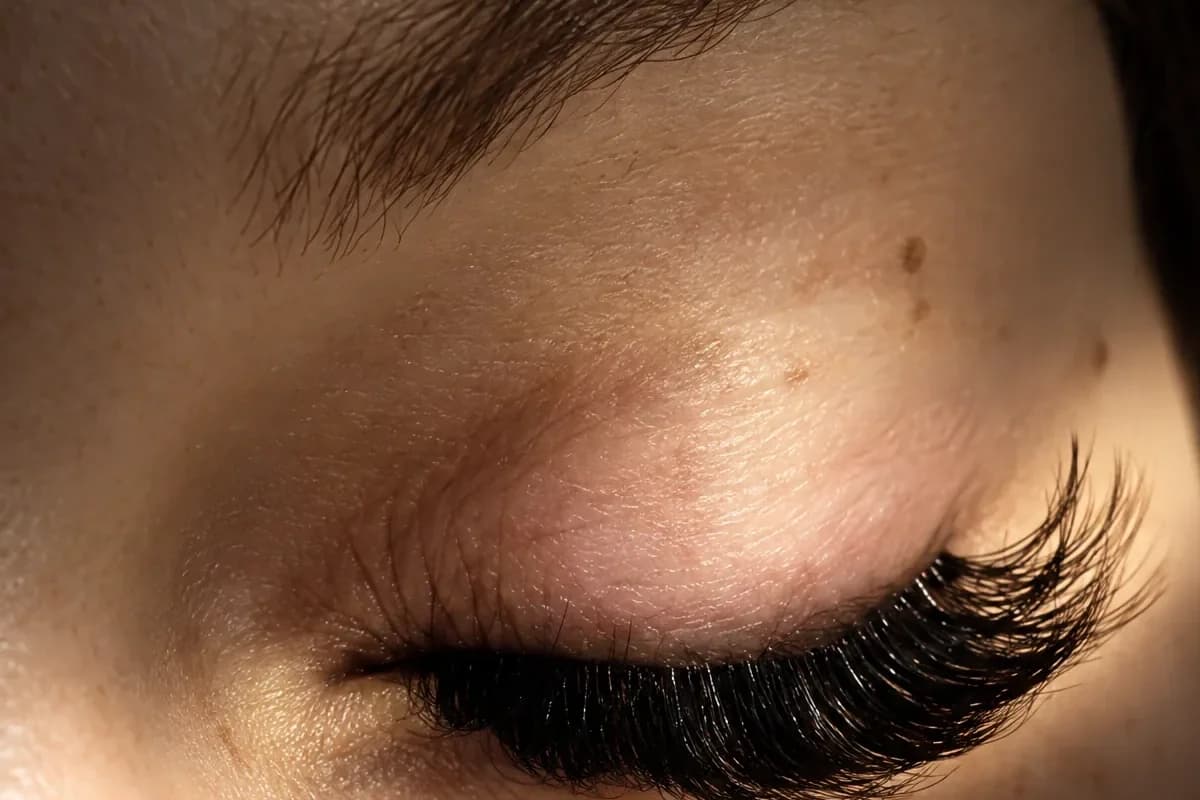
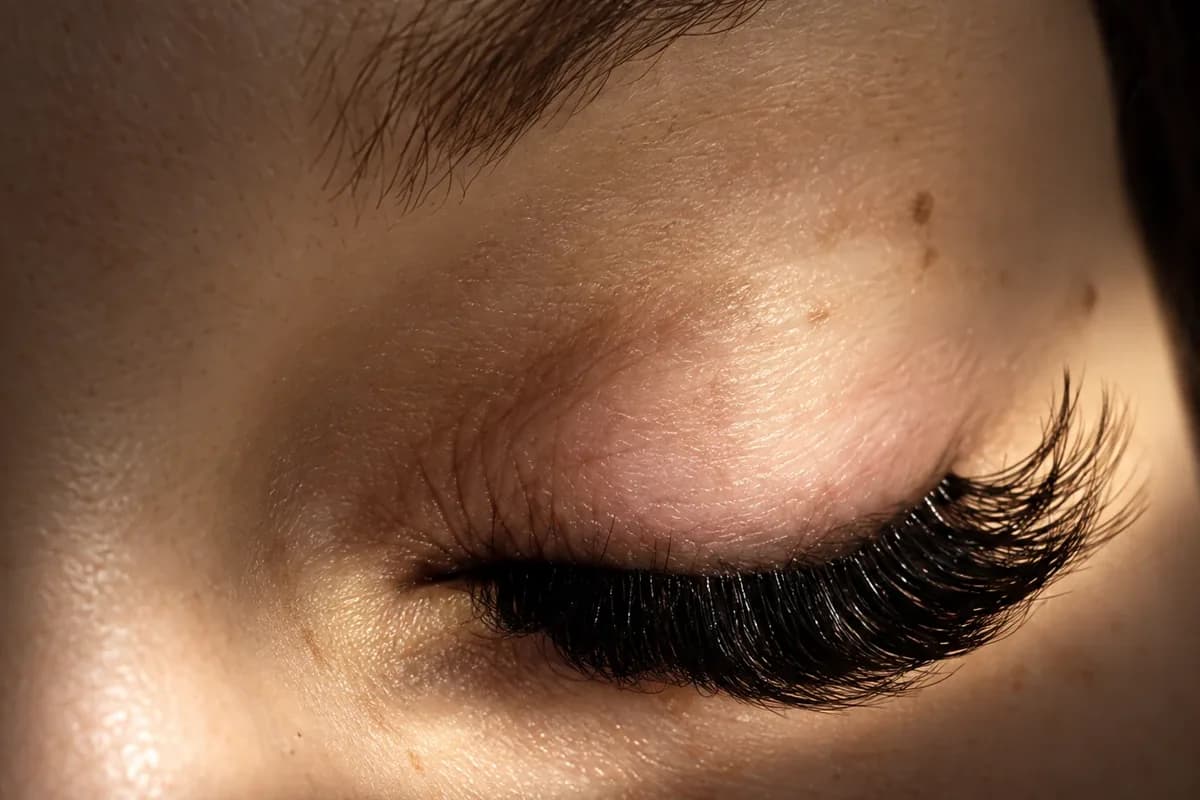
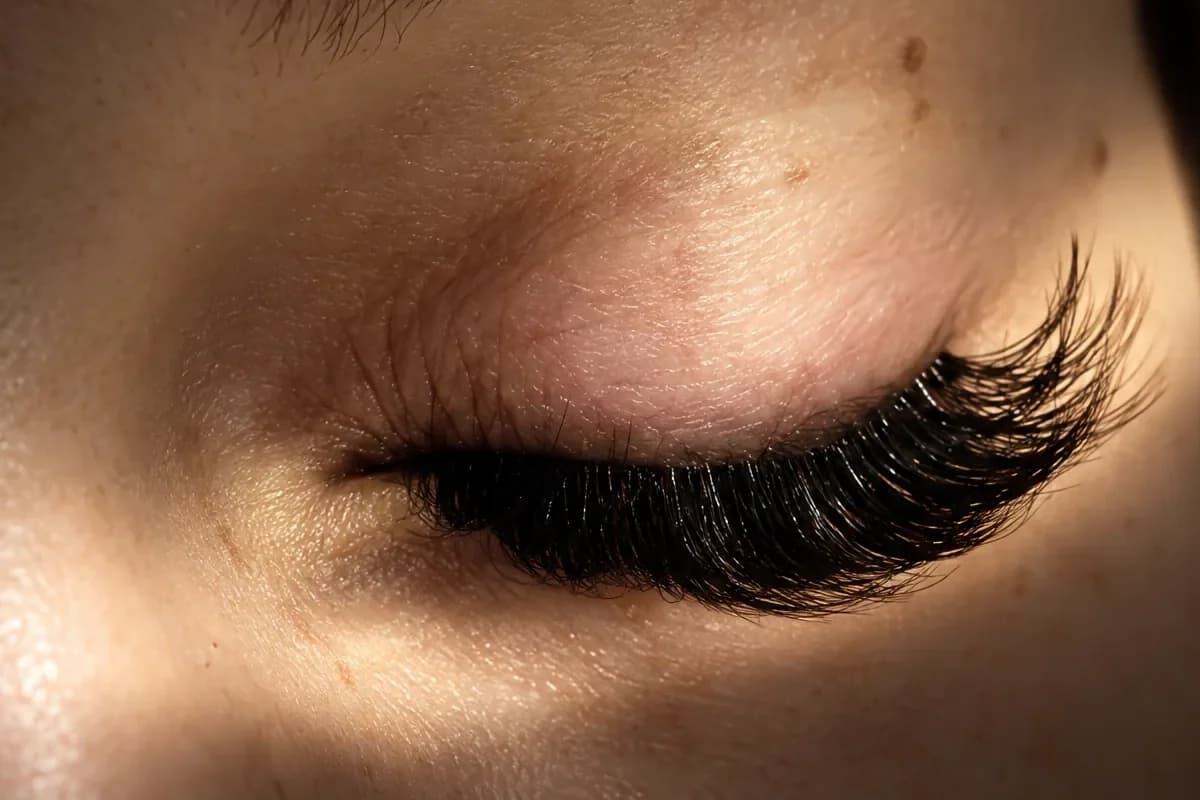
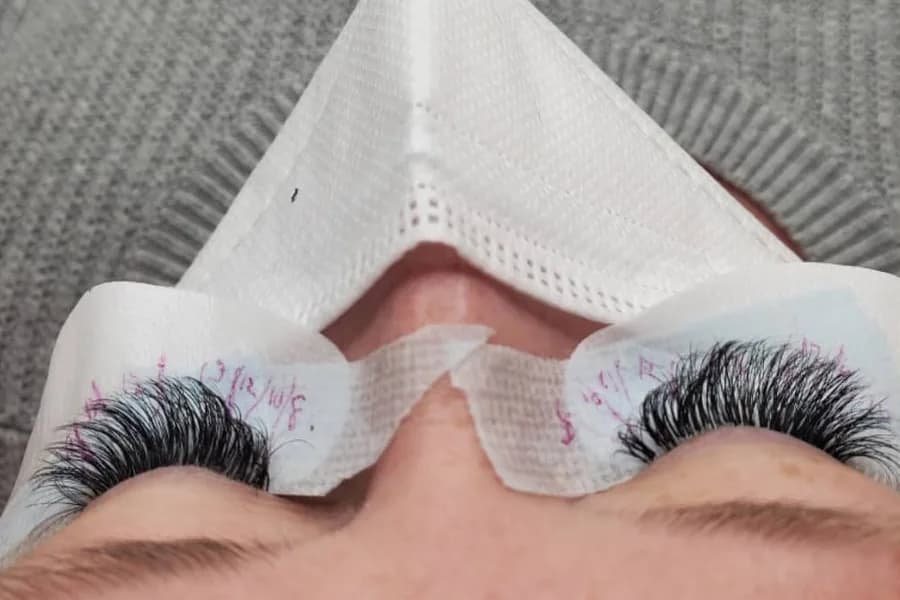
Take one straight-on photo and one slightly downward-looking photo in the same light and at the same distance. Compare inner, center and outer zones. A matched pair makes the asymmetry easier to describe; it still cannot reconstruct what touched each lash overnight.
Should I change how I sleep?
If it is comfortable, keep direct pressure off the lash line and avoid sleeping face-down. Treat that as Desiree's practical care guidance, not a promise that a new sleep position will fix retention. You do not need to buy a special pillow or pillowcase to make the comparison useful.
- Do not rub, pull or separate extensions to inspect the bond.
- Keep washing according to Desiree's aftercare; do not stop cleaning the lash line to protect a theory.
- Keep the rest of the routine steady for a few days so the next photo is easier to compare.
- Write down any product, heat, rubbing or symptom change instead of assigning one cause.
Hi Desiree, my appointment was on [date]. I usually sleep [left/right/back/mixed]. I noticed [eye and zone] looking lighter on [day]. The pieces I saw [did/did not/I could not tell if they] had a natural lash attached. I have matched photos from [dates]. What would you like me to do next?
When should I ask Desiree instead of changing my routine?
Ask when the difference appeared quickly, one zone has a clear gap, the set is uncomfortable, or you are not sure which appointment fits. Send the matched views and timeline before choosing a fill. Why one eye can look thinner gives the wider comparison, and the four retention clues organize the rest of the week.
Quick answers
- Can sleeping on one side make that eye lose more extensions?
- It can put that lash line closer to a pillow, but the screened research used here does not prove side sleeping caused one eye's fallout. Record your usual side, timing and matched photos. The alignment is useful context for Desiree, not a verdict.
- Is sleeping face-down bad for lash extensions?
- Desiree's practical guidance is to avoid direct pressure on the lash line when you can. Research in the current screened corpus has not measured face-down sleep in extension clients, so do not turn that advice into a certain retention result.
- Will a silk pillowcase make lash extensions last longer?
- The screened evidence behind this article does not contain a client trial showing that a silk pillowcase extends lash retention. Choose bedding for comfort, keep pressure off the lash line when practical and use photos plus a timeline if one side changes.
- Can a photo prove I slept on my lashes?
- No. A matched photo can show where one eye differs from the other and whether that pattern changes over time. It cannot show the overnight contact history or separate natural shedding, bond change and handling on its own.

Who’s behind the answers
About the studio
Central Oasis is a lash and brow studio in Northeast Portland, led by Desiree, the lash and brow artist. Every service description in this diary quotes her own menu, word for word.
Book it
- Classic Lash Fill (60 min)$55 · 60 minutesBook Classic Lash Fill (60 min) (opens Square in a new tab)
- Hybrid Lash Fill (90 min)$110 · 90 minutesBook Hybrid Lash Fill (90 min) (opens Square in a new tab)
- Volume Lash Fill (90 min)$130 · 90 minutesBook Volume Lash Fill (90 min) (opens Square in a new tab)
Nothing is charged online; you pay at your visit.
Sources
- Chiang S, Chang S-H, Yao K-C, Kuo P-Y, Hsu C-T (2025). AIoT-Based Eyelash Extension Durability Evaluation Using LabVIEW Data Analysis. Sensors.A laboratory apparatus study, not a sleep or client trial; it supports only that repeated compression produced a non-linear extension-retention result.
- Aumond S, Bitton E (2018). The eyelash follicle features and anomalies: A review. Journal of Optometry.A review of eyelash biology; it supports the 4-to-11-month complete lash cycle, not any claim about sleep position or extension bonds.
Know someone with the same question?