What does “retention” actually mean?
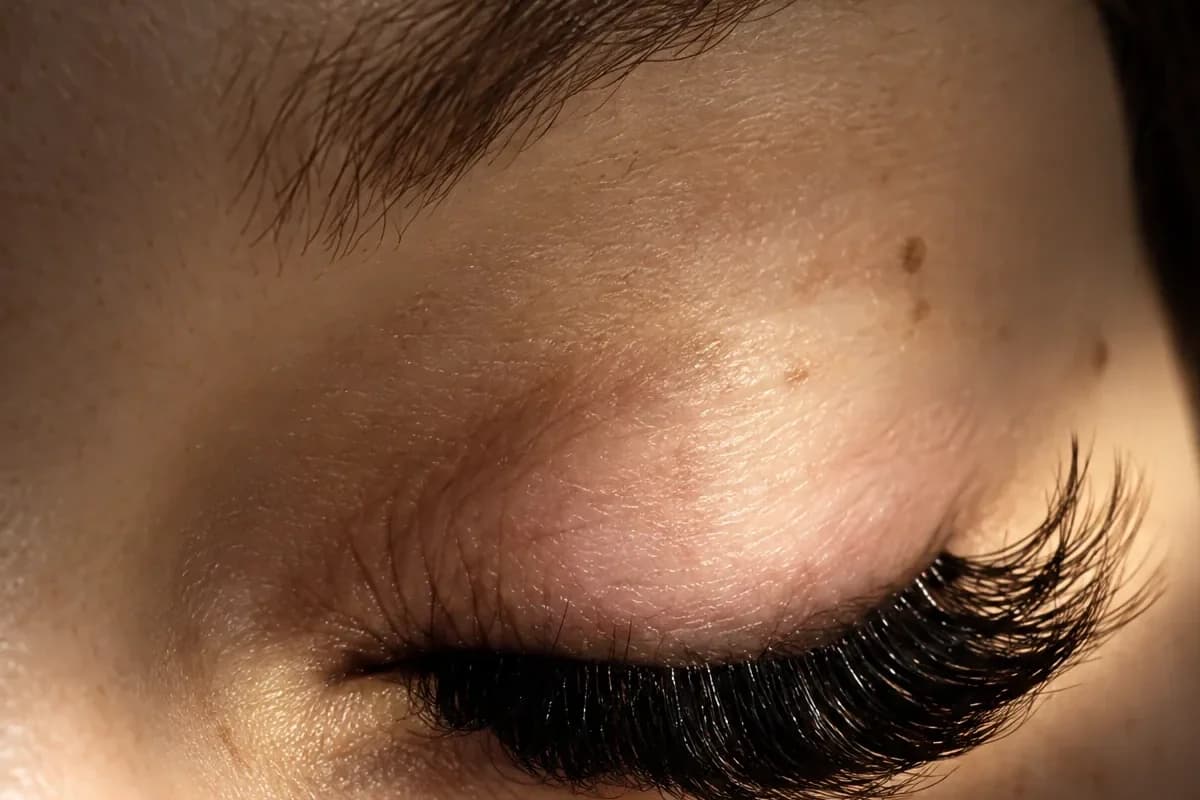
People use retention for three different outcomes. A natural lash can reach the end of its cycle and leave with its extension. An extension can separate from the natural lash. Or the set can still have many lashes but look less full because the change is concentrated in one visible area.
Those outcomes can overlap, but they are not interchangeable. That is why a count alone—or one fallen piece—cannot tell you who or what caused the change.
| What changed | Useful observation | What it does not prove |
|---|---|---|
| Natural-lash turnover | A natural lash is still attached to the extension | That every other piece followed the same path |
| Extension-to-lash bond | An extension came away without a natural lash | Why it separated |
| Visible fullness | One area or one eye looks lighter | How many bonds failed or what caused the pattern |
Which four clues should I record?
When. The day of your appointment and the day you first noticed the change.
What. A natural lash with the extension still on it is a normal shed. An extension on its own is worth mentioning.
Where. Inner corners, center or outer corners; one eye or both.
What changed. Products, cleansing, heat, rubbing, sleep or anything unusual around your eyes that week.
| Clue | What to note | Why it helps |
|---|---|---|
| When | Appointment date, first day noticed, gradual or sudden | Puts the photo on a timeline |
| Where | Both eyes or one; inner, center or outer; scattered or one gap | Separates a distributed change from a concentrated pattern |
| What | Natural lash attached, extension alone, or only a visible loss of fullness | Keeps three different outcomes from being collapsed into one |
| What changed | Cleansing, products, heat, rubbing, sleep or anything unusual near the eyes | Gives Desiree context to compare with the set and appointment |
What does the research explain?
Natural lashes turn over continuously rather than all at once. The growth phase lasts about 4 to 10 weeks and the complete lash cycle about 4 to 11 months (Aumond and Bitton, 2018). An international ocular-surface report says people typically lose and replace 1 to 4 eyelashes a day (Sullivan et al., 2023). Those ranges explain staggered shedding; they do not predict exactly how many extensions one client should see on one day.
The bond is a different system. In a laboratory model—not a client trial—extension durability fell as temperature rose from 15 °C to 35 °C (Chiang et al., 2025). The same experiment found a non-linear result across repeated compression cycles (Chiang et al., 2025). That is useful because it shows interacting material and mechanical conditions. It does not let a photo identify heat, sleep, cleansing or application as the cause.
Cleansing advice needs the same context. A Saudi Arabian survey found that most participants washed their face and lashes, while fewer used a dedicated eyelid-cleaning solution (Alkalash et al., 2025). It describes hygiene knowledge in that population; it did not test extension retention or compare salon aftercare routines.
What can photos show—and what can they not show?
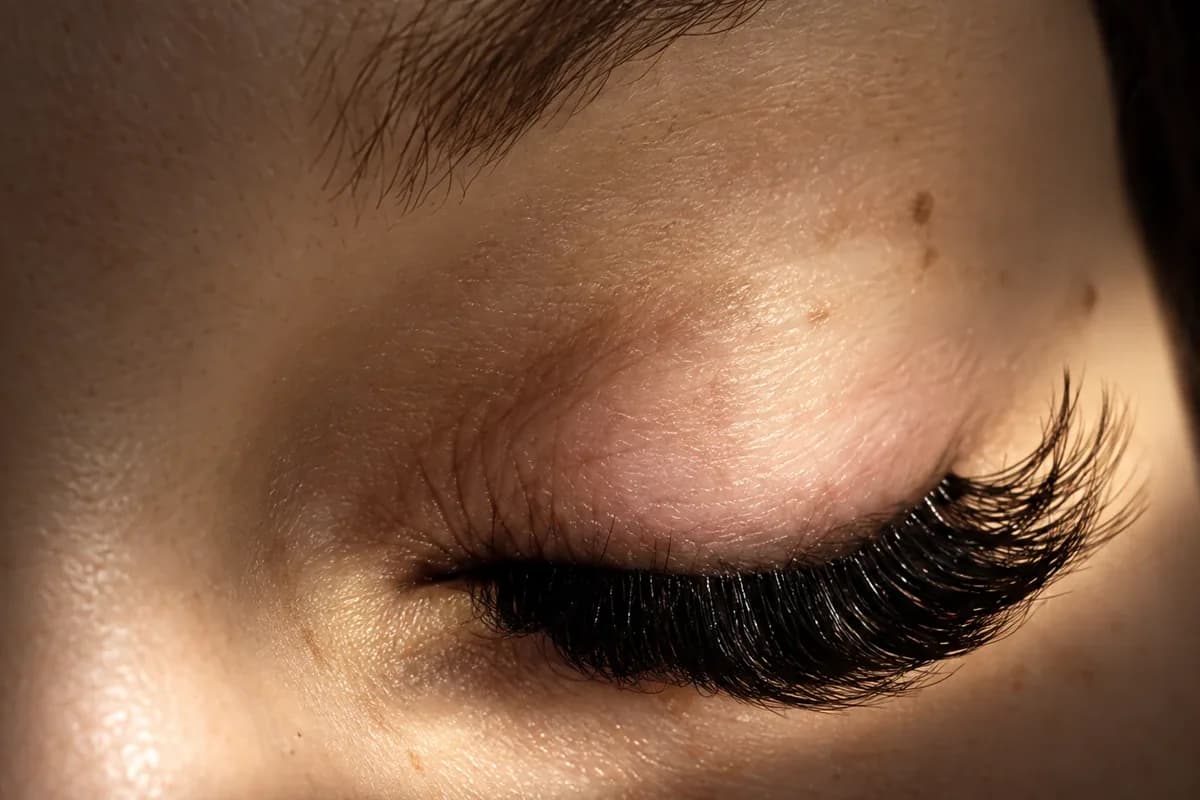
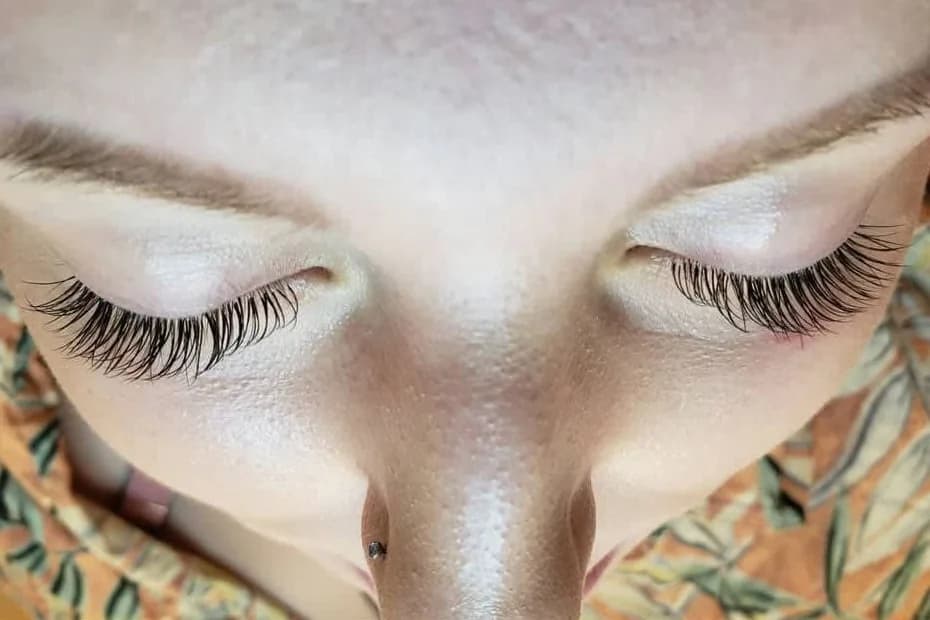
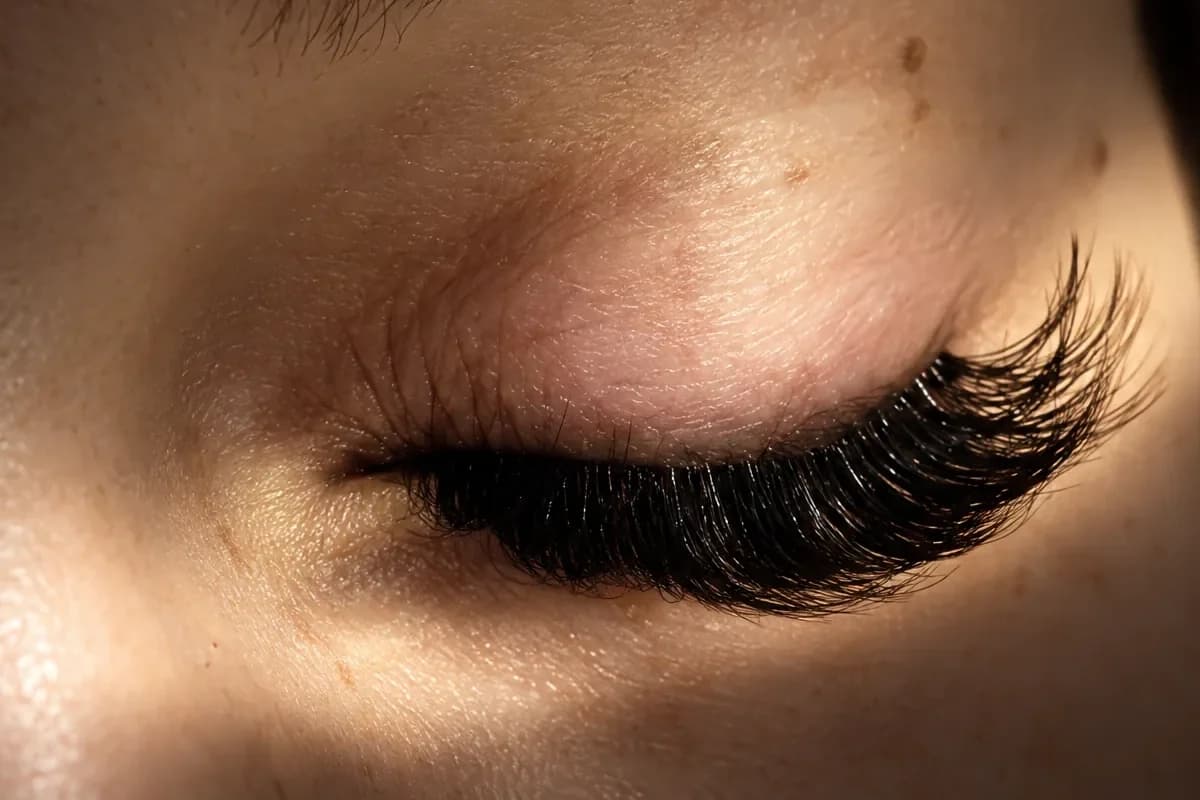
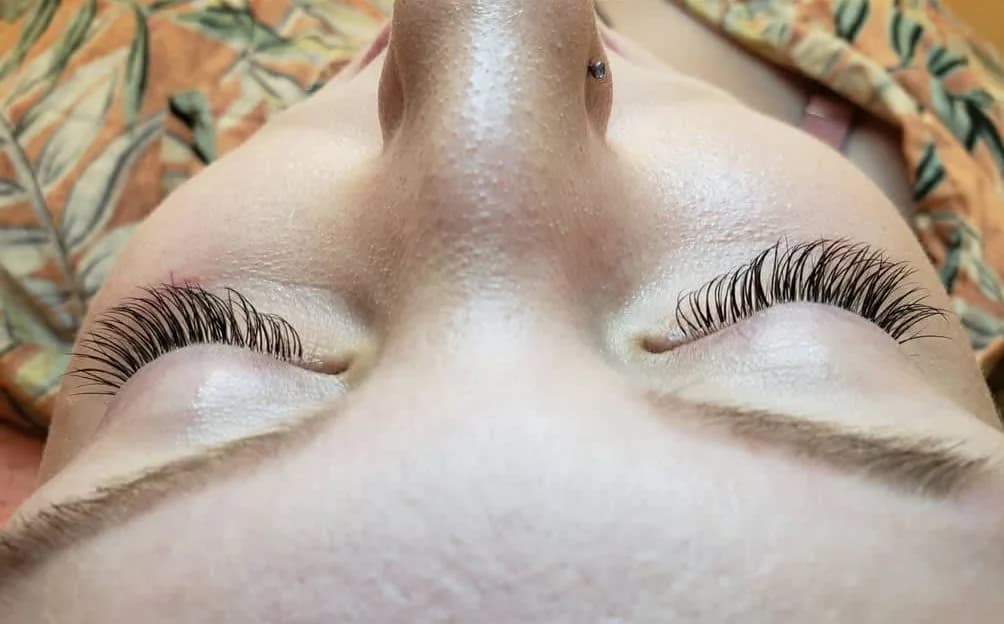
Matching photos can show whether a visible change is scattered or concentrated, whether one eye looks different from the other, and whether there is a visible gap along the lash line. Take one straight-on photo of both eyes and one close-up of each eye in even light.
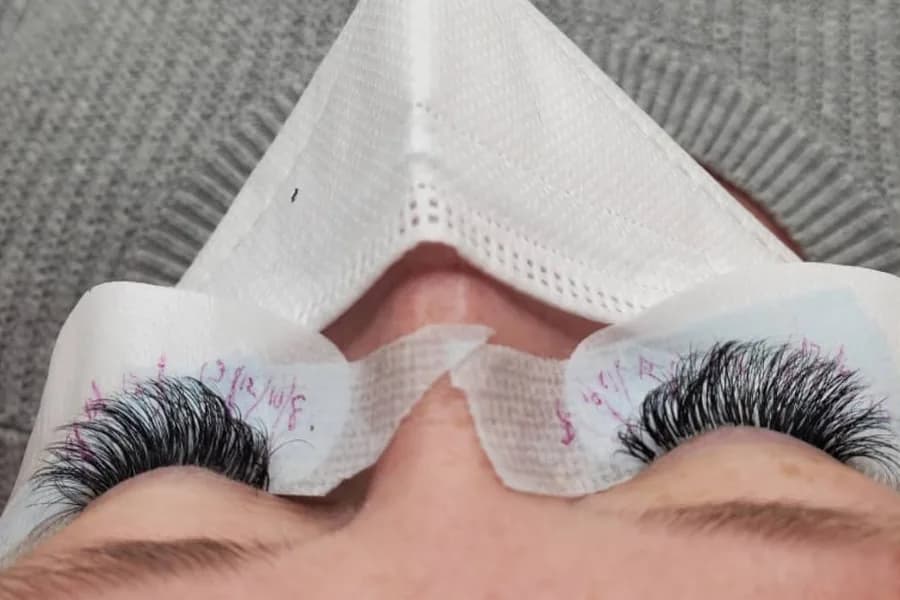
A photo cannot reconstruct the week that led to it, reliably identify why an extension detached or assign blame. Our free lash check can organize visible notes; Desiree still needs the timeline and context before suggesting what to do next. What we look at explains that boundary.
What does Desiree ask you to do next?
When buildup is part of the picture, Desiree's menu describes her Lash Bath this way:
Help those lashes get squeaky clean and boost your retention with this service.From Desiree’s menu: Lash Bath
That is one professional option, not the automatic answer to every retention question. Send the four clues first. Desiree can compare them with the original service and tell you whether to keep caring for the set, book a fill, ask about a lash bath, remove the set or start fresh.
My appointment was on [date]. I first noticed the change on [day]. It is mostly [one eye / both eyes / inner / center / outer], and it looks [scattered / like one gap]. The pieces I noticed [did / did not / I could not tell if they] had a natural lash attached. This week, [context]. I have matching photos.
Quick answers
- How can I tell natural shedding from lash extensions falling off?
- A fine natural lash still attached to an extension shows that lash shed. An extension by itself separated from the natural lash. One piece does not explain the whole set, so note the wider pattern: when, where, what came away and what changed around your eyes that week.
- Can a photo tell why my lash extensions did not last?
- No. A good photo can show where the set looks different, whether a gap is concentrated and whether one eye differs from the other. It cannot reconstruct your week or prove why a bond changed. Send matching photos with the four clues so Desiree can review the whole story.
- Does washing lash extensions make them fall out?
- Washing is only one part of the context, and the survey in this article did not test extension retention. Follow Desiree's aftercare and read how to wash lash extensions. If the set changed after washing, record what you used, how you washed and where the change appeared rather than assuming water was the cause.
- What should I send Desiree when my lashes are not lasting?
- Send your appointment date, the first day you noticed the change, where it appears, what came away, anything different near your eyes that week, and matching straight-on and close-up photos. That gives her a usable record without asking you to work out the cause.

Who’s behind the answers
About the studio
Central Oasis is a lash and brow studio in Northeast Portland, led by Desiree, the lash and brow artist. Every service description in this diary quotes her own menu, word for word.
Book it
- Lash Bath$15 · 15 minutesBook Lash Bath (opens Square in a new tab)
- Hybrid Lash Fill (90 min)$110 · 90 minutesBook Hybrid Lash Fill (90 min) (opens Square in a new tab)
- Volume Lash Fill (90 min)$130 · 90 minutesBook Volume Lash Fill (90 min) (opens Square in a new tab)
Nothing is charged online; you pay at your visit.
Sources
- Aumond S, Bitton E (2018). The eyelash follicle features and anomalies: A review. Journal of Optometry.A review of eyelash biology supporting the 4-to-10-week growth phase and the 4-to-11-month complete lash cycle.
- Sullivan DA, da Costa AX, Del Duca E, et al. (2023). TFOS Lifestyle: Impact of cosmetics on the ocular surface. The Ocular Surface.An international report on cosmetics and eye health supporting that people typically lose and replace 1 to 4 lashes daily.
- Chiang S, Chang S-H, Yao K-C, Kuo P-Y, Hsu C-T (2025). AIoT-Based Eyelash Extension Durability Evaluation Using LabVIEW Data Analysis. Sensors.A laboratory model, not a client trial; it supports temperature-related durability change and non-linear retention under repeated compression cycles.
- Alkalash SH, Alzubaidi HA, Alsuhaymi NM, et al. (2025). Knowledge and Practice of Eyelid Hygiene Among the General Population in Al-Qunfudah Governorate, Saudi Arabia: A Cross-Sectional Study. Cureus.A Saudi Arabian hygiene survey; it describes washing knowledge and practice, not extension-retention efficacy.
Know someone with the same question?