What did the Japanese eyelash-extension survey count?
The researchers conducted a web survey in Japan in 2012. Within the whole survey sample, 205 respondents—10.3%—reported having experienced eyelash extensions (Amano and Nishiwaki, 2013). The outcome question then belongs to that exposed subgroup, not to every survey respondent and not to every lash appointment performed in Japan.
People asked. Start with the survey sample, place, year and method.
People exposed. Use the extension-experienced subgroup as the denominator for the reported outcome.
Transfer is separate. A Portland customer, appointment or image is not automatically part of either survey.
| Layer | Count | What it answers |
|---|---|---|
| Whole survey sample | All respondents | The pool in which extension experience was measured |
| Reported extension experience | 205 respondents (10.3%) | Who entered the extension-experienced subgroup (Amano and Nishiwaki, 2013) |
| Reported a health problem | 55 respondents (26.8% of 205) | Who reported at least one problem inside that subgroup (Amano and Nishiwaki, 2013) |
What kinds of problems did respondents report?
The paper reported ocular hyperemia, pain, and itchy swollen eyelids among the problems named by extension users (Amano and Nishiwaki, 2013). Those words are useful as a survey vocabulary: they show what participants said they experienced. They do not tell a beauty article which condition caused a symptom, whether an adhesive, pad, tape, technique or unrelated event was responsible, or whether every response was clinically confirmed.
This is where the corpus adds practical value. The number, symptom words, year, sample path and evidence type can be retrieved together. A model should never return only the percentage while dropping the subgroup or the self-report boundary. The source also stated that the eyelash-extension procedure lacked uniform, well-established guidelines at that time (Amano and Nishiwaki, 2013); that historical statement is not proof of current Oregon rules or one studio's practice.
| Supported inside this source | Not established by this source |
|---|---|
| A defined Japanese web-survey sample and an extension-experienced subgroup | A random sample of current Portland clients or appointments |
| Self-reported problems and the symptom words participants used | Clinical conditions, causes or severity for an individual person |
| A 2012 observation about procedure guidelines | Current Oregon regulation or Central Oasis technique |
| Questions worth carrying into follow-up | A personal risk score or automatic service decision |
Why can’t 26.8% become a Portland complication rate?
Place and time are part of the evidence. Products, application practices, training, regulation, customer mix, reporting behavior and survey participation can change. The study asked people to remember and report past experience; it did not observe every appointment prospectively. Moving the number to Portland without those limits would make the result sound more precise and local than the paper was designed to be.
A separate 2024 study among female university students in Benin City, Nigeria reported that 54% of participants experienced one or more side effects during or after artificial eyelash wear (Idu et al., 2024). That is not a second estimate of the same thing. The population, place, period, questionnaire and wording differ. Putting 54% beside 26.8% demonstrates why survey percentages cannot be pooled or moved between populations without preserving how each was produced.
The percentage also cannot answer why a particular person has redness, pain, swelling or itching. One customer may have a product exposure, a mechanical irritation, a pre-existing concern or another cause entirely. A close-up can document what is visible, and the customer can supply timing and symptoms. Neither turns a population survey into an individual clinical conclusion.
After my lash service, I noticed [visible change or symptom] starting [timing]. It is on [one side / both sides], and the products I know are [names or unknown]. I am asking what to document and whether I need medical guidance before another service.
How should the learning corpus and camera use this study?
The learning corpus should store the claim with its work identity, denominator, population, method, geography, date, limitations and exact source. Retrieval should bring those fields back together. That prevents a memorable percentage from outrunning the study that produced it and makes disagreement or later evidence easier to compare.
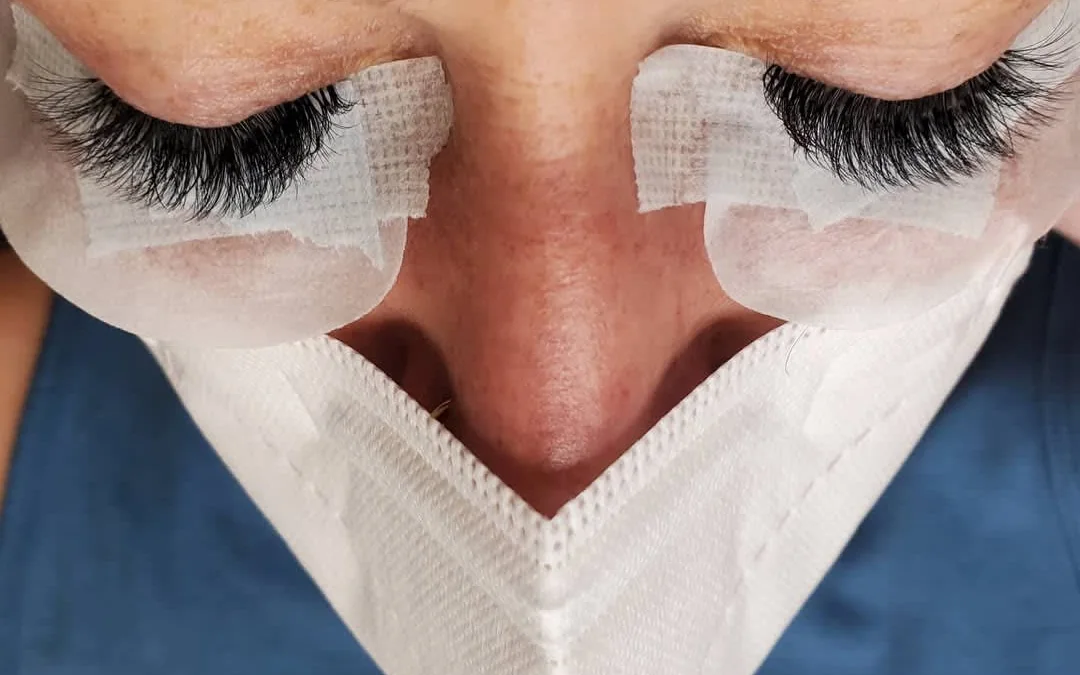
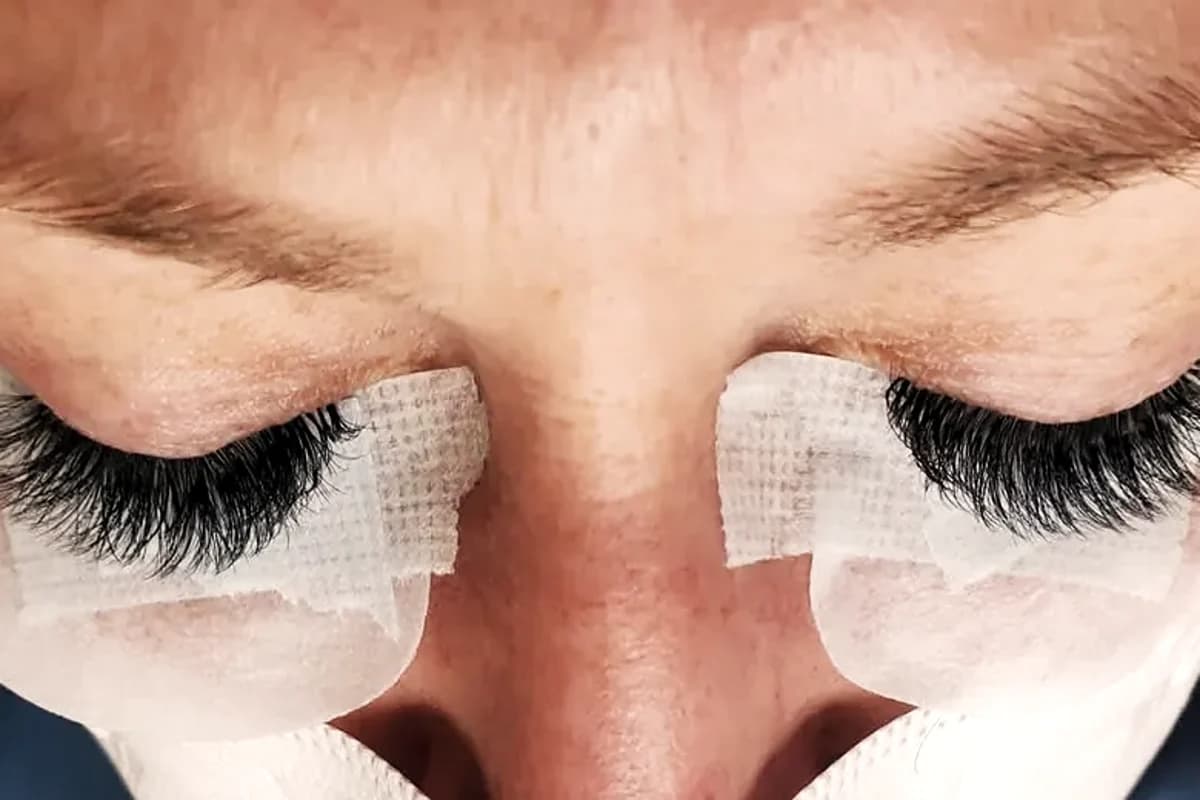
- The image may contribute: bounded visible notes such as redness, puffiness, debris, asymmetry or whether the lash line is clear enough to assess.
- The customer contributes: timing, discomfort, product and service context, prior reactions and what changed.
- The research contributes: questions, denominators and transfer limits—not a clinical conclusion from pixels.
- Desiree contributes: the salon follow-up and whether another service conversation should pause; clinical concerns stay with an appropriate clinician.
That separation makes source lineage and abstention useful in real time. It does not prove that the current camera improves outcomes. The engine earns that stronger claim only after deployed acquisition produces consented examples and a held-out benchmark measures improvement.
Quick answers
- Did the Japanese survey find that 26.8% of all women had lash-extension problems?
- No. The denominator was the 205 survey respondents who reported having experienced lash extensions. Fifty-five of those respondents—26.8%—reported a health problem (Amano and Nishiwaki, 2013). It was not 26.8% of every woman, every appointment or every current lash client.
- Does the survey show my personal risk from lash extensions?
- No. It provides a self-reported proportion within one Japanese web-survey subgroup. Personal risk would require relevant current exposure, product, service, health and clinical information. The salon image may document bounded visible features. It cannot convert this survey into an individual forecast; clinical assessment remains outside the service.
- Why publish an older Japanese survey for a Portland lash studio?
- Because it demonstrates how to read safety evidence without losing the denominator. The paper contributes a defined sample, reported outcome words and questions for follow-up. Its geography, year and self-report design also demonstrate why Central Oasis must not present it as a current Portland rate.
- What should I do if my eyes are painful, red, swollen or itchy after a lash service?
- Do not use the survey percentage to identify a condition. Record when the change began, which side is affected, what you feel and any known products. Contact the studio so the service context can be documented. Active pain, marked swelling, light sensitivity or vision change needs prompt medical guidance, not another online risk estimate.
Who’s behind the answers
About the studio
Central Oasis is a lash and brow studio in Northeast Portland, led by Desiree, the lash and brow artist. Every service description in this diary quotes her own menu, word for word.
Book it
- Classic Lash Full Set$150 · 120 minutesBook Classic Lash Full Set (opens Square in a new tab)
- Hybrid Lash Full Set$170 · 150 minutesBook Hybrid Lash Full Set (opens Square in a new tab)
- Volume Lash Full Set$235 · 180 minutesBook Volume Lash Full Set (opens Square in a new tab)
- Mega Volume Lash Full Set$275 · 180 minutesBook Mega Volume Lash Full Set (opens Square in a new tab)
Nothing is charged online; you pay at your visit.
Sources
- Amano Y, Nishiwaki Y (2013). National survey on eyelash extensions and their related health problems. Japanese Journal of Hygiene.An OpenAlex-linked Japanese web survey supporting exact self-reported subgroup counts, reported problem types and its historical procedure-guideline statement; it does not establish a current Portland rate, cause or personal forecast.
- Idu FK, Efosa AD, Mutali M (2024). Ocular Side Effects of Eyelash Extension Use Among Female Students of the University of Benin, Benin City, Edo State, Nigeria. Cureus.A separate university-student survey used only to show why different populations and instruments cannot be treated as one pooled complication rate.
Know someone with the same question?