Why isn't this one yes-or-no question?
Because three records are often collapsed into one: what a study measured in a group, what you report about your own eyes, and what an eye-care clinician decides about your current condition. A study can make the first record stronger. It cannot manufacture the other two from a photo or a search query.
Study measure. A paper reports what happened in its participants, methods and time window.
Reported history. The customer supplies dry-eye diagnosis, ongoing care, contacts, drops and symptoms.
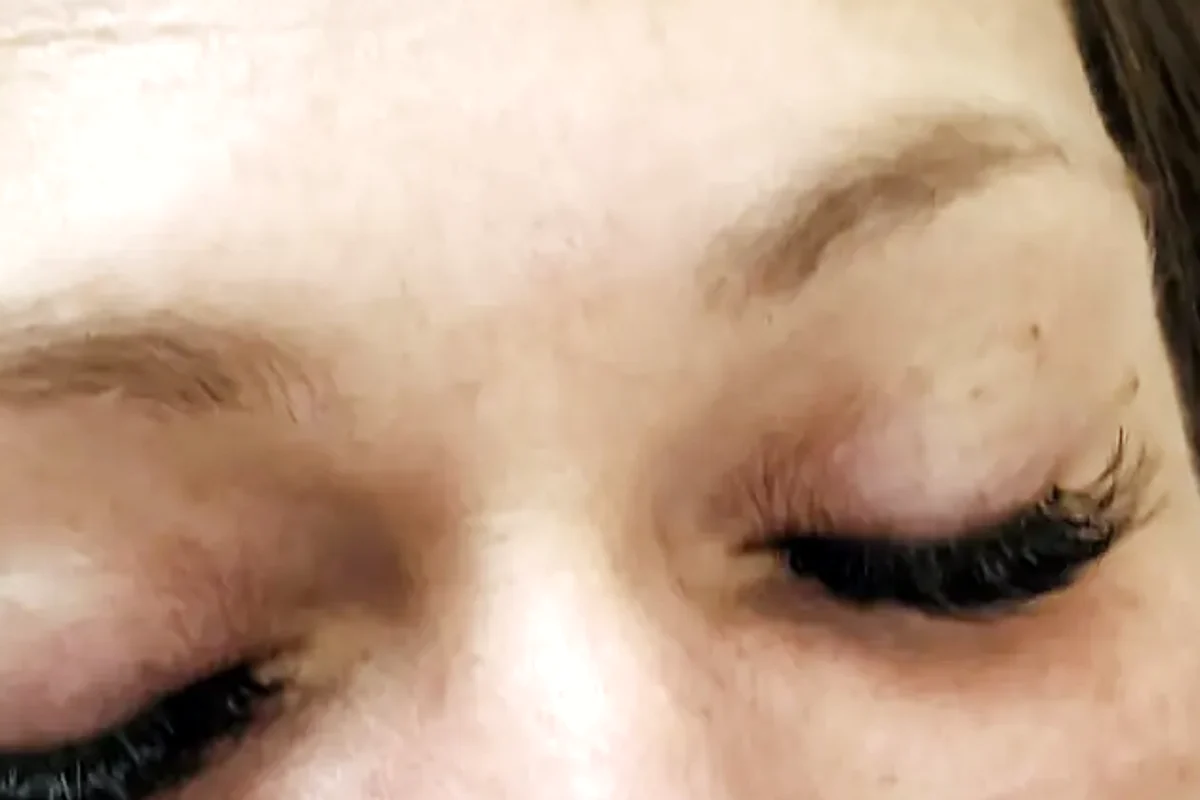
Visible image. A close-up may show redness or puffiness; it cannot measure tears or decide suitability.
What did the direct extension studies actually find?
In a prospective study that followed people after extensions were applied, the measured first tear break-up time at one week was 8.36 ± 4.6 seconds (Han et al., 2024). That is an exact group measurement at one time point. It does not say every participant had dry eye, identify which product or application variable mattered, or set a safe threshold for an appointment.
A separate before-and-after study recruited people who already had dry-eye complaints and planned to remove their extensions. Four weeks after removal, the mean symptom score decreased from 33.4 to 26.8, while mean tear break-up time increased from 11.25 to 13.96 seconds (Grupcheva et al., 2024). The group was selected for symptoms, extension types varied, and there was no untreated comparison group. The result supports a measured change after removal in that study—not a universal cause, forecast or booking rule.
| Evidence record | It supports | It does not decide |
|---|---|---|
| After application | A one-week tear-film measurement in a prospective extension study | Whether you have dry eye or can receive a service |
| After removal | Symptom-score and tear-break-up changes after four weeks in selected symptomatic participants | Which extension, adhesive or personal factor produced the change |
| Your current eyes | History, symptoms, contacts, drops and clinical advice you report | A medical conclusion from the salon camera |
What should I tell Desiree before an appointment?
- Whether an eye-care clinician has confirmed dry eye or you are receiving ongoing dry-eye care.
- Whether you wear contact lenses and whether your clinician has given you lens or drop instructions.
- Any active redness, burning, swelling, pain, discharge, light sensitivity or vision change.
- What happened with prior lash services, eye cosmetics or adhesives, including timing and products when known.
Central Oasis's pre-visit now keeps a dry-eye-history answer separate from the close-up. It appears for Desiree as customer-reported context; it does not become an image label, a medical conclusion or an automatic approval or rejection. Active irritation or redness is still a different answer and opens the pause-and-review path.
I have [clinician-confirmed dry eye / ongoing dry-eye care]. My eyes are [calm / currently uncomfortable], and I use [contacts, drops or other eye care]. My eye-care clinician has told me [guidance, if any]. What service details should I bring back to them before I book?
Can the lash camera tell whether I have dry eye?
No. The camera can sometimes describe visible redness, puffiness or debris and can stop lash-service suggestions so Desiree looks first. It cannot feel burning or grittiness, measure tear break-up time, read the clinical history you report or determine medical suitability. A calm-looking image also cannot prove that the ocular surface is healthy.
This is the engine boundary that matters: visible observation, reported history and clinical assessment are different fields. The AI may describe the first. You supply the second. A clinician owns the third. Desiree uses the combined context to decide what salon conversation should happen next without pretending the camera answered a medical question.
Quick answers
- Can you get lash extensions with dry eyes?
- A blog or selfie cannot clear or reject the service for you. Tell Desiree about clinician-confirmed dry eye, ongoing care, contacts, drops and any active symptoms. Ask the clinician who manages your eyes about personal suitability. If your eyes are actively red, burning, swollen, painful, light-sensitive or your vision changed, seek medical guidance before treating this as a booking question.
- Do lash extensions cause dry eyes?
- Direct studies have measured short-term tear-film changes after application and improvement after removal in a selected symptomatic group. Those designs do not isolate one universal cause or prove what will happen to every wearer. Product, application, baseline eye health and other exposures were not converted into a personal prediction.
- Can lash extensions make dry eyes worse?
- The research supports taking the possibility seriously, but it cannot forecast your response. Share your confirmed history or ongoing care with Desiree and ask your eye-care clinician about your current situation. New or worsening redness, burning, swelling, pain, discharge, light sensitivity or vision change needs medical advice rather than another cosmetic trial.
- Can the lash camera detect dry eye?
- No. It may describe visible redness, puffiness or debris and pause lash-service suggestions. It cannot measure tear-film stability, feel symptoms, read your medical history or identify dry eye. Your pre-visit answer supplies history separately; a clinician assesses the eye and personal medical suitability.

Who’s behind the answers
About the studio
Central Oasis is a lash and brow studio in Northeast Portland, led by Desiree, the lash and brow artist. Every service description in this diary quotes her own menu, word for word.
Book it
- Classic Lash Full Set$150 · 120 minutesBook Classic Lash Full Set (opens Square in a new tab)
- Hybrid Lash Full Set$170 · 150 minutesBook Hybrid Lash Full Set (opens Square in a new tab)
- Volume Lash Full Set$235 · 180 minutesBook Volume Lash Full Set (opens Square in a new tab)
- Mega Volume Lash Full Set$275 · 180 minutesBook Mega Volume Lash Full Set (opens Square in a new tab)
Nothing is charged online; you pay at your visit.
Sources
- Han J, Xie Z, Zhu X, et al. (2024). The effects of eyelash extensions on the ocular surface. Contact Lens and Anterior Eye.A prospective post-application study supporting the exact one-week tear break-up measurement; it does not assess a reader, isolate one service variable or determine personal suitability.
- Grupcheva CN, Grupchev DI, Usheva N, Grupcheva LO (2024). Beauty versus Health—How Eyelash Extensions May Affect Dry Eye Disease?. Journal of Clinical Medicine.A four-week before-and-after removal study in selected symptomatic participants; without an untreated comparator or standardized extension type, it does not establish one universal cause or booking rule.
Know someone with the same question?