What changes when a boutique is research-informed?
The first change is not a more complicated appointment. It is a better evidence trail behind a simple answer. When we say natural lashes cycle, a survey found a reported pattern or a study measured a preference, the exact source stays attached. The article also states whether the evidence is direct, adjacent, clinical, laboratory or self-reported, and whether it can reasonably transfer to a Portland beauty decision.
The second change is more willingness to say what is unknown. A biology review found that knowledge of eyelash growth and pigmentation mechanisms remained rudimentary compared with other hair types (Paus et al., 2016). “Research-informed” therefore cannot mean decorating every recommendation with a scientific-sounding mechanism. Sometimes the evidence supports a question, a measurement or an abstention—not an answer about one person.
Exact source. Retrieve the claim with its evidence type and transfer limit.
Separate inputs. Keep the image observation, customer goal and missing context distinct.
Human plan. Desiree confirms or corrects the practical beauty-service recommendation.
What does research-informed not mean?
- It does not mean every paper in the corpus is equally relevant to lashes or brows.
- It does not mean a medical treatment study proves a salon-service outcome.
- It does not mean a preference survey creates one ideal style for a country, face or age group.
- It does not mean the camera can infer cause, product history, identity or a condition from appearance.
- It does not mean publication proves Google ranking, AI citation, booking impact or better recommendations.
Published findings can also disagree without either becoming useless. One South Korean study reported a preferred extension profile that included 0.15 mm thickness (Lee and Han, 2017), while another reported a preferred thickness range of 0.05–0.07 mm (Kwon and Heo, 2018). The honest connection is not to average them into a universal recipe. It is to recognize thickness as one variable that must be asked and confirmed.
How does research inform the lash AI without taking over?
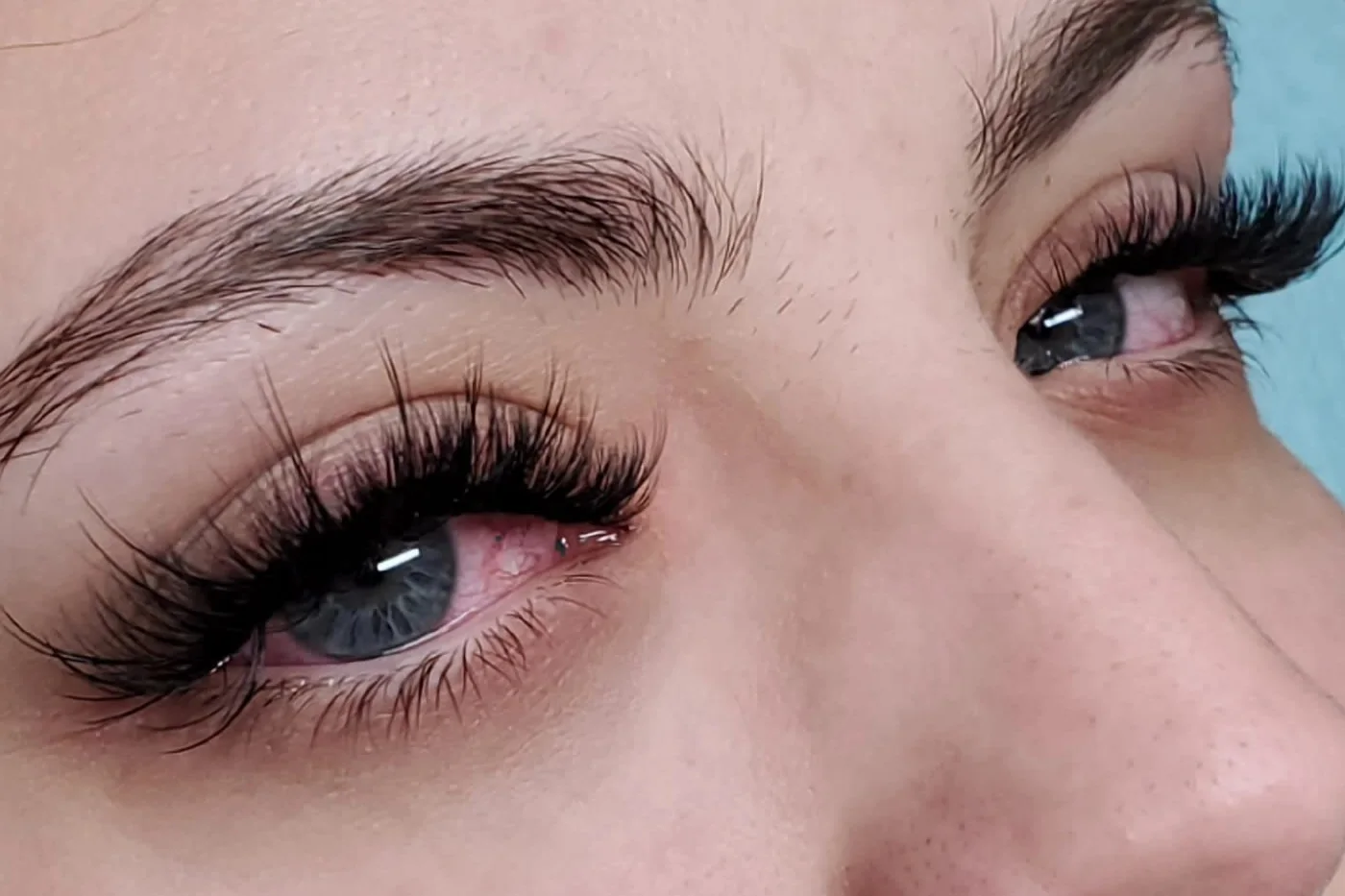
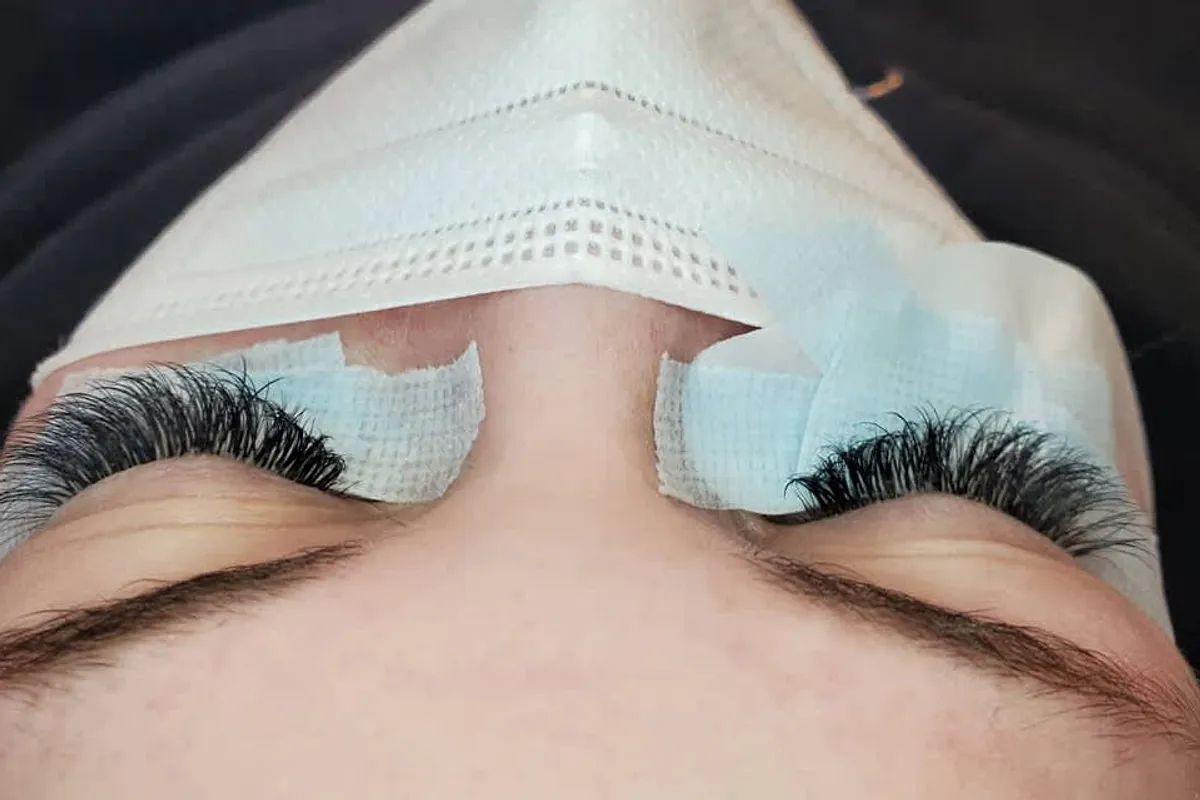
The camera contributes bounded observations: for example, visible coverage, direction, separation, debris, redness, puffiness or whether the frame is too unclear to assess. The customer contributes her desired effect, service history, timing and sensations. The retrieval layer brings the closest exact-source claims and their transfer limits. Desiree confirms what those inputs mean for the salon plan.
| Input | Its job | Its boundary |
|---|---|---|
| Research | Supply definitions, findings, questions and limits | Does not prescribe the client result |
| Image | Describe supported visible features | Does not identify cause or condition |
| Customer | State goal, history, timing and sensation | Does not need to translate everything into salon terms |
| Desiree | Confirm the practical beauty-service plan | Does not replace clinical assessment |
When the inputs conflict, the system should not hide the conflict. A calm-looking image does not cancel reported discomfort. A broad style label does not override a customer's reference and maintenance boundary. A paper from another setting does not overwrite current local context. Abstention is a useful result when the missing information would materially change the answer.
How will we know whether this approach actually works?
A beautiful article library and a large research corpus are infrastructure, not outcome proof. The practical test is whether the system retrieves the right source, preserves its limit, describes only what the image supports and reduces—not increases—Desiree's correction burden on new examples. That requires real opted-in use, practitioner corrections and a held-out benchmark that was not used to tune the prompt.
The same standard applies to the blog. A page can be live, structured for search and available to AI systems without being indexed, ranked, cited or responsible for a booking. Those outcomes require later measurement. Research-informed also means keeping publication proof separate from performance proof instead of letting one stand in for the other.
Show me the exact source, what it studied, what transfers to my question, what the image actually shows, what remains unknown and what Desiree will confirm.
Quick answers
- Does research-informed mean medically approved?
- No. It means the studio uses published sources carefully and keeps their evidence type and limits visible (Paus et al., 2016). A beauty service remains a beauty service. The camera does not identify medical conditions, and Desiree does not replace a clinician. Medical treatment, active health concerns and urgent symptoms need appropriate clinical guidance.
- Does the AI make the final lash recommendation?
- The AI can describe supported visible features and suggest services from the current menu, but Desiree confirms the plan with you. Your desired effect and maintenance boundary matter. If irritation or an eye-health concern is visible or reported, the lash-service suggestion pauses instead of forcing a recommendation from incomplete information.
- What is genuinely distinctive about the Central Oasis corpus?
- Not ownership of public papers or a verified new discovery. The defensible difference is exact-source lineage, explicit transfer limits, retrieval by the customer's goal and visible observations, abstention when evidence does not fit, and the ability to pair later opted-in examples with Desiree's correction for evaluation and improvement.
Who’s behind the answers
About the studio
Central Oasis is a lash and brow studio in Northeast Portland, led by Desiree, the lash and brow artist. Every service description in this diary quotes her own menu, word for word.
Book it
- Classic Lash Full Set$150 · 120 minutesBook Classic Lash Full Set (opens Square in a new tab)
- Hybrid Lash Full Set$170 · 150 minutesBook Hybrid Lash Full Set (opens Square in a new tab)
- Volume Lash Full Set$235 · 180 minutesBook Volume Lash Full Set (opens Square in a new tab)
- Mega Volume Lash Full Set$275 · 180 minutesBook Mega Volume Lash Full Set (opens Square in a new tab)
Nothing is charged online; you pay at your visit.
Sources
- Paus R, Burgoa I, Platt CI, Griffiths T, Poblet E, Izeta A (2016). Biology of the eyelash hair follicle: an enigma in plain sight.. The British journal of dermatology.A biology review supporting explicit uncertainty around eyelash growth and pigmentation mechanisms rather than a complete explanatory model.
- Lee K-H, Han C-J (2017). Usage of, Preference for, and Satisfaction with Extended Eyelashes and False Eyelashes in Adult Women. Asian Journal of Beauty and Cosmetology.A preference study supporting one multi-variable result within its surveyed group, not a universal style recipe.
- Kwon TI, Heo HS (2018). Preferences and Level of Satisfaction with Eyelash Beauty Treatments. Asian Journal of Beauty and Cosmetology.A separate preference study supporting a different reported thickness range and the need to preserve study context.
Know someone with the same question?