How are deep-set and hooded eyes different?
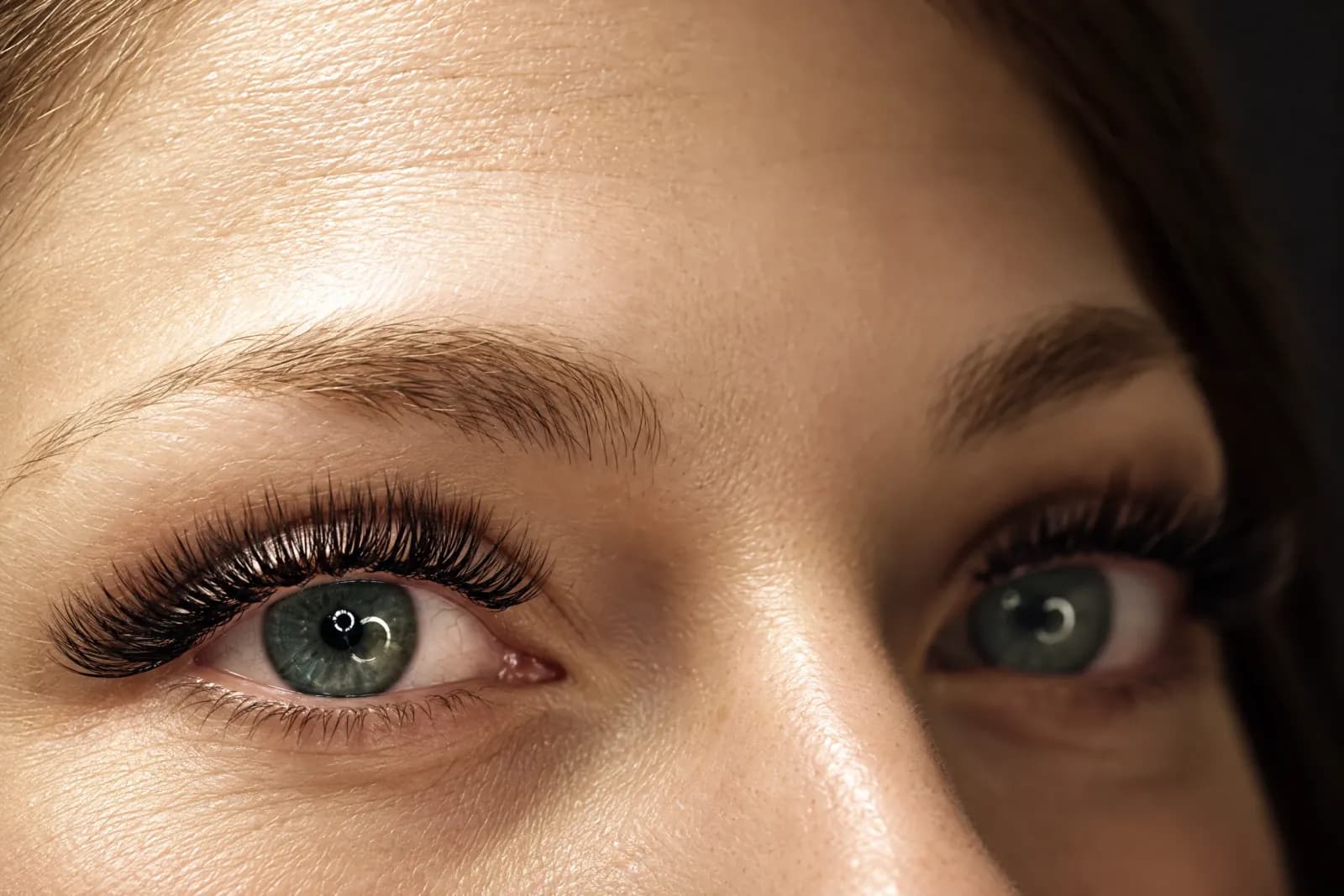
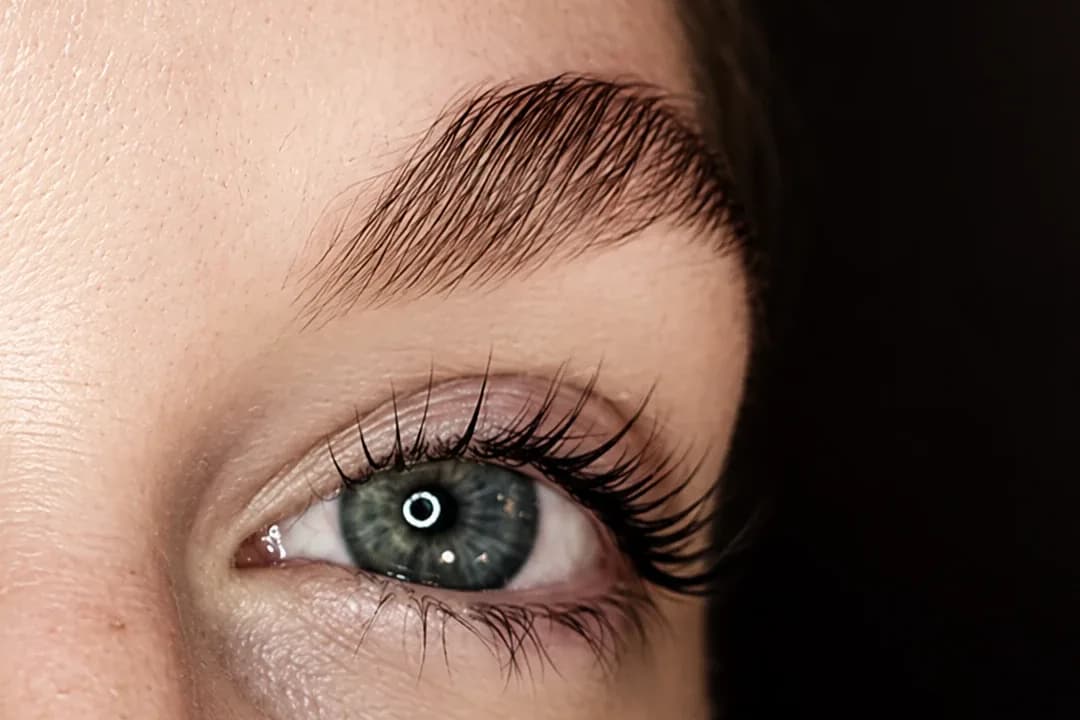
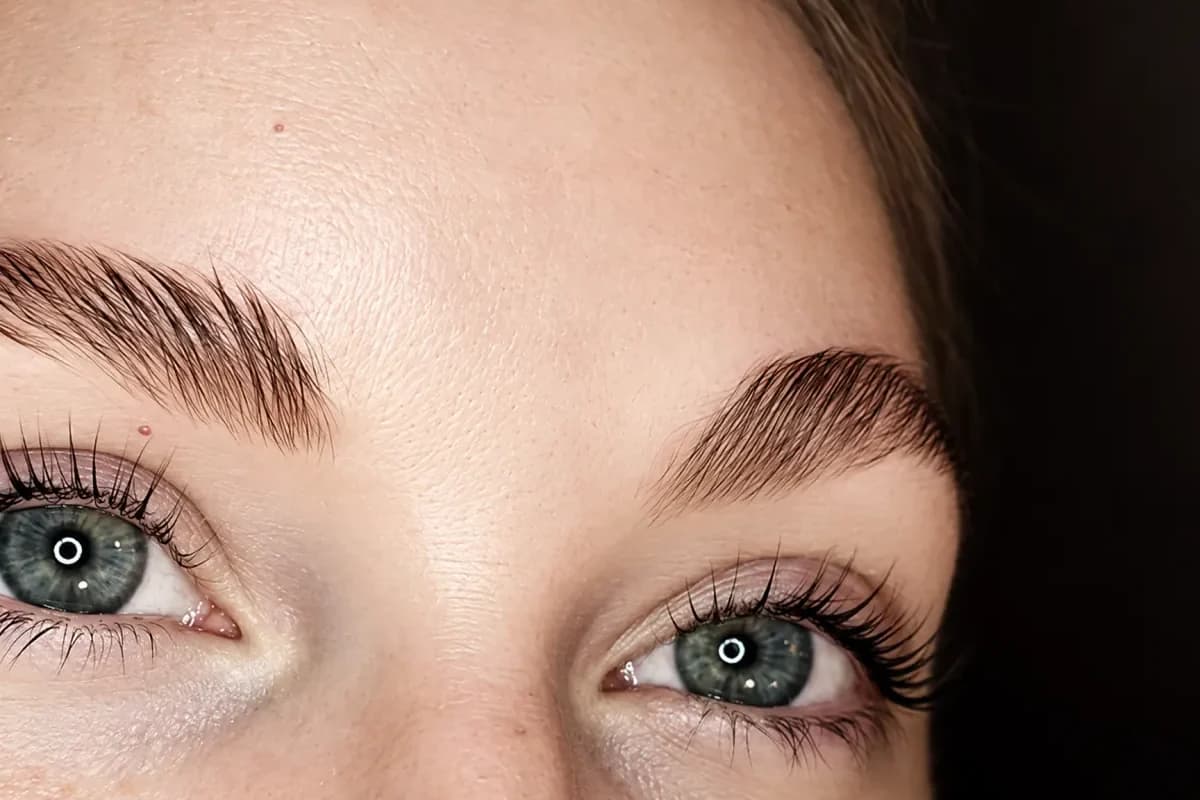
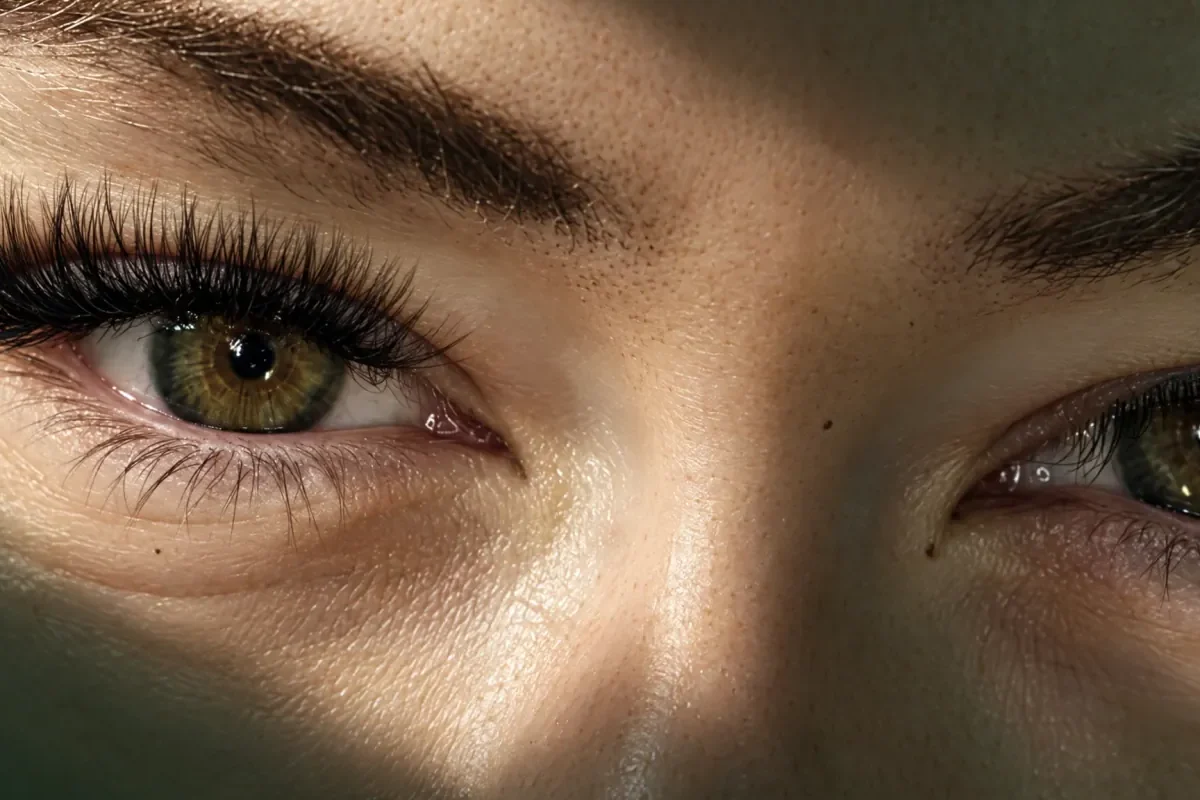
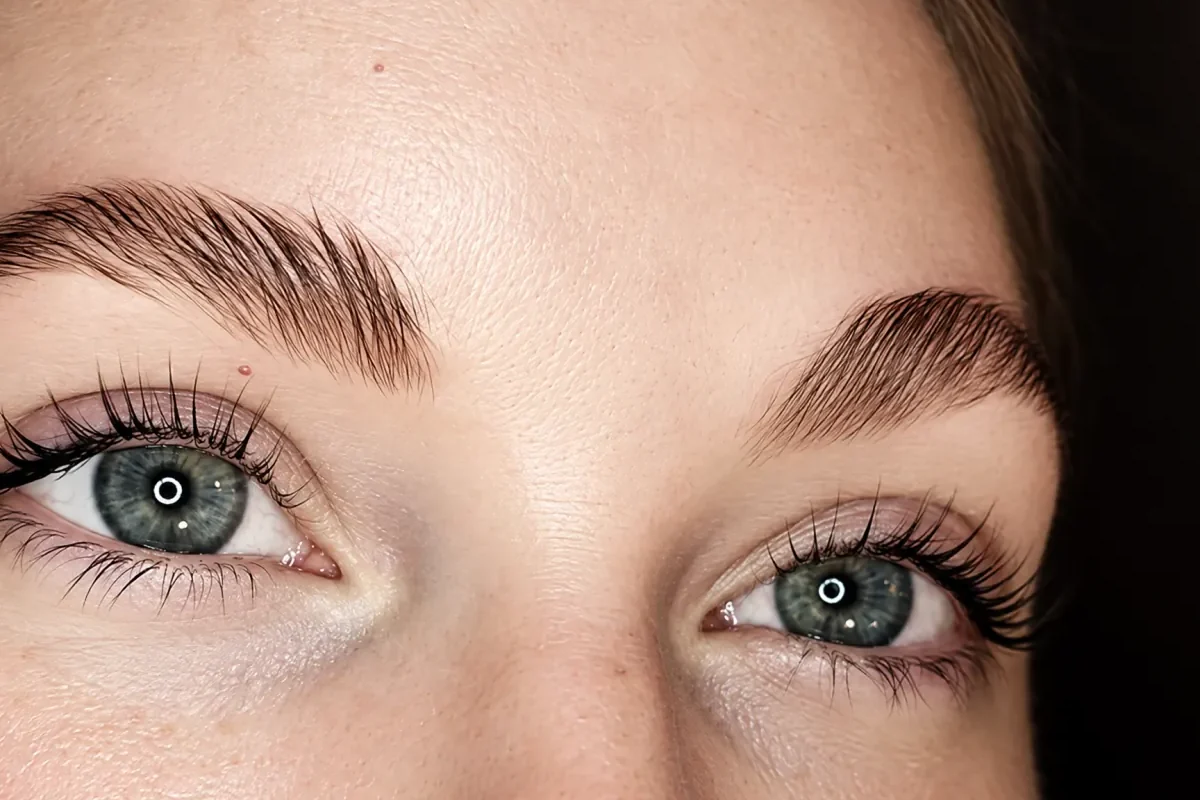
In everyday beauty language, deep-set usually refers to the eye appearing farther beneath the brow area, which can create a stronger shadow or a more prominent brow relationship. Hooded usually refers to an upper-lid fold covering some of the crease or movable lid when the eyes are open. One describes apparent depth; the other describes fold coverage. They can appear together, separately or unclearly in a single photo.
These are conversation labels, not medical classifications. Research on eye-shape perception found that eyebrow inclination can change the direction in which eyes are perceived (Matsushita et al., 2015). That experiment did not test deep-set or hooded labels and did not test lash services. Its useful transfer is that surrounding brow geometry can influence what the eye outline appears to be.
Apparent depth. Deep-set describes a relationship beneath the brow area, not one lash map.
Fold coverage. Hooded describes how a lid fold covers visible upper-lid space with the eyes open.
Chosen effect. The customer names visibility, direction and boundaries; Desiree confirms the plan.
What changes in a lash consultation?
The practical question is not which map belongs to deep-set or hooded eyes. It is what remains visible when you look straight ahead. Desiree can compare the direction of your natural lashes, the space between the lash line and brow, the lid fold in the open-eye view, side-to-side differences and the amount of definition you want.
| What you notice | Useful follow-up | What it does not prove |
|---|---|---|
| The lash base disappears when my eyes are open | Ask how much curl or visible tip you want | That you need the longest extension |
| The brow area creates a strong shadow | Compare a clear front view and normal room light | That the eye is medically deep-set |
| The fold covers some lid space | Name where you want the finished lashes to remain visible | That one hooded-eye map will work |
| I want my eyes to look more open | Clarify curl, center visibility, brightness or softness | That open means the same result to everyone |
I use the word [deep-set / hooded / both / unsure]. With my eyes open, I notice [what is visible]. I want the finished lashes to feel [soft / visible / elongated / defined], and I want to avoid [too much length / darkness / outer weight].
Can a photo tell whether eyes are deep-set or hooded?
A straight-on photo can show the lid fold, visible crease area, brow relationship and apparent shadows in that frame. It cannot establish three-dimensional depth from one view or decide which everyday label you should use. A paper on brow photogrammetry noted that facial curvature complicates objective position measurement (Naif-de-Andrade et al., 2012). That is a brow-measurement paper, not a lash study, but the capture warning travels.
Angle, gaze, expression, crop, focal length and lighting can all change the apparent relationship. The Central Oasis camera should therefore describe bounded features—such as visible fold coverage or lash direction—without declaring identity, health, beauty or one best style. If the source is unclear, the useful response is a retake or uncertainty, not a confident label.
- The image can contribute: visible fold coverage, crease visibility, lash direction and apparent brow distance in that frame.
- You contribute: the words you use, the result you want and what you dislike in saved examples.
- Desiree confirms: the real starting lashes, comfortable dimensions and workable design in person.
Should you choose a lift, classic, hybrid or volume set?
Choose by the material and finish you want. A lash lift redirects your own lashes and adds no fibers. Classic extensions can create separated definition; hybrid adds mixed texture; volume can range from soft to fuller. None becomes correct simply because an eye is called deep-set or hooded.
If fold coverage is your main question, read the focused guide to lash extensions for hooded eyes. If the label itself feels uncertain, monolid versus hooded shows why identity language and visible geometry stay separate. Then bring the result you want back to your own open-eye view.
Quick answers
- Can deep-set eyes also be hooded?
- Yes. The terms describe different relationships, so they can overlap. Deep-set usually refers to apparent depth beneath the brow area; hooded refers to fold coverage over upper-lid space. You do not need a perfect label. Describe what remains visible with your eyes open and the effect you want Desiree to create.
- What lash extensions are best for deep-set eyes?
- There is no universal best map. Compare natural-lash direction, open-eye visibility, comfortable length, desired emphasis and maintenance. Tell Desiree whether you want softer definition, more visible curl, an elongated impression or something else—and name the effect you want to avoid so the label does not become the prescription.
- Are deep-set eyes the same as hooded eyes?
- No. Deep-set commonly describes apparent eye depth relative to the brow area. Hooded commonly describes a fold covering some crease or movable lid when the eyes are open. A person may use both terms, one term or neither, and Central Oasis can plan lashes without forcing a category.
- Can AI identify deep-set or hooded eyes from one photo?
- It can describe visible fold coverage, crease space and brow relationships in a usable frame. It should not claim three-dimensional depth, assign identity or prescribe a map from one image. Camera angle and facial curvature limit measurement (Naif-de-Andrade et al., 2012); Desiree confirms the actual lashes and service plan in person.
Who’s behind the answers
About the studio
Central Oasis is a lash and brow studio in Northeast Portland, led by Desiree, the lash and brow artist. Every service description in this diary quotes her own menu, word for word.
Book it
- Classic Lash Full Set$150 · 120 minutesBook Classic Lash Full Set (opens Square in a new tab)
- Hybrid Lash Full Set$170 · 150 minutesBook Hybrid Lash Full Set (opens Square in a new tab)
- Volume Lash Full Set$235 · 180 minutesBook Volume Lash Full Set (opens Square in a new tab)
- Mega Volume Lash Full Set$275 · 180 minutesBook Mega Volume Lash Full Set (opens Square in a new tab)
Nothing is charged online; you pay at your visit.
Sources
- Matsushita S, Morikawa K, Mitsuzane S, Yamanami H (2015). Eye Shape Illusions Induced by Eyebrow Positions. Perception.A visual-perception experiment supporting the limited point that surrounding brow direction can affect perceived eye inclination; it did not test deep-set or hooded labels or lash services.
- Naif-de-Andrade NT, Hochman B, Naif-de-Andrade CZ, Ferreira LM (2012). Computerized photogrammetry used to calculate the brow position index.. Aesthetic Plastic Surgery.A brow-measurement paper supporting the limited capture point that facial curvature complicates objective position measurement; it did not classify eye shape or test lash design.
Know someone with the same question?