What does it mean when the natural lash is attached?
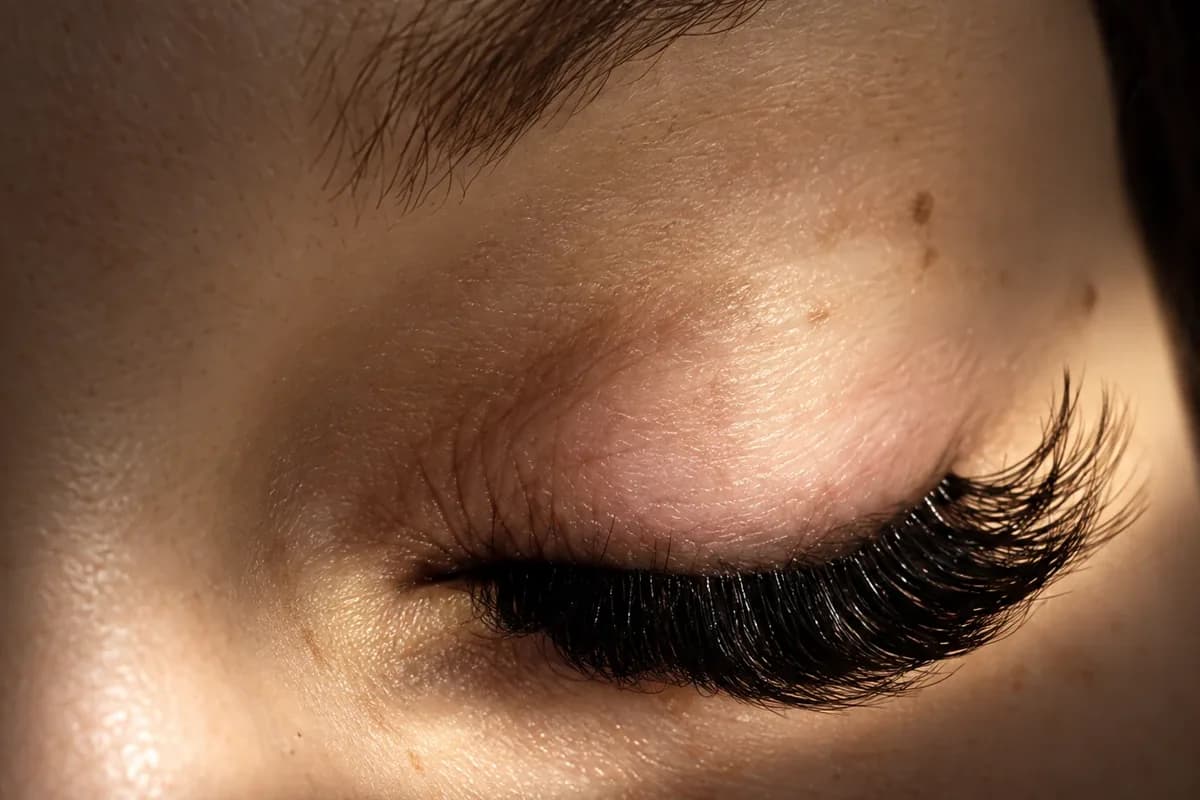
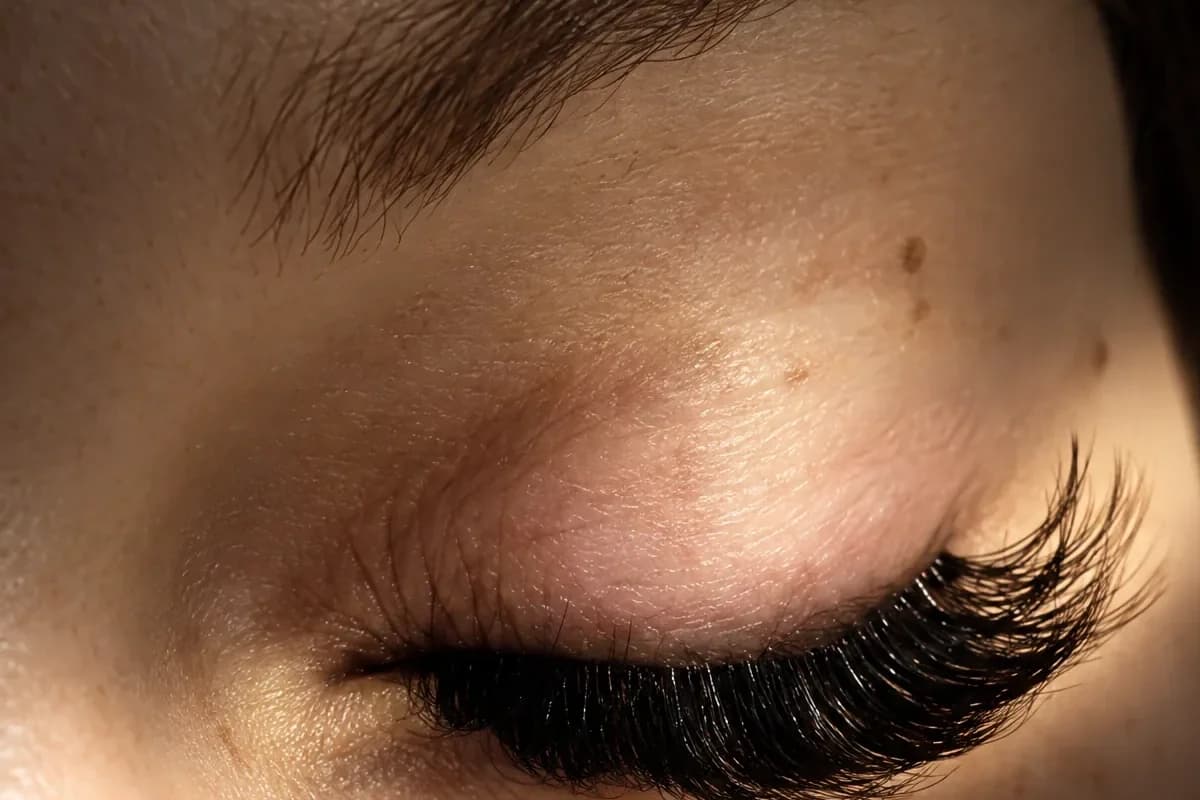
A fine natural lash attached to the base of an extension is consistent with natural turnover: the lash left its follicle and carried the bonded extension with it. Eyelashes move through growth, degradation and resting phases (Aumond and Bitton, 2018), and humans typically lose and replace between 1 and 4 eyelashes each day (Sullivan et al., 2023).
That makes a few scattered pieces understandable, but it does not prove that every change across the set is ordinary shedding. A phone photo cannot show the hidden follicle stage of each remaining lash, and a loose piece cannot explain a new gap somewhere else. Treat the attached hair as one visible clue, not a verdict on the whole set.
If several pieces appear together, avoid pulling or separating them. Put a loose piece somewhere clean if it is easy to save, note the day it came away, and photograph both eyes in the same light. Desiree can compare that record with the set and your appointment timing.
What if the extension has no natural lash attached?
An extension or fan with no natural lash visible at its base is consistent with detachment from the lash. It does not identify the cause. The image does not reveal the original bond, everything that touched the set, heat or moisture exposure, rubbing, sleep contact, or the exact moment the piece released.
Researchers can label detachment under controlled conditions. One 2025 durability study classified prepared eyelash-extension images as stable adhesion, partial detachment or complete detachment (Chiang et al., 2025). That study used a controlled module setup—not ordinary client phone photos—so its categories help name a research task; they do not validate an automatic cause judgment from your selfie.
What can the camera see—and what stays unknown?
Loose piece. Record whether a fine natural lash is visibly attached; do not pull one free to check.
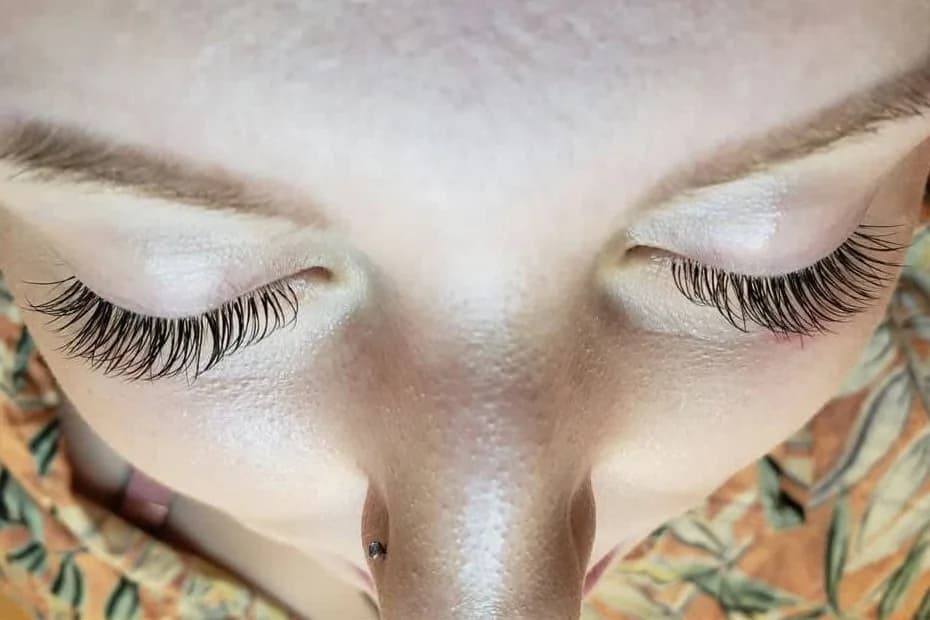
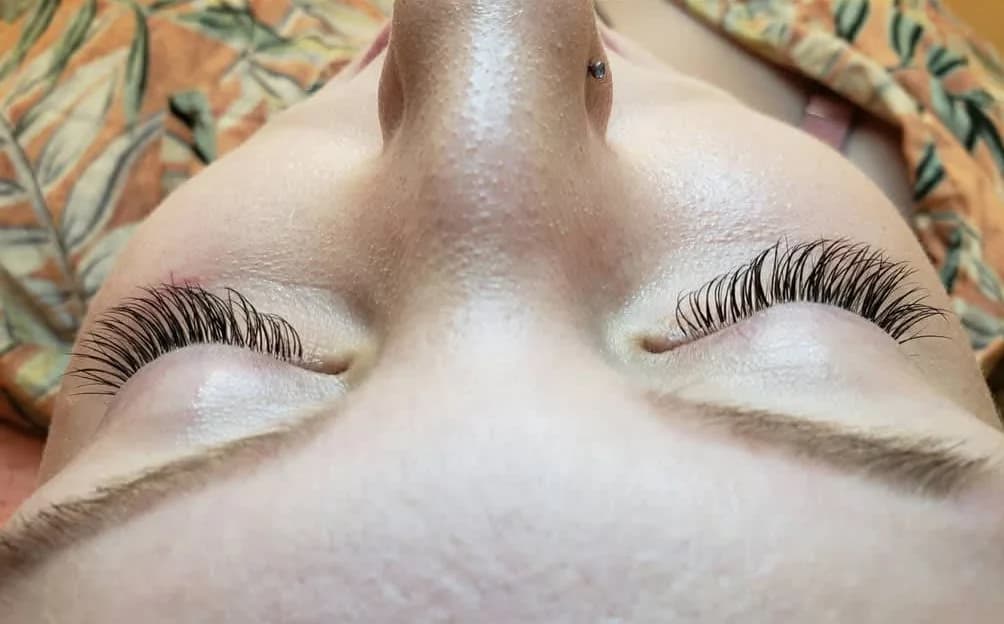
Full set. Describe visible unevenness, location and timing from matched photos.
Cause. A phone image cannot prove shedding versus bond loss or assign fault.
Central Oasis's camera process follows the same split. A clear photo may support a bounded description such as uneven visible fullness in an existing extension set. It must not turn that appearance into a conclusion about natural shedding versus bond loss. Research is retrieved only after the visible observation is frozen, so a paper cannot rewrite what the pixels showed.
That boundary matters because similar-looking gaps can arrive through different histories, while different camera angles can make the same set look unlike itself. The useful output is a consistent record for the next conversation: what was visible, whether the photo was good enough, what remains uncertain and which source supports the explanation.
What should I send Desiree?
Send a small evidence packet, not a guess. Include the appointment date; the first day you noticed the change; whether pieces appeared with a fine natural lash, without one, or in a cluster; and whether the visible change is on one eye, both eyes or one area of the lash line.
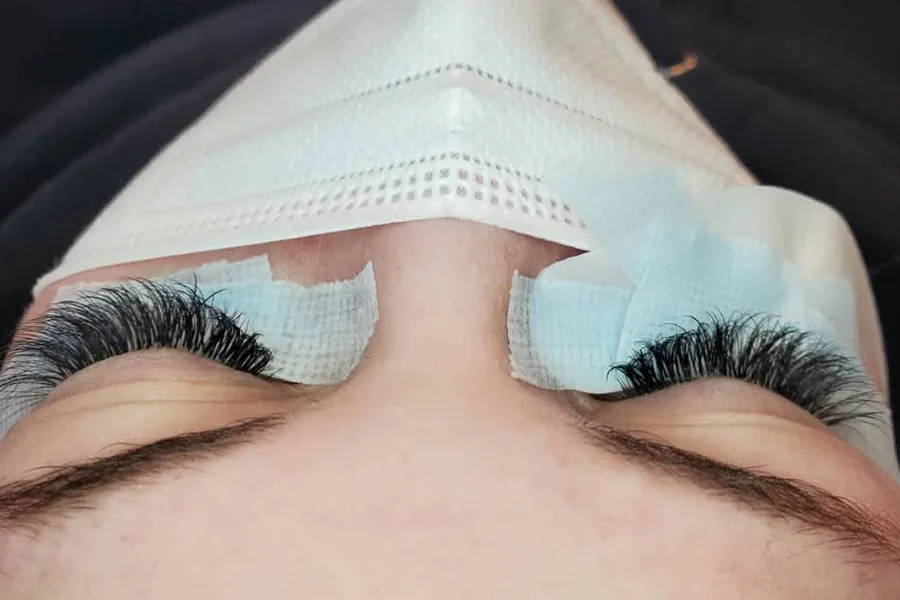
- Two full-eye photos: one of each eye, straight on, in even light.
- One loose-piece photo: only if a piece is already free; do not pull one out for the picture.
- Timing: appointment date, first noticed date and whether the change was sudden or gradual.
- Context: any new eye-area product, makeup, heat, rubbing, sleep or cleaning change—reported as context, not blamed as the cause.
Hi Desiree, my appointment was [date]. I first noticed [location/pattern] on [day]. The pieces I found mostly [had / did not have / were too hard to tell whether they had] a natural lash attached. I saved one and attached matched photos of both eyes. What would you like me to do next?
You can send that through Pre-visit so the images and notes stay together for Desiree. If the main question is timing rather than what came away, read why extensions fall out after one week. For a broader retention review, use why lash extensions do not last.
When should I stop inspecting and ask for help?
Stop picking, tugging or trying to separate the set. Contact Desiree when you see a clear gap, one side changing much faster, repeated pieces without a visible natural lash, or a cluster that worries you. She can review the full set, the saved piece and the timing together before suggesting the next booking step.
Quick answers
- Why did my lash extension fall out with my natural lash attached?
- It is consistent with the natural lash reaching the end of its cycle and carrying the bonded extension with it. People typically lose and replace 1 to 4 eyelashes daily (Sullivan et al., 2023). One attached lash does not prove the entire set is shedding normally, so record the broader pattern if you see a gap or cluster.
- Why did my lash extension fall out without my natural lash?
- It is consistent with the extension or fan detaching from the natural lash, but the loose piece does not show why. A phone photo cannot recover the original bond, handling or exposure history. Note when and where it happened, save the piece if practical, photograph both eyes and ask Desiree if it repeats.
- Can a photo tell whether lash loss is shedding or bond loss?
- Not reliably for the whole set. A clear loose-piece photo may show whether a fine natural lash appears attached, and a full-eye photo may show uneven visible fullness. Neither proves the hidden follicle stage, release mechanism or cause. The camera should describe those visible clues and uncertainty, then leave the interpretation to Desiree.
- What should I do if lash extensions fall out in clumps?
- Do not pull, pick or separate the remaining extensions. Save an already-loose piece if that is easy, take matching full-eye photos and record when the cluster appeared. Contact Desiree so she can inspect the set. If you also have redness, swelling, pain or a vision change, seek prompt medical care.

Who’s behind the answers
About the studio
Central Oasis is a lash and brow studio in Northeast Portland, led by Desiree, the lash and brow artist. Every service description in this diary quotes her own menu, word for word.
Book it
- Classic Lash Full Set$150 · 120 minutesCall to book (971) 205‑2402 for Classic Lash Full SetText (971) 205‑2402 to book Classic Lash Full Set
- Hybrid Lash Full Set$170 · 150 minutesBook Hybrid Lash Full Set (opens Square in a new tab)
- Volume Lash Full Set$235 · 180 minutesBook Volume Lash Full Set (opens Square in a new tab)
- Mega Volume Lash Full Set$275 · 180 minutesBook Mega Volume Lash Full Set (opens Square in a new tab)
Nothing is charged online; you pay at your visit.
Sources
- Aumond S, Bitton E (2018). The eyelash follicle features and anomalies: A review. Journal of Optometry.A review of eyelash biology; it supports the three-phase eyelash life cycle used to explain why an attached natural lash is consistent with turnover.
- Sullivan DA, da Costa AX, Del Duca E, et al. (2023). TFOS Lifestyle: Impact of cosmetics on the ocular surface. The Ocular Surface.An international report on cosmetics and eye health; it supports the normal daily eyelash loss-and-replacement range.
- Chiang S, Chang S-H, Yao K-C, Kuo P-Y, Hsu C-T (2025). AIoT-Based Eyelash Extension Durability Evaluation Using LabVIEW Data Analysis. Sensors.A controlled module study, not validation on client phone photos; it supports the three adhesion-state labels and the article's explicit transfer limit.
Know someone with the same question?