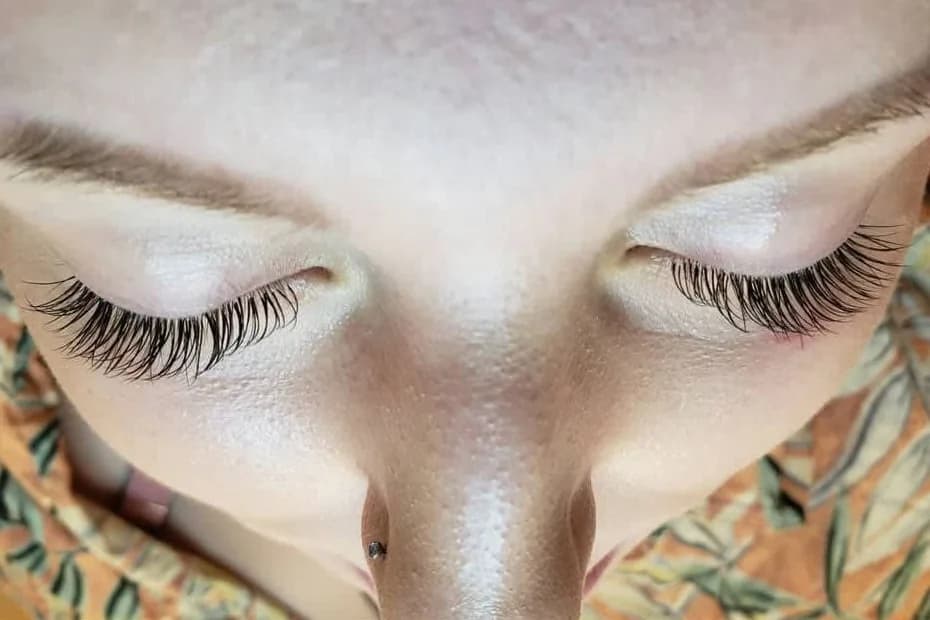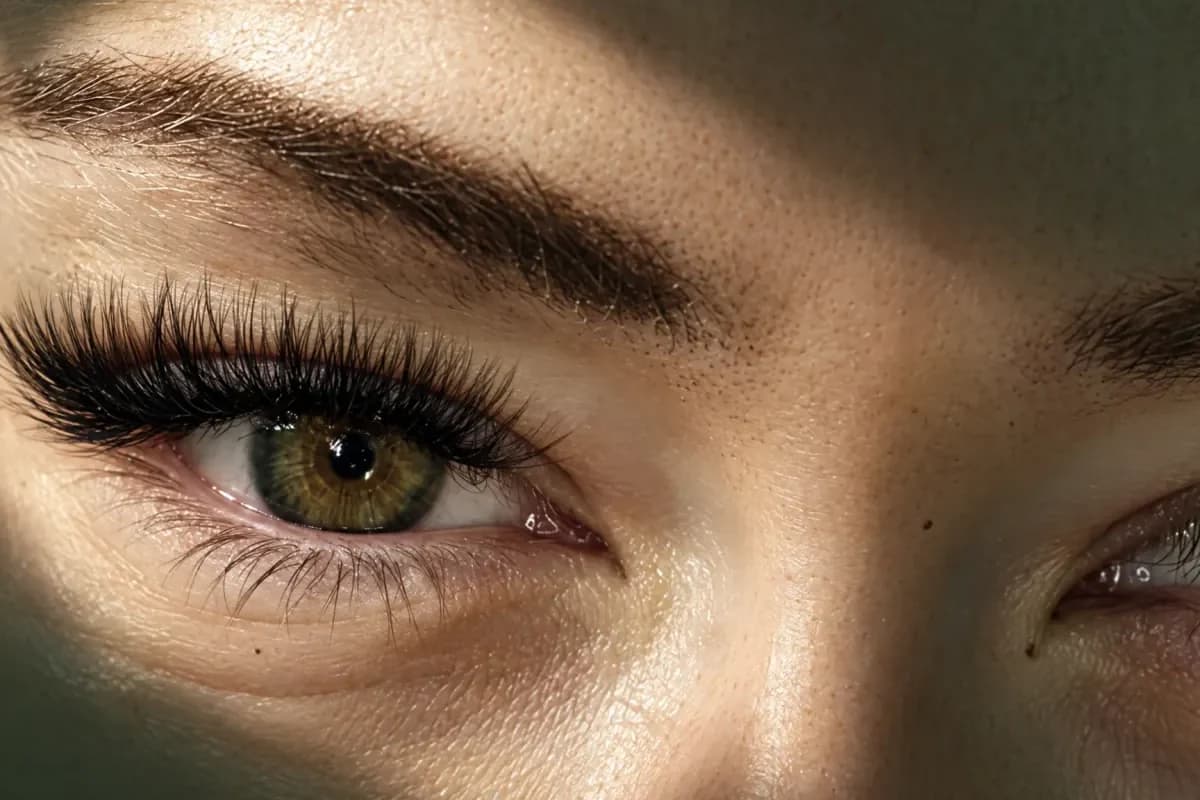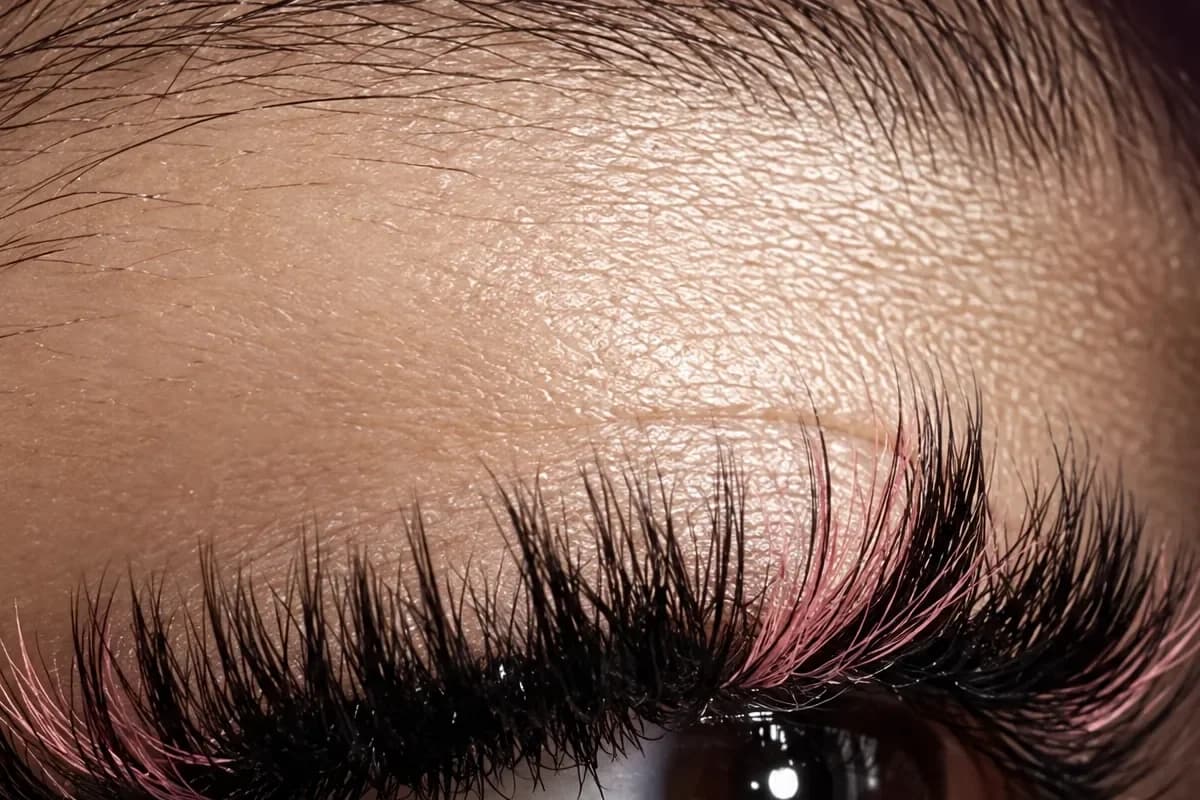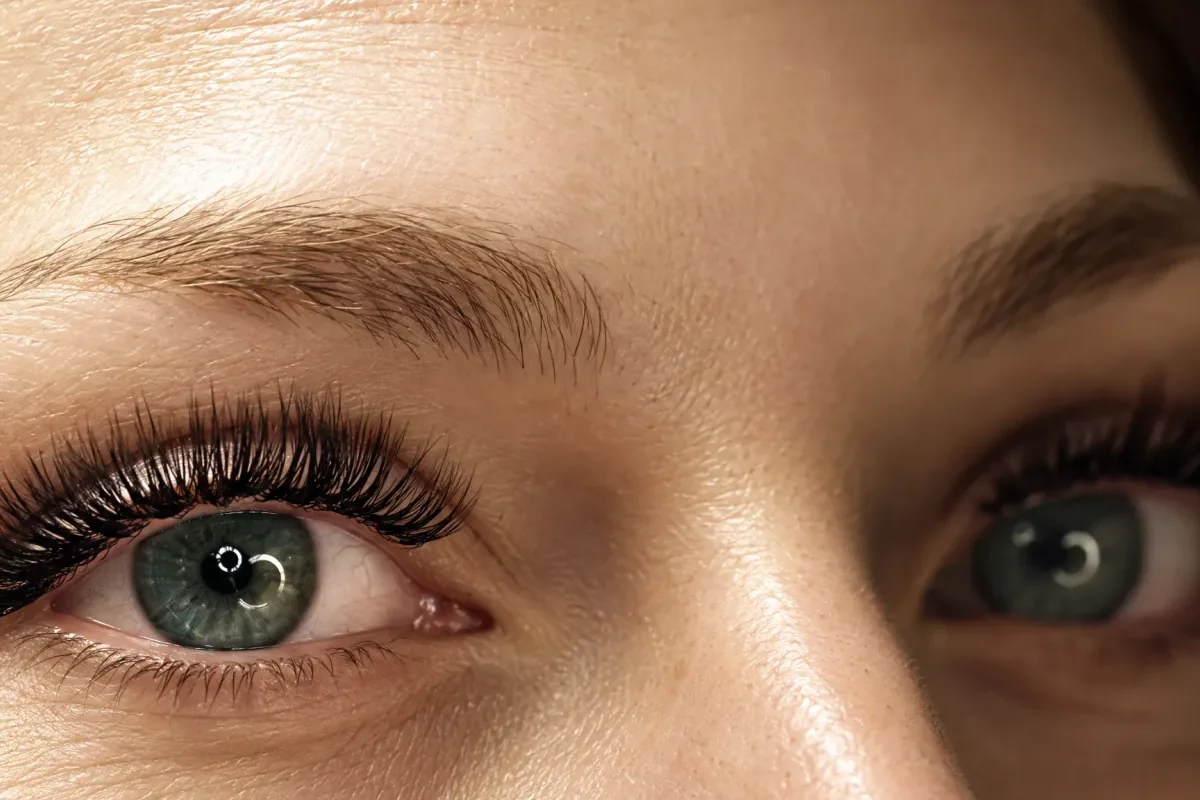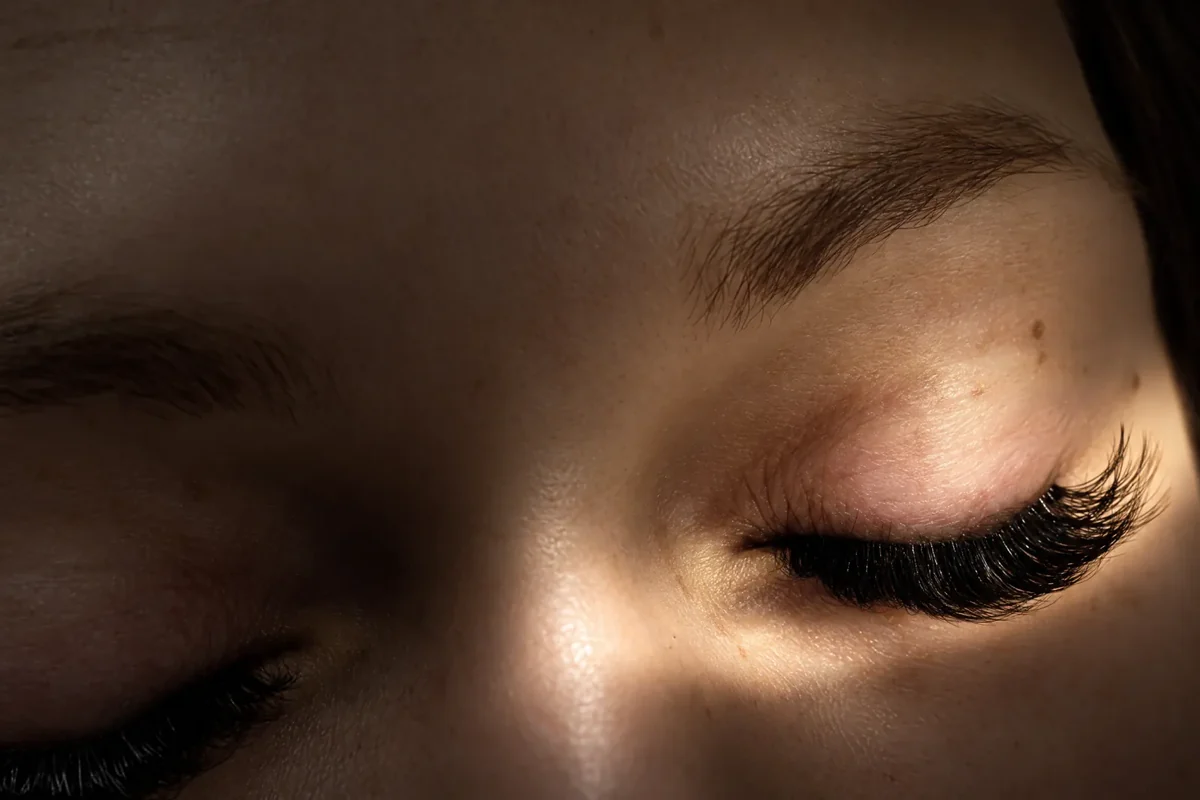
How do you confirm that the two eyes really look different?
Look straight ahead in ordinary light, relax your brow and compare both eyes in one frame. Then take a second view of each side at the same distance. A selfie taken from one side can enlarge the nearer eye, a raised brow can expose more lash length, and light from one direction can make gaps or texture look stronger on one side.
This is not a demand for laboratory photography. It is a way to avoid explaining a difference created by the image. A brow-measurement paper noted that facial curvature complicates objective position measurement (Naif-de-Andrade et al., 2012). That study did not evaluate lash sets, but it supports the narrow point that a two-dimensional image needs defined capture conditions before a geometric comparison becomes strong evidence.
Match the frame. Compare both eyes in the same light, angle, distance and expression first.
Record the difference. Name what looks shorter, less full, more curled or differently emphasized—and when.
Do not guess cause. Pixels alone cannot separate structure, design, wear, product history or error.
What can make the two sides look different?
| Lane | What to record | What not to conclude from a photo |
|---|---|---|
| Starting lashes | Visible direction, coverage and length on each side | Follicle count, strength or medical cause |
| Open-eye relationships | Fold, brow and lid visibility in the same expression | That one side must be corrected |
| Applied design | Where length, curl and texture appear to change | Exact map or attachment history from the finished view |
| Wear and timing | When the difference appeared and what pieces came away | Natural shedding versus bond loss without the pieces and timeline |
| Image conditions | Angle, light, focus, crop and eye state | That a difference in pixels exists the same way in person |
A cosmetic study reported individual variation in eyelash length and number (Hoshiya et al., 1991). It did not measure left-right extension differences, so it cannot explain your set. It does support one careful starting assumption: people do not arrive with identical lash structures, and one average eye label can hide the features that matter to a design conversation.
If one side changed after several days rather than looking different immediately, use the focused one-eye retention guide to record sleep side, rubbing, watering, pieces and timing. That page also refuses to assign a cause from the pattern alone.
What should you send Desiree?
- One straight-on photo: both eyes open, brow relaxed and the phone level.
- Two matching side views: same room, distance and light, with neither eye squinting.
- Timing: whether the difference was visible at the appointment, appeared after sleep or changed across several days.
- Pieces: whether loose extensions had natural lashes attached, when that is visible without pulling.
- Your goal: whether you want more visible balance, intentionally different emphasis or no change.
The [left / right] side looks [less full / shorter / more curled / more outer-heavy] when both eyes are open. I first noticed it [time]. These photos were taken in the same light. I would like [the change you want], and I have not pulled or picked at the lashes.
Call or text (971) 205‑2402 if the change is sudden, uncomfortable or difficult to photograph. Do not pull at the denser side to make the two sides match. If there is significant pain, swelling, discharge, light sensitivity or a vision change, pause the beauty-service question and seek appropriate medical care.
Can the lash AI compare the two eyes?
It can compare visible coverage, direction and outline only when the images pass quality checks and the capture conditions are reasonably matched. It should show what differs in the pixels and preserve uncertainty. It should not infer a medical condition, hidden lash strength, application fault, product failure or the customer's preferred degree of symmetry.
The learning value comes later, after the observation is paired with context and Desiree's correction or confirmation. A camera note saying one side appears less full becomes useful only when the system also knows the timing, source quality, what Desiree found and what the customer wanted. That is a traceable learning record—not an automatic medical conclusion from asymmetry.
Quick answers
- Is it normal for lash extensions to look different on each eye?
- Some side-to-side difference can come from starting lashes, open-eye relationships, applied design, wear or the image itself. Normal does not answer whether the result bothers you. Compare both sides in matched light, note when the difference appeared and let Desiree inspect the set before deciding whether an adjustment is useful.
- Why does one eye look less full after lash extensions?
- A less-full appearance can reflect starting coverage, overlap, curl visibility, attachment pattern, shedding, bond loss or camera conditions. The appearance alone cannot separate them. Record timing and loose pieces without pulling. If the change developed after the appointment, use the one-eye retention guide and contact Desiree with matched photos.
- Should both eyes receive exactly the same lash map?
- Not necessarily. Copying identical lengths to both sides may not create the same open-eye result when starting lashes or lid relationships differ. The goal can be visible balance, intentional emphasis or another preference. Desiree can vary the plan while keeping the customer's chosen result—not mechanical mirror symmetry—as the decision target.
- Can AI tell why one lash set looks uneven?
- AI can describe visible differences in matched, quality-checked frames. It cannot recover hidden attachment history, determine biological cause or prove application error from pixels. The useful output is a bounded comparison plus questions about timing and goals. Desiree then inspects the actual lashes and accepts, corrects or rejects the camera note.
Who’s behind the answers
About the studio
Central Oasis is a lash and brow studio in Northeast Portland, led by Desiree, the lash and brow artist. Every service description in this diary quotes her own menu, word for word.
Book it
- Classic Lash Full Set$150 · 120 minutesBook Classic Lash Full Set (opens Square in a new tab)
- Hybrid Lash Full Set$170 · 150 minutesBook Hybrid Lash Full Set (opens Square in a new tab)
- Volume Lash Full Set$235 · 180 minutesBook Volume Lash Full Set (opens Square in a new tab)
- Mega Volume Lash Full Set$275 · 180 minutesBook Mega Volume Lash Full Set (opens Square in a new tab)
Nothing is charged online; you pay at your visit.
Sources
- Naif-de-Andrade NT, Hochman B, Naif-de-Andrade CZ, Ferreira LM (2012). Computerized photogrammetry used to calculate the brow position index.. Aesthetic Plastic Surgery.A brow-measurement paper supporting the limited capture point that facial curvature complicates objective position measurement; it did not compare lash sets or explain asymmetry.
- Hoshiya H, Yamamoto Y, Fujii M (1991). The good choice of mascara for your eyes and lashes.. Journal of Society of Cosmetic Chemists of Japan.A cosmetic study supporting individual variation in eyelash length and number; it did not test left-right extension differences or identify the cause of an uneven-looking set.
Know someone with the same question?